
What Is Unglazed Tile and Why It Matters
Unglazed tile: Choosing the right floor tiles can feel daunting when every North Yorkshire renovation project demands both style and strength. For homeowners and interior designers looking for durable ceramic tiles that blend tradition with a modern touch, unglazed tiles promise a unique blend of resilience and authentic character. This guide reveals the advantages, types, and practical tips for unglazed tiles, helping you make confident choices that stand up to daily life while showcasing enduring natural beauty.
Table of Contents
- Unglazed Tile Defined And Common Myths
- Types Of Unglazed Tile And Unique Qualities
- Key Benefits And Drawbacks For Uk Homes
- Installation, Maintenance, And Everyday Care
- Comparing Unglazed Tile With Glazed Options
Key Takeaways
| Point | Details |
|---|---|
| Unglazed Tile Benefits | Unglazed tiles offer exceptional durability and slip resistance, making them ideal for high-traffic and moisture-prone areas such as kitchen floors and bathroom floors. |
| Maintenance Requirements | They require regular sealing and careful cleaning to protect against staining and moisture absorption, ensuring easier maintenance over time. |
| Aesthetic Authenticity | Unglazed tiles showcase natural textures and colours, providing a unique natural look compared to glazed options. |
| Application Versatility | Suitable for residential and commercial spaces, they maintain their appearance under heavy use due to their through-body composition common in porcelain tile and other materials. |
Unglazed Tile Defined and Common Myths
Unglazed tiles represent a classic, authentic tiling solution with deep historical roots. Unlike their glazed ceramic tile counterparts, these tiles showcase the raw, natural material in its purest form. Characterised by their through-body composition, unglazed tiles have colour and texture that run completely through the tile, providing exceptional durability and structural integrity.
Historically, unglazed tiles have been integral in architectural design, particularly in high-status buildings where resilience and aesthetic authenticity were paramount. Unglazed tiles represent traditional tile craftsmanship that prioritises material integrity over superficial decoration. These tiles expose the inherent qualities of ceramic or stone materials, displaying natural textures, colours, and imperfections that tell a unique visual story.
Contrary to popular misconceptions, unglazed tiles are not inferior to glazed tiles. They offer remarkable advantages in specific applications, particularly for surfaces requiring high slip resistance, such as outdoor patios, commercial flooring, and areas with heavy foot traffic. Their through-body composition means that wear and chipping do not dramatically alter the tile’s appearance, as the underlying material matches the surface.
Pro tip: When selecting unglazed tiles, consider their natural porosity and ensure you apply appropriate sealing treatments to enhance their longevity and protect against staining.
Types of Unglazed Tile and Unique Qualities
Unglazed tiles come in several distinctive varieties, each offering unique characteristics and applications for residential and commercial spaces. Unglazed porcelain tiles stand out as a premier choice, renowned for their exceptional durability, dense composition, and natural mineral-rich textures. These tiles are created through high-temperature firing processes that result in an incredibly robust material with remarkable structural integrity that withstands high temperatures.
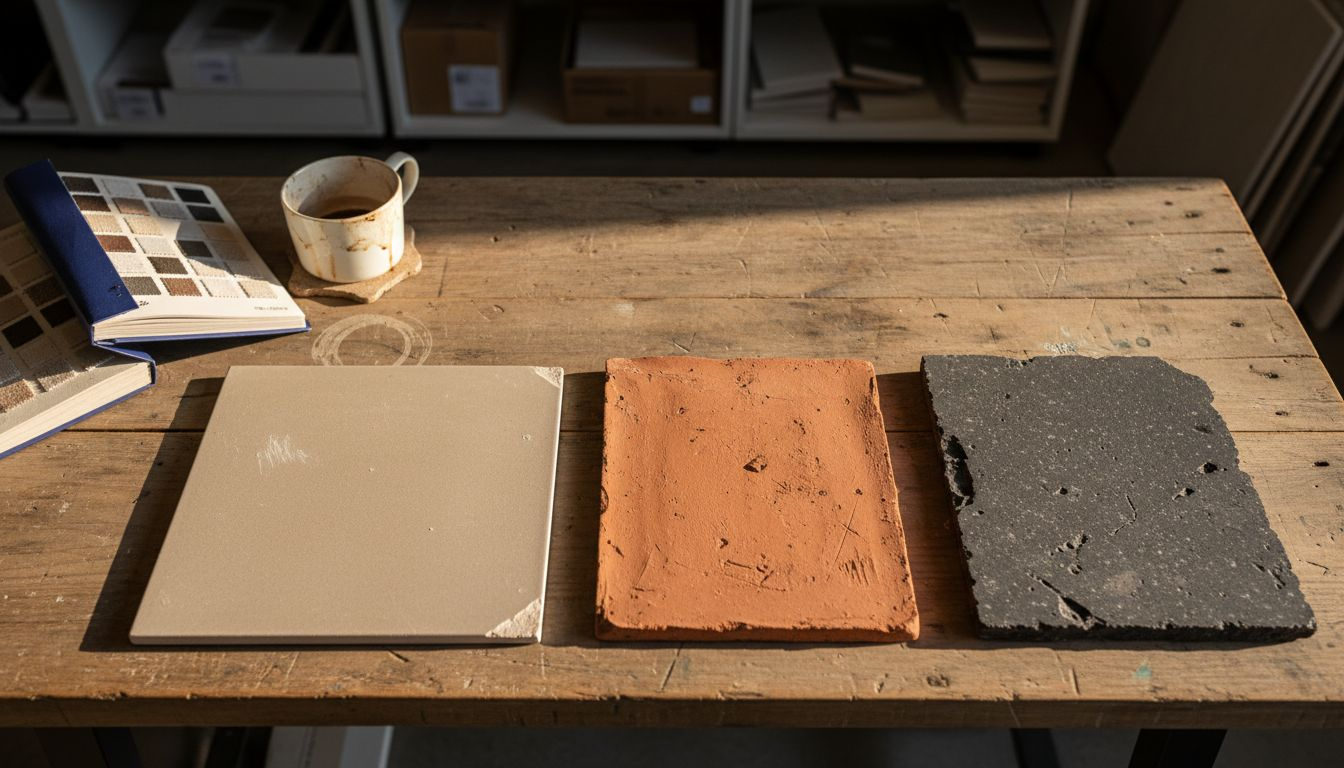
Beyond porcelain, other significant unglazed tile types include terracotta and natural stone variants. Terracotta tiles present a rustic, earthy aesthetic with warm reddish-brown tones, traditionally used in Mediterranean and Latin American architectural styles. Natural stone unglazed tiles such as slate, marble, and travertine provide organic textures and colours that reflect their geological origins, making each tile a unique design element with inherent variations in pattern and tone.
The practical advantages of unglazed tiles extend beyond aesthetic appeal. Their textured surfaces offer superior slip resistance, making them ideal for areas prone to moisture like bathroom floors, kitchen floors, and outdoor patios. The lack of a tile glaze means these tiles maintain their appearance even with significant wear, as the colour and texture run continuously through the entire tile body. This through-body composition ensures that chips, scratches, and wear do not dramatically alter the tile’s visual integrity.
Pro tip: When installing unglazed tiles, invest in high-quality sealants to protect against staining and enhance their natural durability, particularly in high-moisture environments.
Here is a summary of common types of unglazed tiles and their distinctive characteristics:
| Type of Unglazed Tile | Core Qualities | Typical Applications |
|---|---|---|
| Porcelain | Extremely dense, high durability | Commercial floors, bathrooms, kitchen backsplash |
| Terracotta | Rustic aesthetic, warm tones | Kitchens, patios, Mediterranean homes |
| Natural Stone | Varied textures, unique patterns | Hallways, wall tiles, feature walls, luxury spaces |
Key Benefits and Drawbacks for UK Homes
Unglazed tiles present a compelling option for UK homeowners seeking durability and authenticity in their interior design. Unglazed tile benefits for residential spaces include exceptional resilience, particularly in high-traffic areas like kitchen floors and hallways. Their natural composition provides superior slip resistance, making them an ideal choice for spaces prone to moisture such as bathroom floors and utility rooms.
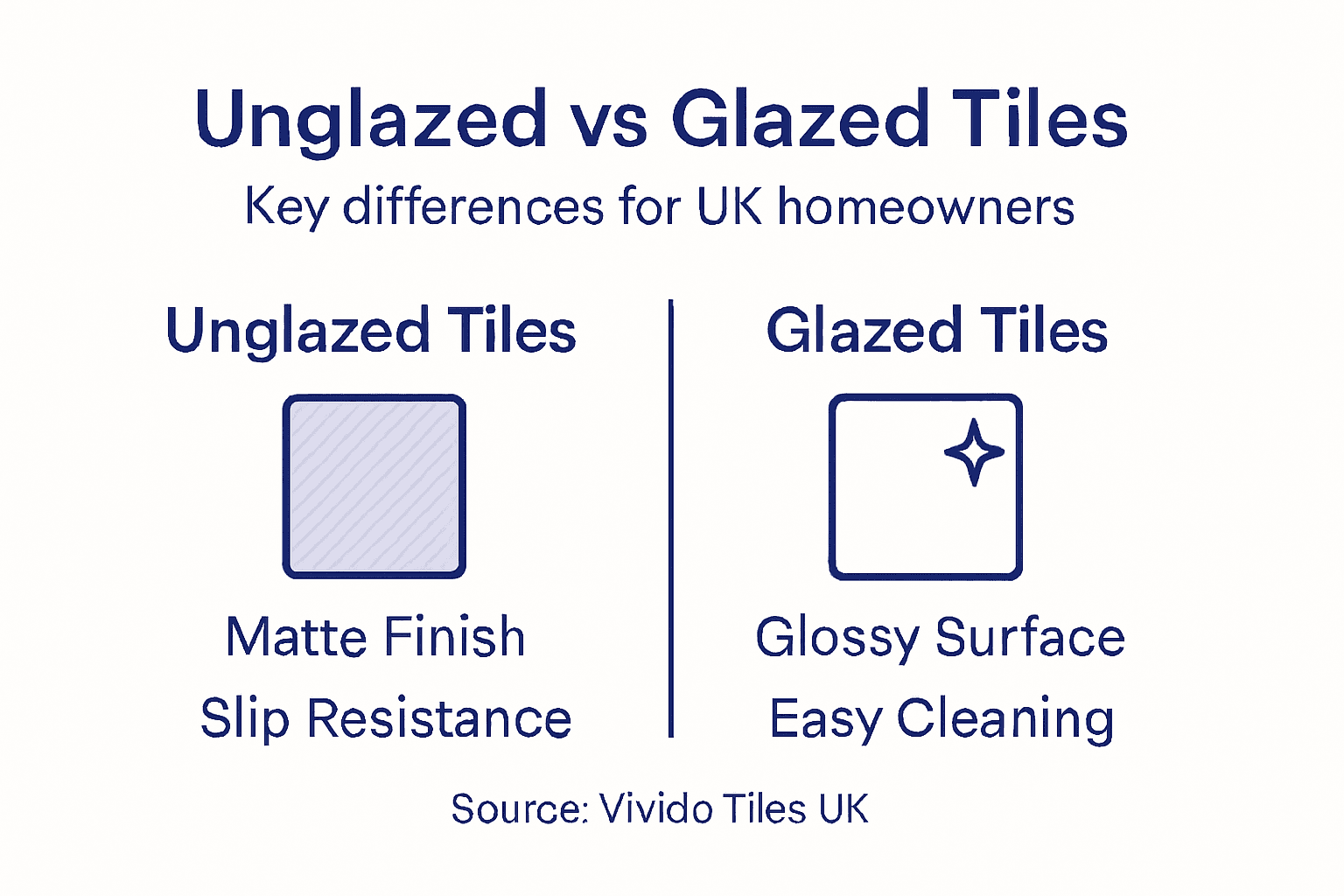
However, these tiles are not without their challenges. The inherent porosity of unglazed tiles means they require more meticulous maintenance compared to their glazed counterparts. Homeowners must commit to regular sealing to prevent staining and moisture absorption. The natural, matte finish also means fewer design options, which can limit aesthetic flexibility for those seeking vibrant or intricate tile designs.
The structural advantages of unglazed tiles are particularly noteworthy for British homes. Their robust nature means they can withstand significant wear and tear, maintaining their appearance even under heavy foot traffic. The through-body composition ensures that chips and scratches are less noticeable, as the colour and texture run consistently throughout the tile. This makes them an excellent long-term investment for homeowners looking for durable floor tiles solutions that age gracefully.
Pro tip: Apply a high-quality penetrating sealant annually to unglazed tiles, focusing on grout lines and areas with frequent moisture exposure to maximise their longevity and protect your investment.
Installation, Maintenance, and Everyday Care
Successful installation of unglazed tiles requires meticulous preparation and precision. Proper tile installation techniques begin with ensuring a completely flat, clean, and dry substrate. Professional tilers recommend using polymer-modified thinset mortar and employing back-buttering techniques to guarantee optimal adhesion and minimise potential future issues with tile placement.
Maintenance of unglazed tiles demands a proactive approach to protect their natural porosity. Homeowners should implement a regular cleaning regime using mild, pH-neutral cleaning solutions that won’t compromise the tile’s delicate surface. Immediate attention to spills is crucial, as the porous nature of these tiles makes them susceptible to staining. Annual resealing provides an essential protective barrier, preventing moisture penetration and maintaining the tile’s structural integrity and aesthetic appeal.
The cleaning process for unglazed tiles requires careful consideration. Avoid saturating the surface with water, which can penetrate the porous material and cause potential damage. Soft-bristled brushes or microfibre mops work best for routine cleaning, helping to remove dirt and debris without scratching the tile’s natural surface. Special care should be taken with grout selection, choosing materials specifically designed for absorbent tiles to ensure long-term durability and prevent moisture-related deterioration.
Pro tip: Create a dedicated cleaning kit for your unglazed tiles, including a pH-neutral cleaner, soft microfibre cloths, and a penetrating sealant, to simplify your maintenance routine and protect your investment.
Comparing Unglazed Tile With Glazed Options
Navigating the choice between unglazed and glazed tiles requires a nuanced understanding of their distinct characteristics. Tile surface differences fundamentally impact performance and aesthetic appeal, with each type offering unique advantages for different home environments. Glazed tiles feature a glass-like protective layer that provides a smooth, often vibrant surface, while unglazed tiles showcase the raw material’s natural texture and colour throughout the entire tile body.
The performance distinctions between these tile types are significant. Glazed tiles excel in design versatility, offering an extensive range of colours, patterns, and finishes that can complement virtually any interior style. However, they are more susceptible to visible damage, with chips and scratches revealing a contrasting underlying tile body. Unglazed tiles, conversely, demonstrate superior durability and slip resistance, making them ideal for high-traffic areas, wet rooms, and spaces requiring enhanced safety features.
Maintenance requirements further differentiate these tile options. Glazed tiles typically offer easy to clean surfaces due to their sealed surface, which resists staining and moisture more effectively. Unglazed tiles demand more attentive care, including regular sealing and prompt spill management to prevent permanent staining. The choice ultimately depends on the specific requirements of the space, balancing aesthetic preferences with practical considerations such as foot traffic, moisture exposure, and maintenance capabilities.
This table compares essential factors between unglazed and glazed tiles to aid your selection:
| Attribute | Unglazed Tiles | Glazed Tiles |
|---|---|---|
| Slip Resistance | Superior, textured and slip resistant surfaces | Lower, often smooth finish |
| Maintenance Needs | Requires regular sealing and care | Simple cleaning, low upkeep |
| Appearance Longevity | Minimal change with wear due to through-body colour | Damage exposes base material, visible chips |
| Design Options | Limited, natural look | Wide range of colours and styles |
Pro tip: Consider the specific environment and usage of your space when selecting between glazed and unglazed tiles, prioritising both aesthetic appeal and practical performance requirements.
Discover Durable and Authentic Unglazed Tiles at Vivido Tiles
Choosing unglazed tiles means embracing natural beauty and exceptional durability perfected through traditional craftsmanship. If you are concerned about slip resistance, longevity, and maintaining a timeless look in high-traffic or moisture-prone areas, Vivido Tiles offers an extensive selection to meet your needs. Our premium range includes unglazed porcelain, terracotta, and natural stone tiles that combine strength with aesthetic charm, ideal for UK homes and commercial spaces.
Explore our carefully curated catalogue at Vivido Tiles and experience affordable quality alongside expert guidance. Act now to take advantage of free UK delivery on many items and visit our new showroom in Harrogate to see your perfect unglazed tile in person. Transform your space with tiles that wear beautifully and provide safe, slip-resistant flooring solutions. Start your journey by browsing our full collection of premium tiles today.
Frequently Asked Questions
What is unglazed tile?
Unglazed tile is a type of tile that features a raw, natural surface without a glass-like coating. It is characterized by its through-body composition, where the colour and texture run through the entire tile, providing durability and structural integrity.
What are the advantages of using unglazed tiles?
Unglazed tiles offer several advantages, including superior slip resistance, exceptional durability, and a unique aesthetic that showcases natural materials. They are particularly suitable for high-traffic areas and wet environments such as bathroom and kitchen floors, where resilience is key.
How do unglazed tiles compare to glazed tiles?
Unglazed tiles differ from glazed tiles in their surface composition. While glazed tiles have a protective glass-like coating offering a wide range of colours and easy maintenance, unglazed tiles maintain a natural look, are more durable, and require regular sealing to protect against staining and moisture absorption.
What maintenance do unglazed tiles require?
Unglazed tiles require regular maintenance, including annual sealing to prevent staining and moisture penetration. It’s essential to clean spills immediately and use pH-neutral cleaning solutions to avoid damaging the tile’s surface.