
What Is Tile Underlayment? Benefits for UK Projects
Most British homes and commercial spaces rely on robust tile underlayment to safeguard against structural shifts and moisture damage. With over 80 percent of professional tile installers citing underlayment as the main reason for tile longevity, its importance in modern flooring projects is undeniable. Understanding how this layer works and which type to choose can help British property owners avoid costly repairs and keep floors looking their best for years.
Table of Contents
- Defining Tile Underlayment And Its Purpose
- Types Of Tile Underlayment Used In The UK
- Key Features And How Underlayment Works
- Selecting The Right Underlayment For Your Tiles
- Installation, Common Mistakes, And Cost Factors
Key Takeaways
| Point | Details |
|---|---|
| Importance of Tile Underlayment | Tile underlayment provides essential support, preventing tile cracking and ensuring durability in flooring installations. |
| Selecting the Right Underlayment | Choosing the appropriate tile underlayment is critical, taking into account factors like substrate condition, moisture exposure, and mechanical stress levels. |
| Installation Precision | Proper substrate preparation and meticulous installation are key to avoiding common mistakes that can lead to costly repairs. |
| Cost Considerations | While initial investment in quality underlayment may be high, it is a necessary expense to prevent future repair costs, typically ranging from £5 to £25 per square metre. |
Defining Tile Underlayment and Its Purpose
Tile underlayment represents a critical foundation layer in flooring installations, providing essential structural support and performance characteristics for tiled surfaces. National Stair Nosings describes this specialist layer as a crucial component that sits between the substrate and tile covering, engineered to deliver multiple protective functions.
The primary purpose of tile underlayment is multifaceted, addressing several critical technical requirements for successful tile installations. Structural support remains the fundamental role, with underlayment creating a stable, even base that prevents tile cracking and ensures long-term durability. Professional tilers understand that an uneven or compromised substrate can lead to significant tile failure, making underlayment an indispensable investment.
Underground conditions dramatically influence tile performance, which is why modern underlayment products offer advanced features beyond basic support. Specialised membranes like Durabase CI++ provide critical decoupling capabilities, absorbing structural movements and preventing stress transfer between the substrate and tile surface. These sophisticated materials also deliver additional benefits:
- Waterproofing protection for moisture-prone areas
- Crack prevention through flexible material design
- Enhanced sound insulation properties
- Thermal regulation and improved floor comfort
Professional tiling associations like The Tile Association (TTA) consistently emphasise the importance of selecting appropriate underlayment, recognising it as a fundamental aspect of achieving high-quality, long-lasting tiled surfaces. By investing in superior underlayment, UK homeowners and contractors can significantly extend the lifespan and aesthetic appeal of their tiling projects.
Types of Tile Underlayment Used in the UK
The United Kingdom offers a diverse range of tile underlayment solutions, each designed to address specific installation challenges and environmental conditions. National Stair Nosings highlights several sophisticated membrane technologies that have become standard in professional tiling practices, providing targeted performance for different residential and commercial applications.
Decoupling Membranes represent a critical category of underlayment, specifically engineered to prevent structural movement from causing tile damage. Products like Durabase CI++, a 3mm thick specialist mat, absorb substrate movements and create a protective barrier that minimises stress transfer. These membranes are particularly valuable in areas experiencing temperature fluctuations or where building foundations might experience slight shifts.
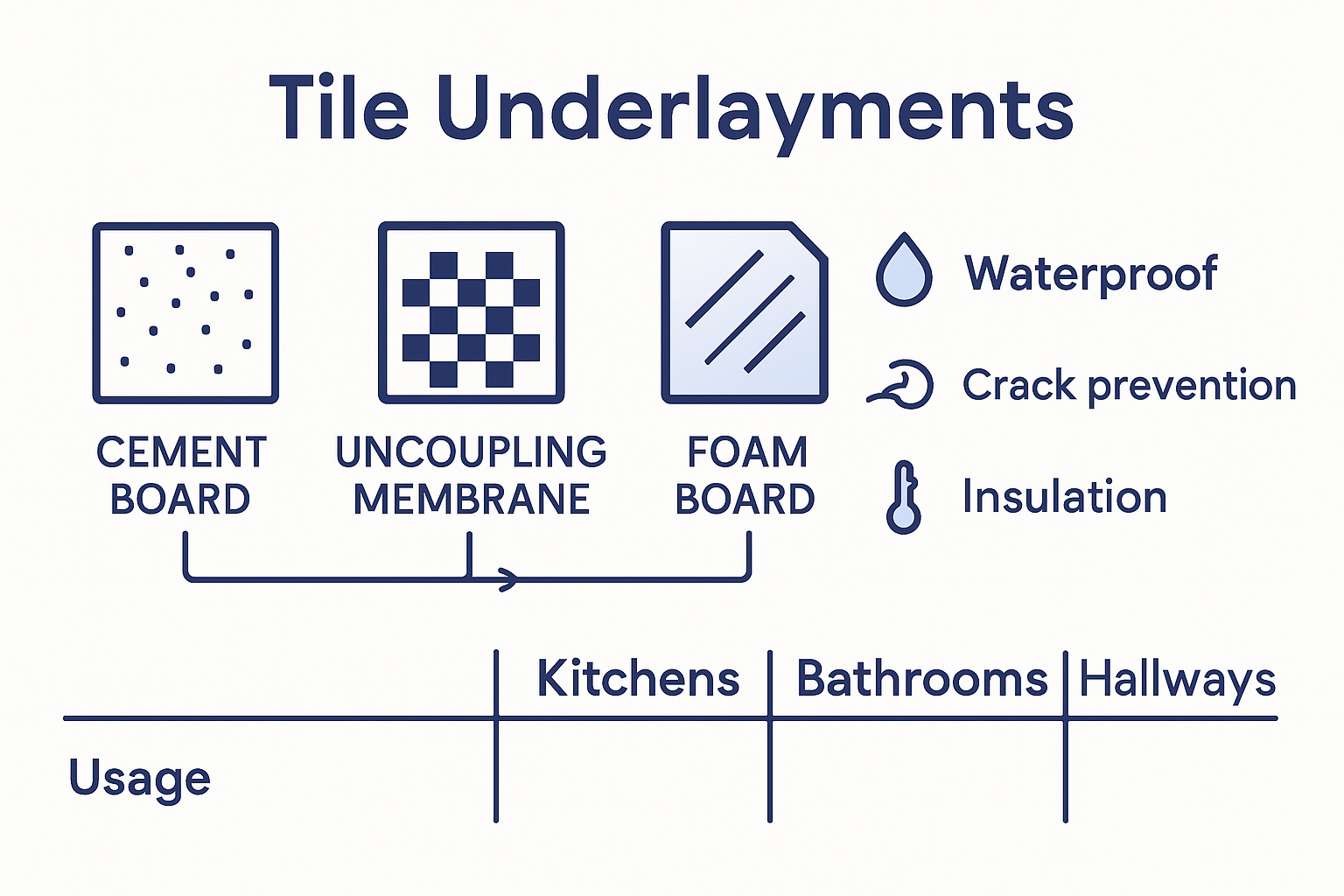
Another essential underlayment type addresses moisture management and waterproofing requirements. Waterproofing Membranes such as Durabase WP provide comprehensive protection for walls and floors in wet environments like bathrooms, kitchens, and utility spaces. The range of underlayment options extends to include specialised solutions for different contexts:
- Drainage membranes for external tiling projects
- Sound-reducing underlayments for multi-storey buildings
- Thermal insulation layers for improved floor comfort
- Crack-prevention membranes for challenging substrate conditions
Professional tile installation guidance emphasises selecting underlayment that matches specific project requirements. UK contractors and homeowners increasingly recognise that investing in high-quality underlayment is not merely an optional extra, but a fundamental strategy for ensuring tile durability, performance, and aesthetic longevity.
Key Features and How Underlayment Works
Tile underlayment operates through sophisticated engineering principles designed to address complex flooring challenges. National Stair Nosings explains that these advanced materials function by creating a critical interface between the substrate and tile surface, effectively mitigating potential structural complications.
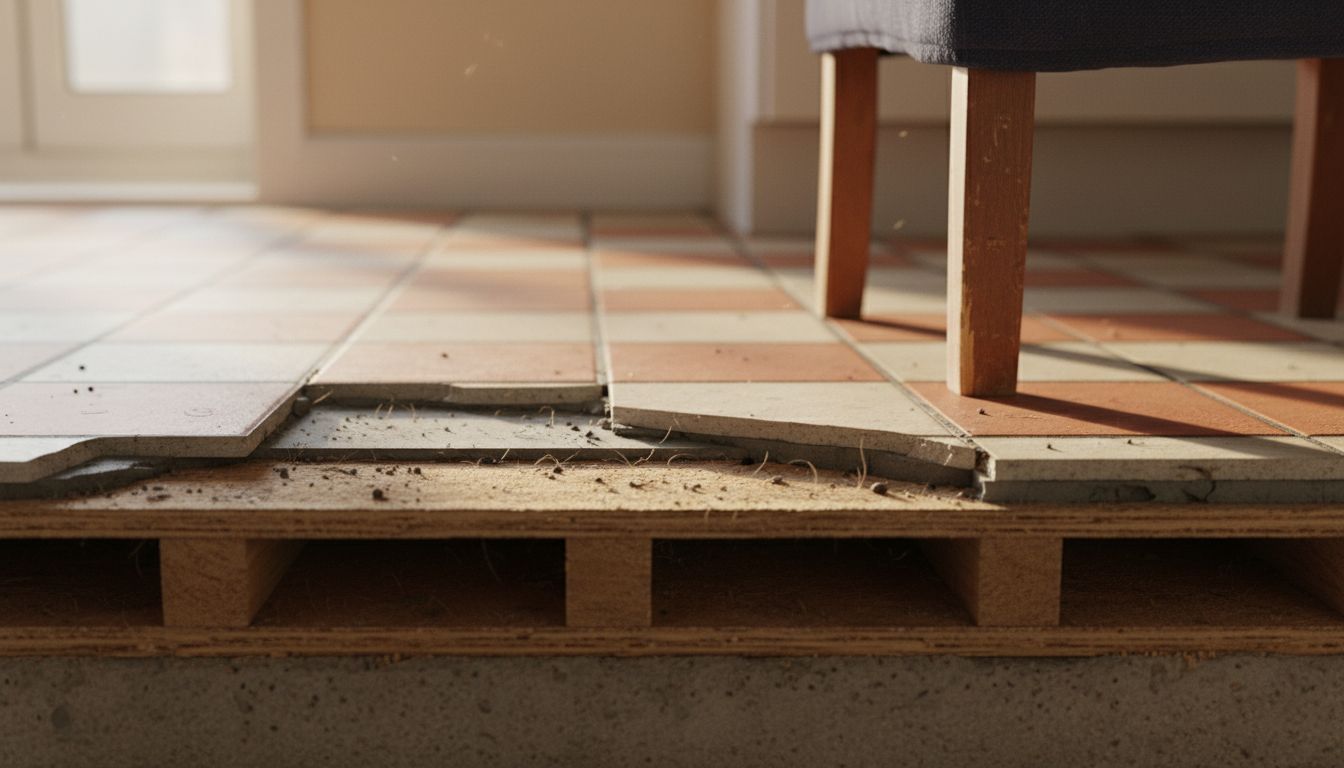
Load Distribution represents a fundamental mechanism of underlayment performance. The membrane acts as a sophisticated shock absorber, spreading mechanical stress evenly across the surface and preventing concentrated pressure points that could cause tile cracking or substrate damage. Modern underlayment technologies incorporate flexible materials that can expand, contract, and move independently, ensuring remarkable resilience against structural movements.
The protective capabilities of underlayment extend far beyond simple load management. Moisture Protection is another crucial feature, with specialised membranes creating impermeable barriers that shield underlying structures from potential water damage. These intelligent materials offer multiple defensive strategies:
- Preventing water penetration into substrate layers
- Blocking moisture migration between different surface levels
- Resisting potential mould and mildew development
- Maintaining substrate structural integrity
Tile installation guidance emphasises that successful underlayment implementation requires understanding these complex interactions. Professional installers recognise that selecting the appropriate membrane is not merely a technical decision, but a critical investment in long-term flooring performance and durability.
Selecting the Right Underlayment for Your Tiles
National Stair Nosings emphasises that selecting the ideal tile underlayment is a nuanced process requiring careful consideration of multiple technical factors. The right membrane can dramatically influence the performance, durability, and longevity of your tiling project, making it crucial to evaluate specific installation requirements with precision.
Professional tile installers typically assess three primary selection criteria when choosing underlayment. First, substrate condition plays a critical role - uneven surfaces or areas prone to movement demand flexible decoupling membranes like Durabase CI++. Second, environmental exposure determines waterproofing needs, with specialised membranes recommended for high-moisture environments such as bathrooms, kitchens, and external spaces. Third, anticipated mechanical stress levels help determine the required load-distribution capabilities of the underlayment.
The selection process involves evaluating several key technical parameters that impact tile installation performance:
- Substrate flatness and structural integrity
- Moisture exposure and potential water penetration risks
- Temperature fluctuation ranges
- Expected mechanical load and traffic intensity
- Specific room or area functional requirements
Tile installation guidance recommends a systematic approach to underlayment selection. Homeowners and contractors should prioritise understanding their specific project context, consulting professional resources, and potentially seeking expert advice to ensure optimal membrane performance. Investing time in careful selection ultimately translates to more robust, long-lasting tiled surfaces that maintain their aesthetic and functional qualities over extended periods.
Installation, Common Mistakes, and Cost Factors
Professional tile underlayment installation demands meticulous attention to detail and technical precision. Tile installation techniques highlight the critical importance of understanding each step of the process to ensure a flawless, long-lasting result.
Substrate Preparation represents the foundational stage of successful underlayment installation. Professional installers emphasise thoroughly cleaning and levelling the surface, removing any debris, dust, or uneven areas that could compromise membrane performance. Critical steps include checking substrate flatness, addressing structural inconsistencies, and ensuring complete moisture control before membrane application. Common installation mistakes frequently emerge from inadequate surface preparation, potentially leading to significant tile failure and costly repairs.
Cost factors for underlayment installation vary considerably depending on several key variables:
- Membrane material quality and complexity
- Total project area square meterage
- Substrate condition and required preparation work
- Additional materials like adhesives and grout
- Professional installation versus DIY approach
- Complexity of specific room or environment requirements
Budget-conscious homeowners should consider that while initial underlayment investment might seem substantial, proper installation prevents exponentially more expensive future repairs. Typical costs range from £5 to £25 per square metre, depending on membrane sophistication and project complexity. Professional consultation can help determine the most cost-effective solution tailored to specific installation requirements, balancing performance expectations with budgetary constraints.
Ensure Lasting Beauty and Performance with the Right Tiles and Underlayment
Understanding the vital role of tile underlayment highlights a key challenge faced by UK homeowners and contractors alike — achieving a durable and flawless tile installation that endures structural shifts and moisture risks. With the risk of cracking, moisture damage, and uneven surfaces, selecting quality tiles that complement your chosen underlayment is essential. At Vividotiles.co.uk, we offer an extensive collection of premium tiles designed to work perfectly with advanced underlayment solutions, ensuring your project’s long-term success.

Discover the perfect balance of style, durability, and affordability with our porcelain, natural stone, and wood effect tiles tailored for a variety of UK project needs. Take advantage of our expert advice and free UK delivery to elevate your tiling project at every stage. Visit Vividotiles.co.uk now to explore our collections and turn your durable tiling vision into reality with confidence.
Frequently Asked Questions
What is tile underlayment?
Tile underlayment is a foundation layer installed beneath tiles to provide structural support, prevent cracking, and enhance overall performance and durability of the tiled surface.
What are the benefits of using tile underlayment?
Tile underlayment offers various benefits, including waterproofing protection, crack prevention, improved sound insulation, thermal regulation, and enhanced durability for tiled surfaces.
How do I choose the right tile underlayment for my project?
Choosing the right tile underlayment involves assessing the substrate condition, environmental exposure (like moisture levels), and expected mechanical stress to ensure optimal performance and durability for your tiling project.
What common mistakes should I avoid during tile underlayment installation?
Common mistakes in tile underlayment installation include inadequate substrate preparation, neglecting moisture control, and failing to choose the appropriate underlayment type for the project’s specific requirements.