
Tile Calibre – Why Precise Sizing Matters
Choosing tiles for your North Yorkshire home can feel overwhelming when every detail counts for both quality and value. Many British homeowners underestimate how even a 1 millimetre difference in tile calibre can affect installation and the overall look. Understanding tile calibre helps you avoid costly mistakes and ensures your space looks as perfect as you imagined. This guide breaks down what calibre means so you can confidently select tiles that truly fit your project and budget.
Table of Contents
- Tile Calibre Defined – What It Means
- Variations In Tile Calibre Explained
- How Calibre Affects Tile Layout And Fit
- Choosing The Right Calibre For Your Project
- Common Mistakes With Tile Calibre And How To Avoid Them
Key Takeaways
| Point | Details |
|---|---|
| Understanding Tile Calibre | Tile calibre refers to the accuracy and consistency of tile dimensions, crucial for ensuring a smooth installation process. |
| Importance of Specifications | Always request and verify calibre specifications from suppliers to avoid alignment and aesthetic issues during installation. |
| Impact of Variations | Variations in tile dimensions can lead to uneven surfaces and alignment challenges; awareness of these tolerances is essential for professional results. |
| Common Installation Mistakes | Avoid mixing tiles from different batches and ensure thorough substrate preparation to prevent lippage and misalignment in your project. |
Tile Calibre Defined – What It Means
Tile calibre represents a precise manufacturing specification defining the dimensional consistency and size accuracy of ceramic tiles. According to international standards established by ISO, calibre determines how closely manufactured tiles match their intended measurements during production.
At its core, tile calibre is a technical measurement describing the systematic variation permitted in tile dimensions. Manufacturers use highly sophisticated production techniques to ensure tiles within a single batch remain within extremely narrow tolerance ranges. These tolerances prevent significant size discrepancies that could complicate installation processes and compromise aesthetic outcomes.
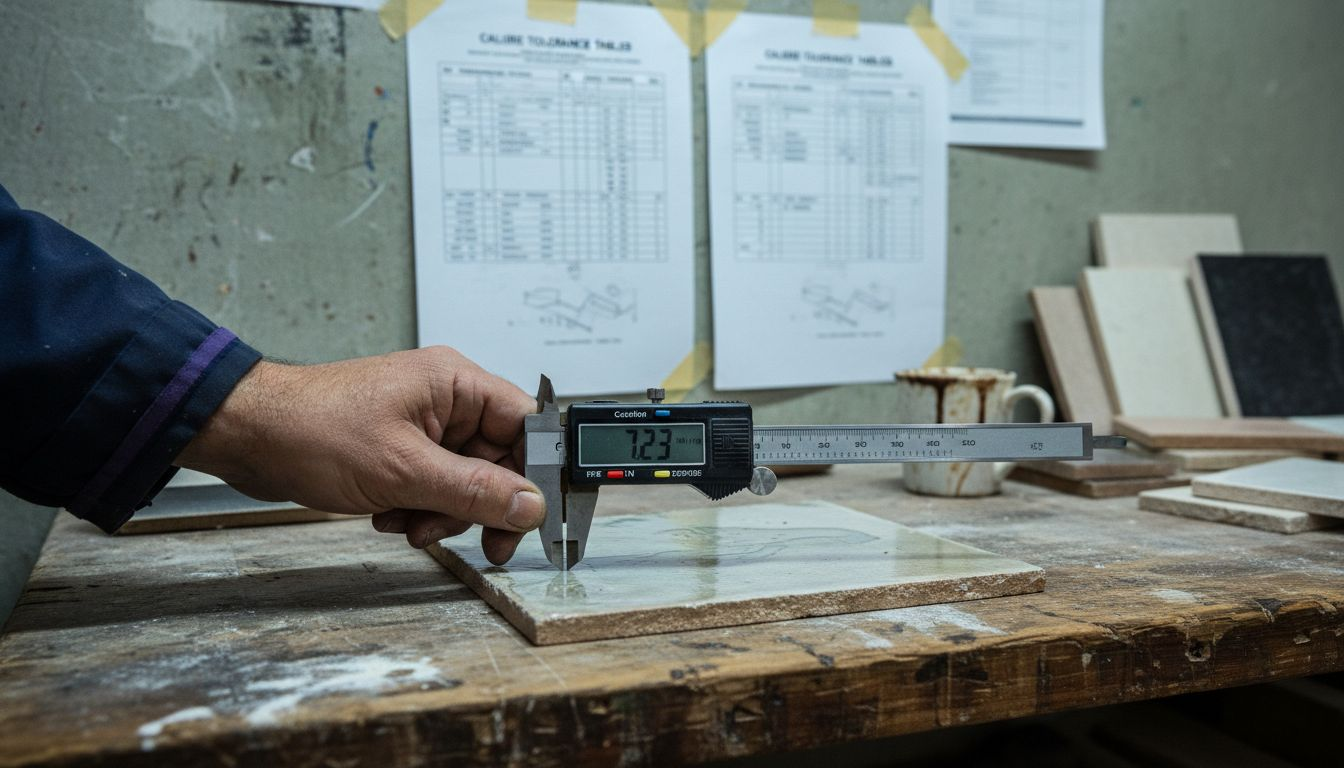
The Tile Council of North America’s collaborative standards outline specific calibre classifications that help professionals understand and select appropriate tiles. These classifications typically range from zero calibre (perfect dimensional consistency) to higher tolerance levels that accommodate slight manufacturing variations. Understanding these nuanced differences enables homeowners and contractors to make informed selections based on precise dimensional requirements for specific project needs.
Pro Tip: Always request calibre specifications directly from your tile supplier and verify dimensional tolerances before purchasing to ensure seamless installation and professional results.
Variations In Tile Calibre Explained
Tile calibre variations represent subtle but significant differences in tile dimensions that occur naturally during manufacturing processes. According to ANSI standards, these variations are systematically classified to ensure consistent quality and installation performance across different tile batches.
Manufacturers typically group tiles into specific calibre categories based on minute dimensional tolerances. These categories range from zero calibre (perfect dimensional consistency) to broader tolerance ranges that accommodate slight manufacturing variations. The classification helps professionals understand potential size discrepancies that might impact installation precision. Some key variation types include:
- Minimal variations (±0.5mm)
- Moderate variations (±1mm)
- Significant variations (up to ±2mm)
International manufacturing standards define these variations precisely, allowing tile professionals to anticipate and manage potential sizing challenges during installation. Different calibre ranges impact everything from grout line width to overall surface uniformity, making it crucial for homeowners and contractors to understand these technical specifications before selecting tiles for a project.
Pro Tip: Always request detailed calibre specifications from your tile supplier and use a measuring tape to verify tile dimensions before large-scale installation to prevent unexpected alignment issues.
The following table summarises classified tile calibre tolerance levels and their typical installation implications:
| Calibre Tolerance | Typical Use Case | Installation Challenge |
|---|---|---|
| ±0.5mm | Residential living areas | Achieving tight grout lines |
| ±1mm | General commercial spaces | Minor alignment adjustments |
| ±2mm | Large-format / exterior areas | Maintaining overall flatness |
| Above ±2mm | Industrial/outdoor applications | Risk of visible misalignment |
How Calibre Affects Tile Layout And Fit
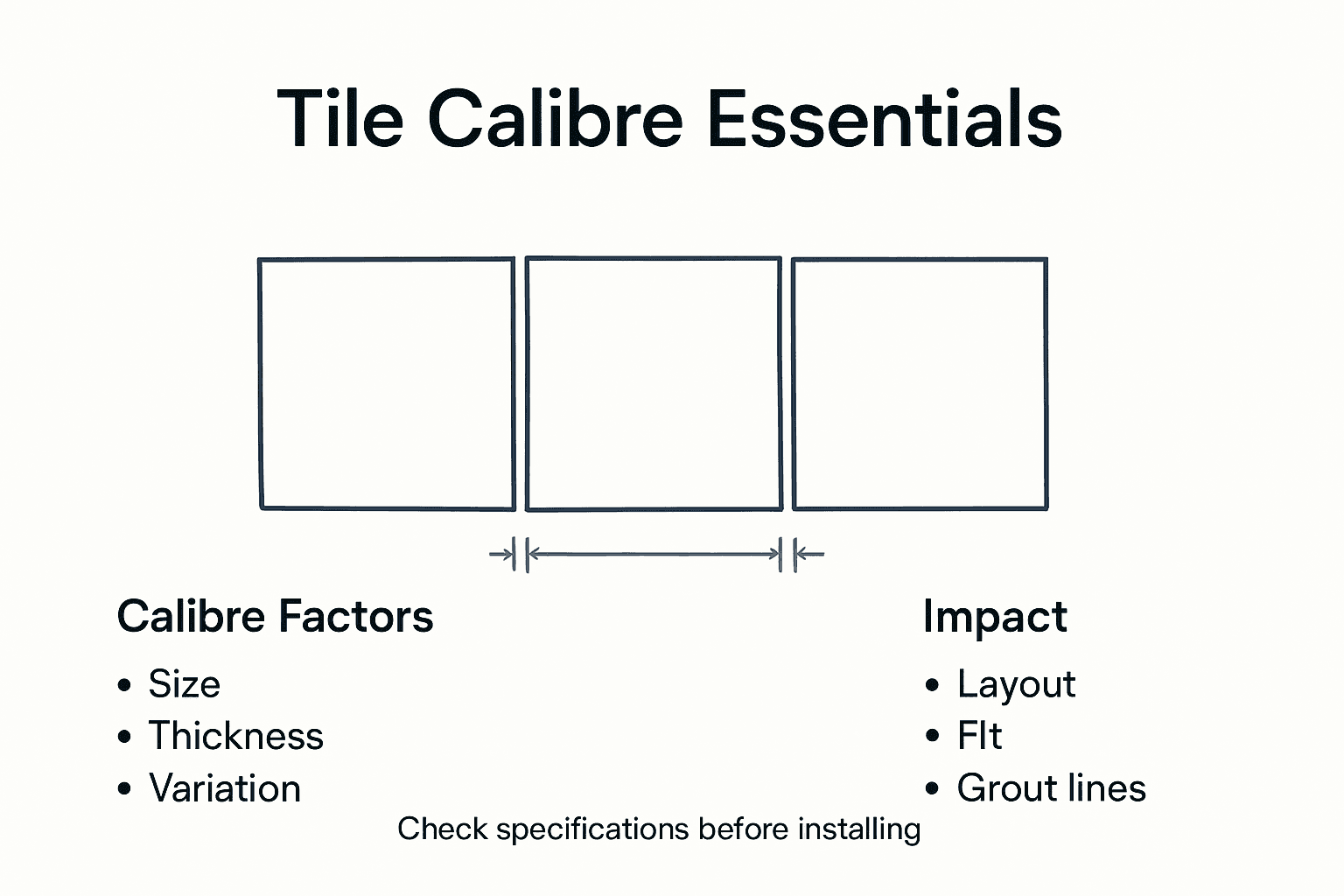
Tile calibre profoundly impacts the overall aesthetic and functional quality of tile installations. Subtle variations in tile dimensions can dramatically transform how tiles align, interlock, and create visual continuity across a surface.
The critical challenge lies in managing dimensional tolerances during installation. Even minor discrepancies in calibre can lead to significant layout complications. Professional tilers must carefully select tiles from the same production batch to minimise potential misalignments. These variations can manifest in several ways:
- Uneven tile surfaces
- Irregular grout line widths
- Visible height differences between adjacent tiles (lippage)
- Compromised overall flatness of the tiled area
ANSI installation standards emphasise the importance of coordinated calibre selection to achieve seamless, professional-looking results. Contractors and homeowners must understand that tiles from different production runs, even within the same product line, can exhibit subtle but meaningful dimensional differences that impact final installation quality.
Pro Tip: Request tile samples from the same production batch and perform a dry layout test before final installation to identify and mitigate potential calibre-related alignment challenges.
Choosing The Right Calibre For Your Project
Selecting the appropriate tile calibre requires careful consideration of multiple project-specific factors, ensuring a seamless and professional installation across different spaces and applications.
The selection process involves evaluating several critical dimensional parameters. Different areas demand distinct calibre requirements based on their unique characteristics:
- Living spaces: Prefer minimal variation tiles (±0.5mm)
- Large commercial areas: Accommodate broader tolerances (up to ±2mm)
- Precision areas like bathrooms: Require extremely tight calibre groupings
- Outdoor installations: Need more robust dimensional flexibility
ANSI standards recommend thoroughly assessing manufacturer specifications and installation environments before finalising tile selection. Professional installers understand that calibre choice impacts not just aesthetic appearance but also long-term performance, structural integrity, and maintenance requirements of the tiled surface.
Pro Tip: Consult with a professional tile installer to conduct a comprehensive site assessment and obtain calibre recommendations tailored specifically to your project’s unique environmental and functional demands.
Common Mistakes With Tile Calibre And How To Avoid Them
Tile calibre mistakes can transform a promising renovation into a costly disaster, potentially compromising both the aesthetic and functional integrity of your tiling project.
The most frequent calibre-related errors homeowners and contractors encounter include:
- Mixing tiles from different production batches
- Ignoring subtle dimensional variations
- Failing to check manufacturer specifications
- Overlooking substrate flatness and preparation
- Disregarding room-specific installation requirements
Addressing lippage risks requires meticulous attention to tile flatness and installation standards, ensuring that adjacent tile edges align perfectly. Professional installers understand that even minor calibre discrepancies can create uneven surfaces, leading to potential tripping hazards and compromised visual appeal.
Pro Tip: Always request tile samples from the same production batch and perform a comprehensive dry layout test to identify and mitigate potential calibre-related alignment challenges before final installation.
This table outlines common calibre-related mistakes and how to prevent them during tile installation:
| Mistake | Risk Involved | Prevention Strategy |
|---|---|---|
| Mixing batches | Uneven grout lines | Use single-batch tiles exclusively |
| Ignoring tolerance specs | Gaps or overlaps | Verify manufacturer data pre-purchase |
| Skipping substrate preparation | Lippage or tile lift | Ensure flat, clean substrate |
| Not dry-laying before install | Missed alignment issues | Perform dry layout with batch samples |
Achieve Perfect Tile Calibre With Vivido Tiles
Struggling with tile dimensional variations that disrupt your installation plans or cause unsightly grout lines and lippage? Understanding tile calibre is crucial for flawless results. At Vivido Tiles, we bring you a carefully curated selection of high-quality tiles to meet your precise calibre needs. Whether you seek minimal variation porcelain or natural stone tiles that deliver consistent sizing, our range ensures you can confidently avoid common pitfalls outlined in the article.

Explore our extensive collection and enjoy expert support to select tiles that match your project’s demands for dimensional accuracy and professional finish. Boost your confidence with tiles that guarantee tighter grout lines and smooth surfaces. Visit Vivido Tiles homepage to browse our premium tiles, discover customer favourites, and take advantage of free UK delivery. For personalised advice on picking the right calibre for your home or commercial project, contact us or visit our new showroom in Harrogate today.
Frequently Asked Questions
What is tile calibre and why is it important?
Tile calibre refers to the manufacturing specifications that define the dimensional consistency and size accuracy of ceramic tiles. It is crucial because it ensures that tiles fit together properly during installation, preventing issues such as uneven grout lines and misalignment.
How do variations in tile calibre impact installation?
Variations in tile calibre can lead to uneven surfaces, irregular grout line widths, and visible height differences between adjacent tiles. Understanding these variations is essential for achieving a professional finish and maintaining surface flatness during installation.
What are the different types of tile calibre variations?
Tile calibre variations are typically classified into categories based on dimensional tolerances, ranging from minimal variations (±0.5mm) to significant variations (up to ±2mm). Each classification impacts specific applications and installation challenges, making it important to choose the right calibre for your project.
How can I ensure I choose the right tile calibre for my project?
To choose the appropriate tile calibre, consider the specific requirements of your project area. Living spaces generally require minimal variation tiles (±0.5mm), while larger commercial or outdoor installations may accommodate broader tolerances. Consulting with a professional installer can help tailor your selection to meet the demands of your project.