
Underfloor Heating and Tiles: Efficient Home Comfort
More than 40 percent of British homeowners now choose underfloor heating when updating kitchens and bathrooms. For those renovating in North Yorkshire, the quest for affordable warmth and lasting beauty leads many to pair efficient heating systems with quality tiles. This guide reveals how combining underfloor heating with the right tiles creates spaces that feel cozy and look stunning, all while helping you make practical decisions that suit your budget and property style.
Table of Contents
- What Is Underfloor Heating and Tiling?
- Types of Underfloor Heating Systems Explained
- Selecting Suitable Tiles for Underfloor Heating
- Installation Tips for Optimum Heating Performance
- Cost, Maintenance and Common Pitfalls
Key Takeaways
| Point | Details |
|---|---|
| Underfloor Heating Systems | There are two main types of underfloor heating: wet and dry systems, each suitable for different construction and heating needs. |
| Tile Compatibility | Ceramic and natural stone tiles are ideal for underfloor heating due to their thermal conductivity and durability. |
| Installation Considerations | Professional installation is crucial for optimising performance; it involves careful floor preparation, insulation, and system commissioning. |
| Cost and Maintenance | Initial costs vary significantly between wet and dry systems; ongoing maintenance is essential to prevent performance issues and ensure efficiency. |
What Is Underfloor Heating and Tiling?
Underfloor heating represents a sophisticated home heating solution that transforms how we experience warmth and comfort in living spaces. Unlike traditional radiators, this innovative system operates by distributing heat evenly across an entire floor surface, creating a gentle, consistent temperature throughout the room.
The core mechanism involves two primary heating systems: wet and dry. Wet systems circulate warm water through specially designed pipes beneath the floor, while dry systems utilise electric heating cables to generate warmth. Tiles are particularly well-suited for these installations due to their excellent thermal conductivity, which allows efficient heat transfer and rapid room warming.
From a technical perspective, underfloor heating requires careful preparation and material selection. Different tile types - ceramic, natural stone, and resin agglomerated materials - have unique thermal properties that influence heating performance. Professional installers must consider factors like floor substrate, insulation quality, and tile thickness to ensure optimal heat distribution and energy efficiency.
Advantages of underfloor heating with tiles include:
- Uniform heat distribution across the entire floor
- Reduced energy consumption compared to traditional heating
- Elimination of cold spots and drafts
- Enhanced aesthetic appeal with no visible radiators
- Compatibility with various tile materials
Pro tip: When planning underfloor heating with tiles, always consult a professional installer who can assess your specific room requirements and recommend the most suitable heating system and tile materials.
Types of Underfloor Heating Systems Explained
Underfloor heating systems offer homeowners two primary technological approaches for delivering consistent, efficient warmth: wet and dry heating configurations. These systems differ fundamentally in their heat distribution mechanisms, providing flexible solutions for various residential heating requirements.
The wet system, also known as a hydronic heating network, involves circulating warm water through a network of pipes embedded beneath the floor surface. These pipes connect directly to a central heating boiler or heat pump, enabling whole-home heating with remarkable energy efficiency. Professional installers typically recommend wet systems for comprehensive home heating, particularly in new construction or extensive renovation projects where complete floor restructuring is feasible.
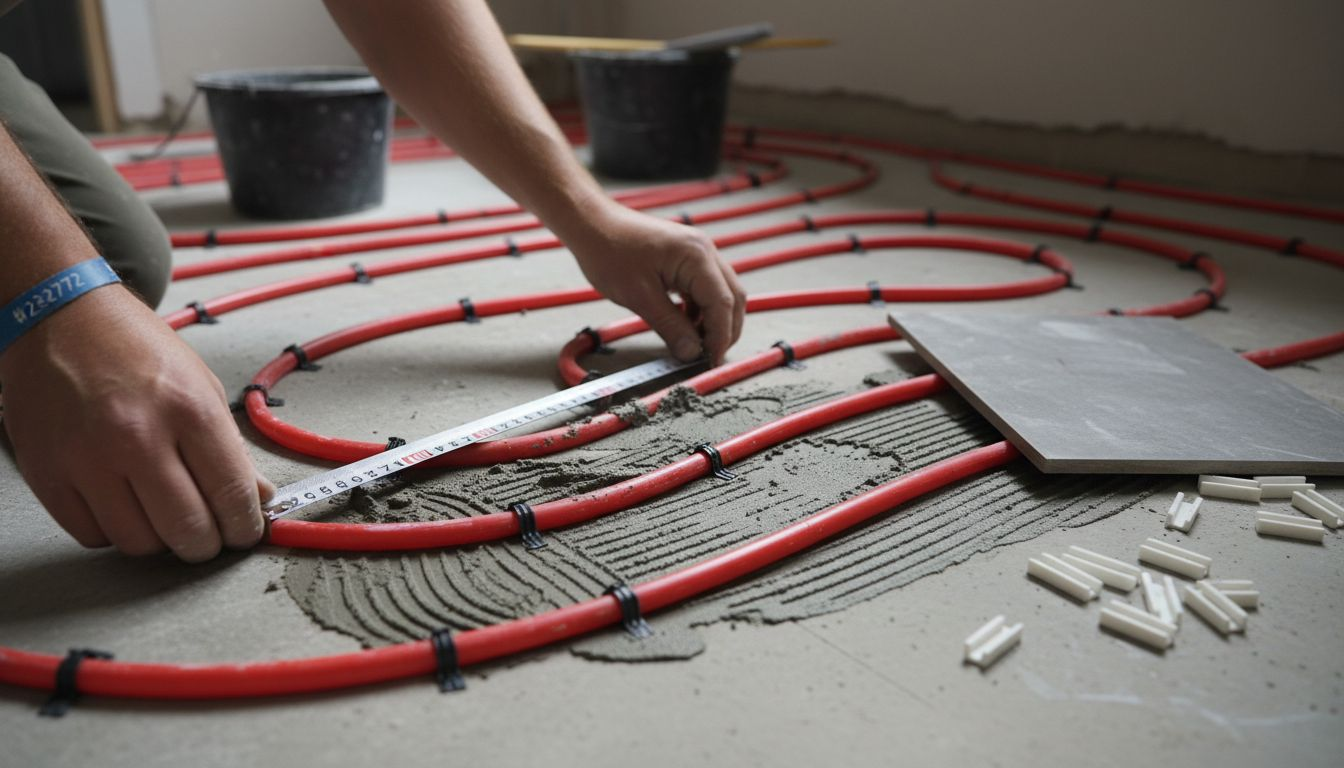
In contrast, dry systems utilise electric heating cables or specialised heating mats installed directly underneath floor surfaces. These electric configurations excel in targeted heating scenarios, offering quick installation and superior flexibility for smaller spaces or retrofit environments. They prove particularly advantageous in bathroom renovations, kitchen extensions, or areas where traditional piped heating infrastructure proves challenging to implement.
Key Characteristics of Underfloor Heating Systems:
Here’s a concise comparison of wet and dry underfloor heating systems:
| System Type | Installation Complexity | Suitable Property Types | Long-Term Energy Efficiency |
|---|---|---|---|
| Wet (Hydronic) | Requires professional fitting; floor restructuring often needed | Best for full home renovations and new builds | High; cost-effective in larger spaces |
| Dry (Electric) | Simple to install; minimal disruption | Ideal for retrofits and small room upgrades | Moderate; less economical for whole homes |
- Wet Systems:
- Connected to central heating boilers
- Suitable for whole-home heating
- More cost-effective for larger areas
- Dry Systems:
- Electric cable or mat-based
- Quick installation
- Ideal for smaller, targeted spaces
- Retrofit-friendly
Pro tip: Consult a heating specialist to conduct a comprehensive home assessment, ensuring you select the most appropriate underfloor heating system tailored to your specific property’s architectural layout and heating requirements.
Selecting Suitable Tiles for Underfloor Heating
Ceramic and natural stone tiles emerge as the premier choices for underfloor heating systems, offering exceptional thermal performance and durability. The Tile Association recommends these materials for their outstanding heat conductivity and compatibility with modern heating technologies, ensuring optimal warmth distribution throughout your living spaces.
Tile selection involves careful consideration of multiple technical factors beyond aesthetic appeal. Thickness plays a crucial role in heat transfer efficiency, with thinner tiles typically providing faster and more responsive heating. Ceramic and porcelain tiles, renowned for their low thermal resistance, allow heat to radiate quickly and evenly across floor surfaces, making them ideal for homeowners seeking rapid and consistent room temperatures.
When evaluating tile materials for underfloor heating, professionals emphasise the importance of thermal expansion properties and adhesive compatibility. Different tile compositions respond uniquely to temperature fluctuations, necessitating specialised installation techniques that accommodate potential structural movements. Homeowners should prioritise materials with proven thermal stability to prevent cracking, warping, or structural compromises during prolonged heating cycles.
Recommended Tile Materials for Underfloor Heating:
- Ceramic tiles
- Porcelain tiles
- Natural stone tiles
- Slate
- Marble
Tile Selection Criteria:
The table below summarises key tile properties for underfloor heating compatibility:
| Tile Type | Thermal Conductivity | Ideal Applications | Longevity with Heating Systems |
|---|---|---|---|
| Ceramic | Excellent | Kitchens, hallways, conservatories | Highly durable |
| Porcelain | Very high | Bathrooms, living rooms | Outstanding, resists warping |
| Natural Stone | High but variable | Luxury spaces, feature floors | Long-lasting, needs expert fitting |
- Low thermal resistance
- High heat conductivity
- Structural stability
- Thickness under 12mm preferred
- Compatible with flexible adhesives
Pro tip: Consult a professional tile installer specialising in underfloor heating to assess your specific room requirements and select the most appropriate tile material for optimal thermal performance and longevity.
Installation Tips for Optimum Heating Performance
Underfloor heating installation requires meticulous planning and precision to achieve maximum efficiency and comfort. Professional guidance from industry experts emphasises the critical importance of systematic installation techniques, ensuring optimal heat distribution and long-term system performance.
The foundation of successful underfloor heating lies in comprehensive floor preparation and strategic insulation placement. Installers must carefully assess the existing floor structure, implementing robust insulation layers that minimise heat loss and maximise thermal efficiency. Proper pipe spacing becomes crucial, with professional recommendations typically suggesting consistent intervals to guarantee uniform heat distribution across the entire floor surface.
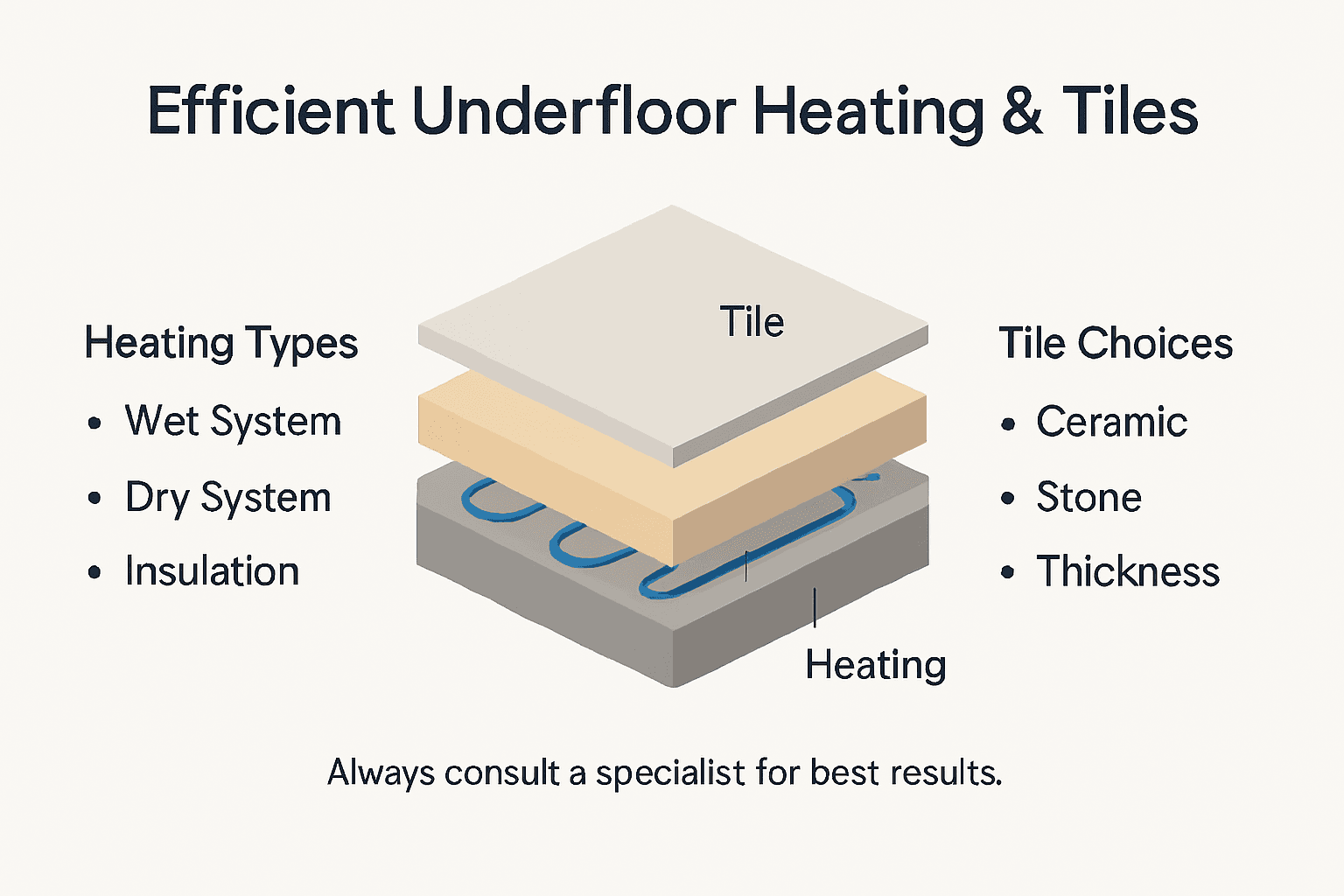
Technical considerations extend beyond basic installation, encompassing precise system commissioning and ongoing maintenance protocols. Heating professionals recommend thorough pressure testing of pipe networks, accurate temperature calibration, and comprehensive system checks to prevent potential performance issues. Homeowners should prioritise professional installation to navigate the complex technical requirements, ensuring their underfloor heating system operates at peak efficiency throughout its operational lifespan.
Critical Installation Considerations:
- Comprehensive floor substrate assessment
- High-quality thermal insulation
- Precise pipe network layout
- Professional pressure testing
- Systematic temperature calibration
Potential Installation Challenges:
- Uneven heat distribution
- Inadequate insulation
- Incorrect pipe spacing
- Poor system commissioning
- Thermal performance limitations
Pro tip: Engage a certified underfloor heating specialist who can conduct a comprehensive property assessment and design a bespoke installation plan tailored to your specific architectural requirements and heating objectives.
Cost, Maintenance and Common Pitfalls
Underfloor heating investments represent a significant home improvement decision requiring comprehensive financial and technical evaluation. Energy experts highlight substantial variations in installation and operational costs depending on system type and property characteristics, making thorough research essential for homeowners considering this heating solution.
Initial installation expenses differ dramatically between wet and electric systems. Wet systems typically demand higher upfront investment but offer more economical long-term running costs, with professional installations ranging from £2,000 to £8,000 depending on property size and complexity. Electric systems present lower initial costs but higher operational expenses, making them more suitable for smaller spaces or targeted heating applications.
Maintenance requirements and potential pitfalls demand proactive management to ensure optimal system performance. Common challenges include inadequate floor insulation, incorrect pipe spacing, and inappropriate floor coverings that impede heat transfer. Professional periodic system checks can prevent efficiency losses, with recommended annual inspections focusing on pressure testing, temperature calibration, and identifying potential wear or damage in pipe networks.
Cost Breakdown by System Type:
- Wet Systems:
- Higher installation costs
- Lower long-term operational expenses
- Best for whole-home heating
- Electric Systems:
- Lower initial investment
- Higher running costs
- Ideal for smaller areas
Key Maintenance Considerations:
- Annual professional system inspection
- Pressure testing
- Temperature calibration
- Insulation assessment
- Control system verification
Pro tip: Request detailed cost projections from multiple heating specialists, comparing both installation expenses and projected annual running costs to make an informed decision tailored to your specific property requirements.
Upgrade Your Home Comfort with the Perfect Tiles for Underfloor Heating
Achieving efficient warmth through underfloor heating requires more than just installation expertise. Selecting the right tiles with excellent thermal conductivity and durability is crucial to unlocking the full potential of your heating system. Whether you aim to renovate a cosy bathroom or transform your entire floor space, choosing ceramic, porcelain, or natural stone tiles designed for underfloor heating ensures uniform heat distribution and long-lasting performance.

Discover a wide selection of premium tiles at Vivido Tiles carefully curated to complement underfloor heating systems. Our affordable range includes marble effect, porcelain, and natural stone options ideal for maximising heat efficiency and aesthetic appeal. Visit our new tile showroom in Harrogate or explore online to find the perfect tile that meets your technical and design needs. Start your project today for a warmer, more comfortable home with reliable, stylish flooring solutions at Vivido Tiles.
Frequently Asked Questions
What is underfloor heating?
Underfloor heating is a modern heating solution that distributes heat across an entire floor surface, providing consistent warmth throughout a space. It can be classified into two main types: wet (hydronic) systems that circulate warm water through pipes, and dry (electric) systems that use heating cables.
What types of tiles are suitable for underfloor heating?
Ceramic and natural stone tiles are the best choices for underfloor heating due to their excellent thermal conductivity and durability. Other recommended materials include porcelain, slate, and marble, as they efficiently transfer heat and perform well under heating conditions.
How do I choose the right tile thickness for underfloor heating?
Thinner tiles (preferably under 12mm) typically provide faster heat transfer and responsiveness in underfloor heating systems. It’s essential to consider the tile’s thermal resistance and compatibility with the heating system for optimal performance.
What are some common installation challenges with underfloor heating?
Common challenges include uneven heat distribution, inadequate insulation, incorrect pipe spacing, and poor system commissioning. Proper planning and professional installation can help avoid these issues and ensure efficient operation.
Recommended
- Tile Underfloor Heating: Comfort and Efficiency Unveiled – Vivido Tiles
- What Is Tile Underlayment? Benefits for UK Projects – Vivido Tiles
- Role of Tiles in Damp Control – Practical Benefits for Homes – Vivido Tiles
- Cost-Effective Tile Upgrades: Transform Your Space Affordably – Vivido Tiles
- The Role of Art in the Home: The Essential Guide – Curiocanvas