
Tiles in Sustainable Landscaping – Lasting Impact Outdoors
More british homeowners are turning to sustainable landscaping, and with good reason. Eco-friendly designs can cut outdoor maintenance costs while protecting the stunning North Yorkshire countryside. Choosing premium tiles made from natural, recyclable materials offers substantial environmental benefits and lets you create inviting garden spaces without compromise. With ceramic tiles lasting as long as 60 years, this approach combines lasting style with real ecological responsibility for your home.
Table of Contents
- Defining Tiles In Sustainable Landscaping
- Eco-Friendly Tile Materials And Variations
- Environmental And Practical Benefits Of Tiling
- Installation, Maintenance, And Sustainability
- Comparing Tiles With Alternative Surfaces
Key Takeaways
| Point | Details |
|---|---|
| Sustainable Design Focus | Sustainable landscaping emphasises reducing ecological impact through material selection and lifecycle considerations. |
| Benefits of Ceramic Tiles | Ceramic tiles are durable, recyclable, and contribute to energy efficiency, making them a strong choice for outdoor spaces. |
| Installation and Maintenance Practices | Sustainable landscaping requires careful planning during installation and adopting eco-friendly maintenance methods to preserve tile integrity. |
| Comparison with Alternative Surfaces | Ceramic tiles outperform materials like wood and synthetic composites in durability, maintenance, and overall environmental impact. |
Defining tiles in sustainable landscaping
Sustainable landscaping represents a progressive approach to outdoor design that integrates environmental responsibility with aesthetic functionality. When considering outdoor tiles for landscaping, the focus shifts from mere decoration to creating spaces that minimise ecological impact while delivering long-lasting performance. Sustainable tile development increasingly emphasises lifecycle considerations and environmental performance across material selection and manufacturing processes.
Ceramic tiles emerge as a particularly compelling solution in sustainable landscaping. The Tile Association highlights that these materials are inherently eco-friendly, being crafted from natural raw materials and possessing exceptional durability. Their composition allows for significant environmental benefits: ceramic tiles can be recycled, provide excellent thermal mass, and contribute to energy efficiency in outdoor environments. The modern tile industry is strategically committed to reducing carbon emissions, with ambitious goals of achieving Net Zero by 2050.
Key characteristics of sustainable landscaping tiles include:
- Locally sourced raw materials
- High durability reducing replacement frequency
- Recyclable at end of product lifecycle
- Low maintenance requirements
- Minimal environmental degradation
- Potential for thermal regulation in outdoor spaces
Pro tip: When selecting tiles for sustainable landscaping, prioritise locally manufactured products with transparent environmental certifications to minimise transportation emissions and support regional manufacturing practices.
Eco-friendly tile materials and variations
Sustainable tile materials represent a critical evolution in landscape design, with innovative approaches transforming traditional manufacturing processes. Research on ceramic tile development reveals sophisticated strategies for producing eco-friendly variations across wall tiles, floor tiles, and porcelain stoneware, each designed to minimise environmental impact while maintaining exceptional performance standards.

The ceramic tile spectrum now encompasses remarkable sustainable variations. Pioneering research from the University of Liverpool’s Environmental Ceramics Laboratory demonstrates how ceramic materials can be engineered to reduce embodied carbon and enhance energy efficiency. These innovative tile components are crafted using non-toxic, durable, and recyclable materials that significantly lower the ecological footprint of landscaping projects.
Diverse eco-friendly tile material variations include:
Below is a summary comparing popular sustainable tile materials for outdoor landscaping:
| Material Type | Key Sustainability Benefit | Typical Outdoor Use |
|---|---|---|
| Recycled ceramics | Reduces landfill waste | Patios, walkways, garden paths |
| Low-carbon stoneware | Lowers embodied carbon | Terraces, driveways |
| Locally sourced stone | Minimises transport emissions | Feature walls, seating areas |
| Clay with low firing | Lowers energy consumption | Pathways, landscape edging |
| Renewable energy tiles | Cuts production carbon footprint | Courtyards, pool surrounds |
- Recycled ceramic compositions
- Low-carbon porcelain stoneware
- Locally sourced natural stone tiles
- Clay-based tiles with reduced firing temperatures
- Tiles manufactured using renewable energy
- Modular designs enabling easier replacement
Pro tip: When selecting eco-friendly tiles, request detailed environmental product declarations that transparently outline the material’s carbon footprint, manufacturing process, and potential for future recycling.
Environmental and practical benefits of tiling
Sustainable landscaping demands materials that offer exceptional performance while minimising environmental impact. Ceramic tiles demonstrate remarkable eco-credentials with an impressive service life spanning 60 years, making them a compelling choice for environmentally conscious homeowners seeking long-term outdoor solutions. Their inherent durability translates into reduced replacement frequency, thereby significantly lowering the ecological footprint associated with landscape maintenance.
The practical advantages of ceramic tiles extend far beyond their environmental attributes. These versatile materials provide outstanding resilience against challenging outdoor conditions, offering unparalleled protection through their fireproof and waterproof characteristics. Natural raw material compositions ensure tiles remain stable under fluctuating temperatures, delivering consistent performance throughout seasonal changes while maintaining structural integrity.
Key environmental and practical benefits include:
- Exceptional durability (up to 60-year service life)
- Low maintenance requirements
- Natural recyclability
- Superior thermal mass properties
- Resistance to fire and water damage
- Minimal environmental degradation
- Adaptability to diverse landscape designs
Pro tip: When selecting outdoor tiles, prioritise materials with documented environmental certifications and verify their expected lifecycle performance to maximise both sustainability and long-term value.
Installation, maintenance, and sustainability
Sustainable tile landscaping transcends material selection, encompassing critical considerations during installation and ongoing maintenance practices. The circular economy approach demands meticulous planning, beginning with minimising waste through strategic cutting techniques and intelligent material usage. Innovative installation methods now prioritise reducing environmental impact by carefully managing tile offcuts, selecting eco-friendly adhesives, and designing with long-term lifecycle performance in mind.
Maintenance represents another crucial dimension of sustainable landscaping tiles. Professional installers increasingly recommend cleaning protocols that avoid harsh chemical treatments, instead focusing on gentle, environmentally conscious techniques that preserve tile integrity. These approaches not only extend the functional lifespan of outdoor tiles but also prevent potential ecological contamination, ensuring that landscaping investments remain both aesthetically pleasing and environmentally responsible.
Key sustainable installation and maintenance strategies include:
- Precise tile cutting to minimise waste
- Using low-VOC, environmentally friendly adhesives
- Implementing gentle, chemical-free cleaning methods
- Selecting installation techniques that maximise tile longevity
- Planning for potential future tile replacement
- Considering thermal and environmental performance
- Designing with modularity and future recycling in mind
Pro tip: Consult professional tilers who specialise in sustainable landscaping to develop a comprehensive installation and maintenance strategy that aligns with your specific environmental and aesthetic goals.
Comparing tiles with alternative surfaces
Landscaping surface selection represents a critical decision for environmentally conscious homeowners, with ceramic tiles emerging as a superior option when comprehensively comparing sustainability metrics. Unlike wood decking or synthetic composite materials, ceramic tiles demonstrate remarkable long-term environmental performance through exceptional durability, minimal maintenance requirements, and inherent recyclability. The extended lifecycle of ceramic tiles significantly outweighs the potentially lower initial environmental costs associated with alternative landscaping surfaces.
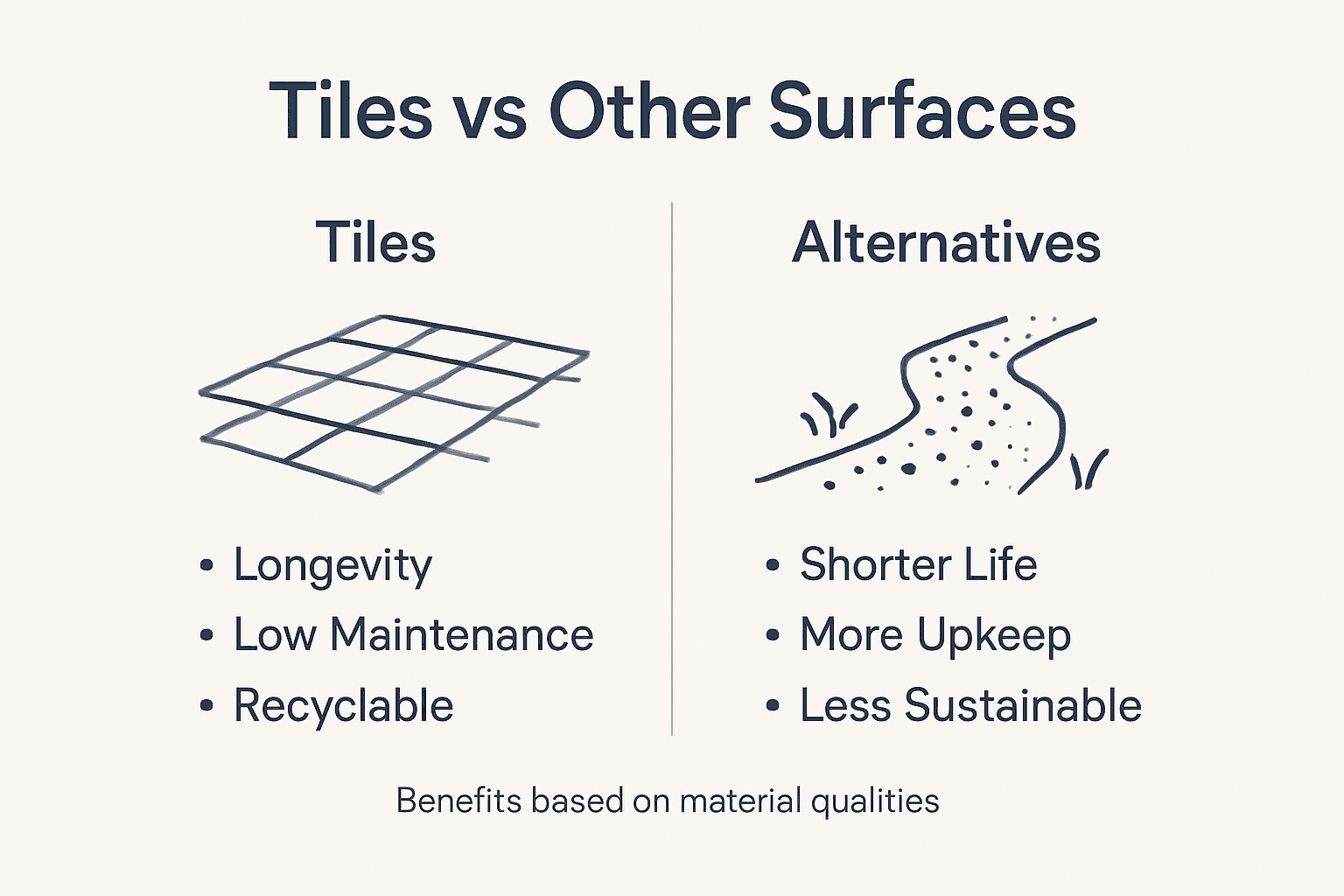
Material performance becomes particularly nuanced when evaluating outdoor surface options. Ceramic tiles provide unparalleled resistance to weather-related deterioration, maintaining structural integrity and aesthetic appeal across decades of exposure. Their superior thermal mass properties enable more effective temperature regulation, contributing to enhanced energy efficiency in surrounding landscape environments. Synthetic alternatives often degrade more rapidly, necessitating frequent replacement and generating substantial waste.
Comparative landscape surface characteristics include:
Here’s a side-by-side comparison of outdoor tile surfaces and common alternatives:
| Surface Type | Typical Lifespan | Environmental Impact | Maintenance Requirements |
|---|---|---|---|
| Ceramic tiles | Up to 60 years | Low, highly recyclable | Minimal |
| Wood decking | 10–20 years | Requires chemical treatments | Moderate to high |
| Synthetic composite | 15–25 years | Difficult to recycle | Moderate |
| Natural stone | 30–50 years | Variable, locally sourced best | Low to moderate |
- Longevity and lifecycle duration
- Environmental impact during production
- Maintenance frequency and complexity
- Recyclability potential
- Weather resistance capabilities
- Thermal performance
- Aesthetic degradation rates
- Carbon footprint considerations
Pro tip: Request comprehensive environmental product declarations from manufacturers to conduct a thorough comparative assessment of different landscaping surface materials before making your final selection.
Elevate Your Outdoor Space with Sustainable Tiles from Vivido Tiles
Sustainable landscaping demands more than just aesthetic appeal. It requires durable, eco-friendly tiles that reduce environmental impact while withstanding outdoor conditions for decades. At Vivido Tiles, we understand the challenge of selecting premium outdoor tiles that combine durability, thermal regulation, and low maintenance, all while supporting your environmental goals.

Explore our wide range of outdoor tiles and discover options crafted from natural raw materials with excellent service life. Whether you are seeking recycled ceramics, low-carbon porcelain stoneware, or locally sourced styles, Vivido Tiles offers affordable solutions backed by expert advice and free UK delivery. Visit our online showroom or the new Harrogate Tile showroom to see sustainable landscaping tiles that will last a lifetime. Act now to enhance your garden or patio with tiles that create a lasting impact outdoors.
Frequently Asked Questions
What are the benefits of using ceramic tiles in sustainable landscaping?
Ceramic tiles offer numerous benefits, including exceptional durability with a lifespan of up to 60 years, low maintenance requirements, natural recyclability, and superior thermal mass properties that contribute to energy efficiency in outdoor spaces.
How can I ensure the tiles I choose are environmentally friendly?
When selecting tiles for sustainable landscaping, prioritise those made from locally sourced materials with transparent environmental certifications. Request detailed environmental product declarations to understand the material’s carbon footprint, manufacturing process, and recyclability potential.
What installation practices support sustainability when using tiles?
Sustainable installation practices include precise tile cutting to minimise waste, using low-VOC and environmentally friendly adhesives, and implementing gentle, chemical-free cleaning methods during maintenance. These methods help preserve tile integrity and extend their functional lifespan.
How do ceramic tiles compare to alternative landscaping surfaces?
Ceramic tiles generally have a longer lifespan (up to 60 years) compared to wood decking (10–20 years) and synthetic composites (15–25 years). They also have a lower environmental impact, require minimal maintenance, and are highly recyclable, making them a more sustainable choice overall.
Recommended
- Transforming Outdoor Spaces -Role of Tiles in Landscaping – Vivido – Vivido Tiles
- Role of Tiles in Landscaping – Transforming Outdoor Spaces – Vivido Tiles
- Outdoor tiles Oasis: Transform Your Space with Stunning porcelain – Vivido Tiles
- Outdoor Tiles : Understanding Their Benefits and Uses - Vivido – Vivido Tiles
- Garden – STYLE
- Iluminat Eco cu Lampa Solara pentru Perete, Exterior, Interior și Gradină 2025 ‣ www.iQualityStore.ro
- Nachhaltig Mit Batterien Umgehen: Der Komplettguide - accu.blog