
Role of Tiles in Fire Resistance – Enhancing Property Safety
Every year, fires in British homes cause millions in property damage and untold stress for families across North Yorkshire. With stricter building regulations and raised safety expectations, choosing the right fire-resistant tiles is more critical than ever for residential renovations. Understanding not just the official standards but also the real performance of different tile materials helps homeowners and interior designers achieve both safer and more beautiful living spaces without compromise.
Table of Contents
- Fire Resistance In Tiles: Definitions And Myths
- Types Of Fire-Resistant Tiles And Categories
- How Tiles Work In Fire Protection Systems
- UK Fire Safety Standards For Tiles
- Legal Obligations For Homeowners And Designers
- Costs, Installation Risks, And Common Mistakes
Key Takeaways
| Point | Details |
|---|---|
| Understanding Fire Resistance | Distinguish between fire resistance (structural integrity) and reaction to fire (combustibility) when selecting tiles for safety. |
| Tile Types and Fire Safety | Ceramic, porcelain, and natural stone tiles offer varying degrees of fire resistance; choose non-combustible options for enhanced safety. |
| Regulatory Compliance | Ensure selected tiles comply with UK fire safety standards and retain documentation to demonstrate compliance to avoid legal liabilities. |
| Installation Best Practices | Professional installation is crucial to maintain fire resistance; common mistakes can compromise safety and lead to significant financial risks. |
Fire resistance in tiles: definitions and myths
Understanding fire safety involves more than recognising a material’s basic properties. Fire resistance and reaction to fire represent two distinct yet crucial concepts that determine how tiles and building materials perform during potential fire scenarios. Fire resistance characteristics are specifically measured by how long a material can maintain structural integrity when exposed to fire, which is critically important for property safety.
In tile selection, homeowners must distinguish between these technical definitions. Reaction to fire evaluates a material’s initial combustibility and potential contribution to fire spread, while fire resistance determines how effectively a material can contain fire and prevent heat transmission. The European standard EN 13501-1 classifies materials into seven Euro classes, providing a comprehensive framework for assessing fire-related performance across different tile types and building applications.
Common myths surrounding tile fire safety often mislead consumers. Some believe that all ceramic or porcelain tiles automatically provide complete fire protection, which is not entirely accurate. While many tiles have inherent fire-resistant properties, the surrounding installation materials and overall construction significantly impact total fire safety. Factors like adhesive quality, grout composition, and underlying substrate can dramatically influence a tile assembly’s actual fire performance.
Pro tip: When selecting tiles for areas requiring high fire safety standards, always request detailed technical documentation demonstrating both reaction to fire and fire resistance ratings from your manufacturer.
Types of fire-resistant tiles and categories
Ceramic and clay tiles stand out as primary fire-resistant materials in the UK building industry, offering robust protection against potential fire hazards. Concrete and clay roof tiles are specifically designed to meet stringent British Standards for fire resistance, ensuring they do not contribute to fire spread and provide critical external barriers in construction.
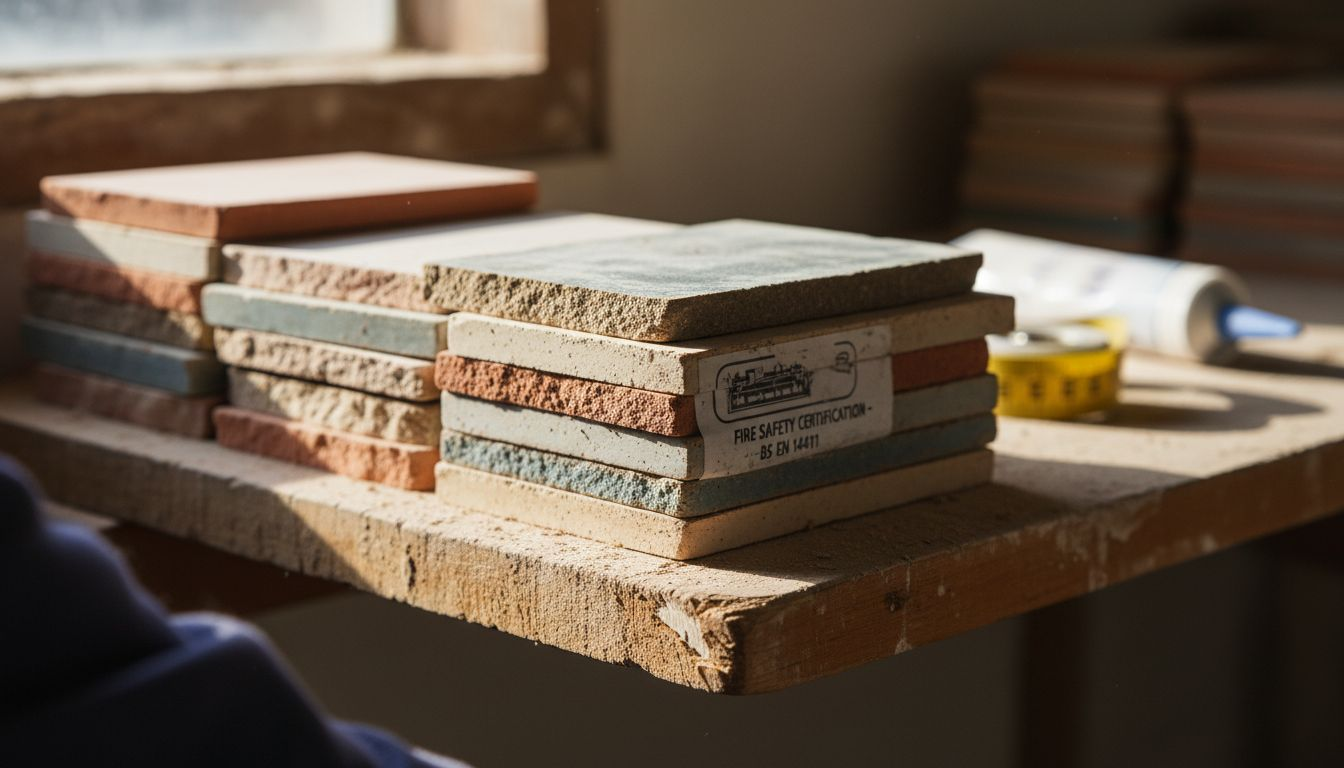
The primary fire-resistant tile categories can be broadly classified into several key types. Ceramic tiles, porcelain tiles, and natural stone tiles each offer different levels of fire protection. Non-combustible tiles such as ceramic and clay are particularly valued for their inherent resistance to flames. These materials are comprehensively tested and classified under fire resistance standards like Class A, which indicates the highest level of fire protection.
Material composition plays a crucial role in determining a tile’s fire-resistant properties. Concrete tiles, for instance, contain cement and aggregate materials that naturally resist high temperatures. Clay tiles undergo high-temperature kiln firing, which further enhances their fire-resistant characteristics. Additionally, specialised ceramic tiles can be treated with fire-retardant glazes that improve their thermal resistance and provide an extra layer of protection against potential fire incidents.
Here’s a comparison of tile materials and their roles in fire protection:
| Tile Material | Key Fire-Resistant Property | Common Application |
|---|---|---|
| Ceramic | High resistance to flames | Kitchen walls, wet areas |
| Porcelain | Low heat conduction | Floors, commercial spaces |
| Clay | Non-combustible, kiln-fired | Roofing, façades |
| Concrete | Natural heat resistance | Roof tiles, exteriors |
| Natural Stone | Slow heat transmission | Feature walls, fireplaces |
Pro tip: When selecting fire-resistant tiles, always request independent fire classification certification and verify the specific fire resistance ratings for your intended installation area.
How tiles work in fire protection systems
Fire protection systems leverage the unique properties of tiles to create strategic barriers against flame and heat propagation. Suspended ceiling tiles play a critical role in fire safety, designed to resist flames and delay fire spread within building structures, providing crucial time for occupants to evacuate and emergency services to respond.
Tile backing materials are fundamental components in comprehensive fire protection strategies. Specialised backing boards like the NoMorePly 12mm Tile Backing Board demonstrate how non-combustible substrates can enhance overall fire resistance. These innovative materials are engineered to prevent fire spread, reduce smoke generation, and maintain structural integrity under extreme temperatures, effectively creating additional protective layers in vulnerable areas such as kitchens and utility spaces.
The mechanism of fire protection in tiles involves multiple defensive strategies. Ceramic and porcelain tiles inherently resist heat transmission, acting as thermal barriers that slow down fire progression. Their dense, non-porous composition prevents rapid flame absorption and helps compartmentalise fire risks. Specialised glazes and treatments can further enhance these protective qualities, creating multilayered defence systems that comply with stringent UK fire safety regulations.
Pro tip: Always consult professional fire safety experts to understand the specific fire resistance ratings and installation requirements for tiles in different areas of your property.
UK fire safety standards for tiles
Fire safety standards in the United Kingdom establish rigorous classification systems for building materials, with specific criteria determining how tiles and construction components must perform during potential fire incidents. The Euroclass system (EN 13501-1) provides a comprehensive framework that categorises materials based on their reaction to fire, ranging from A1 (completely non-combustible) to F (highly combustible), ensuring systematic evaluation of fire resistance properties.
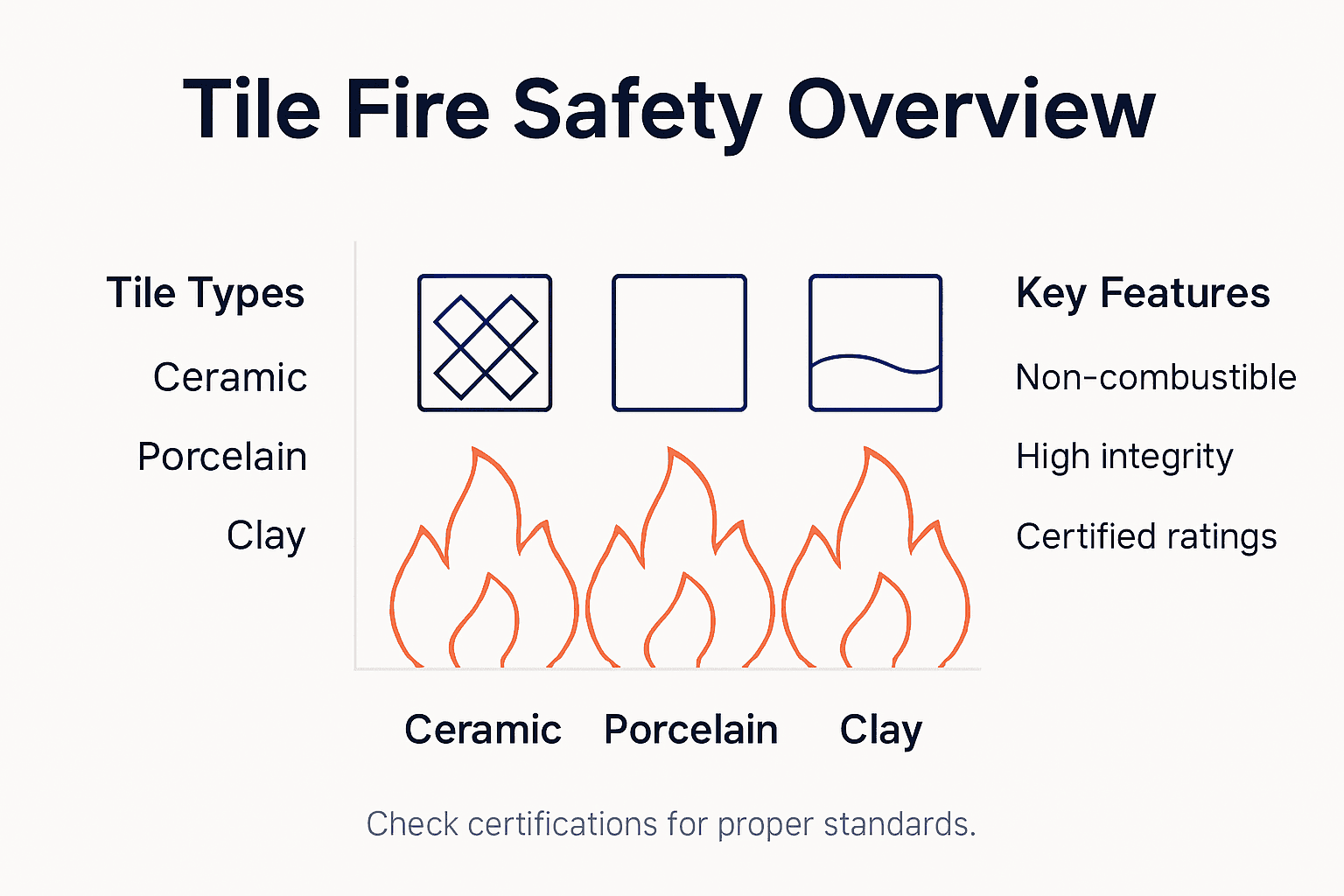
Technical assessments play a crucial role in verifying tile fire safety standards. The Fire Protection Association outlines detailed procedures for evaluating fire resistance performance when direct testing becomes challenging. These assessments involve extrapolating performance data from comparable tested systems, allowing manufacturers and builders to demonstrate compliance with British building regulations, particularly Approved Document B, which governs fire safety requirements.
The testing methodology for tile fire resistance involves multiple sophisticated techniques, including the Single Burning Item (SBI) test, which assesses how materials contribute to fire growth and smoke production. Manufacturers must provide comprehensive documentation showing their tiles meet specific performance criteria, including flame spread rate, smoke generation, and potential droplet formation during fire exposure. These standards ensure that tiles used in residential, commercial, and public spaces provide reliable fire protection and minimise potential risks.
This table summarises main UK fire safety classifications relevant to tile selection:
| Euroclass Rating | Description | Typical Tile Suitability |
|---|---|---|
| A1 | Fully non-combustible | Ceramic, porcelain, stone |
| A2 | Virtually non-combustible | Specialist treated materials |
| B–C | Very limited combustibility | Some treated construction tiles |
| D–F | Increased fire contribution | Not suitable for safety areas |
Pro tip: Request detailed fire classification certificates from tile manufacturers and verify their compliance with current UK building regulations before installation.
Legal obligations for homeowners and designers
Legal obligations surrounding fire safety in building materials constitute a critical responsibility for homeowners and design professionals, requiring comprehensive understanding of UK building regulations and European classification standards. The complexity of these regulations demands meticulous attention to detail when selecting construction materials, particularly tiles that play a significant role in fire protection and risk mitigation.
Designers and homeowners must demonstrate that selected materials meet specific fire resistance and reaction to fire classifications, with potential legal liabilities arising from non-compliance. The Building Regulations Approved Document B provides explicit guidance on fire safety requirements, mandating that all construction materials contribute to preventing fire spread and protecting occupant safety. Failure to adhere to these standards can result in significant legal consequences, including potential prosecution, invalidated property insurance, and mandatory retrofitting.
Professional documentation becomes crucial in demonstrating regulatory compliance. Homeowners and designers must retain comprehensive certification from manufacturers showing fire classification, testing methodologies, and performance characteristics. This documentation serves as essential evidence of due diligence, protecting against potential legal challenges and ensuring that tile installations meet the stringent safety standards established by UK regulatory bodies.
Pro tip: Maintain a comprehensive file of fire safety certification documents for all tile installations, including manufacturer test reports and compliance statements.
Costs, installation risks, and common mistakes
Fire-resistant tile installations involve complex financial considerations that extend far beyond initial material costs, requiring homeowners and designers to understand the nuanced economic landscape of safety-focused construction. Upfront investment in high-quality fire-resistant tiles may seem substantial, but the long-term protection and potential insurance benefits can significantly offset initial expenses, making them a strategic financial decision for property safety.
Common installation mistakes can dramatically compromise fire resistance and negate potential safety benefits. Improper substrate preparation, using incompatible adhesives, or failing to maintain precise grout and fitting specifications can create hidden vulnerabilities in fire protection systems. Professional installation becomes crucial, as even minor errors can create potential pathways for fire spread, reducing the effectiveness of carefully selected fire-resistant materials and potentially invalidating manufacturer warranties.
Economic risks extend beyond direct installation costs, encompassing potential legal and insurance implications. Incorrectly installed fire-resistant tiles might not meet building regulation standards, leading to potential prosecution, mandatory remedial work, and increased insurance premiums. Designers and homeowners must prioritise comprehensive understanding of material specifications, installation techniques, and regulatory compliance to mitigate these substantial financial risks associated with fire safety infrastructure.
Pro tip: Always obtain multiple professional quotes and request detailed installation methodology documentation to ensure comprehensive understanding of fire-resistant tile installation requirements.
Enhance Your Property Safety with Fire-Resistant Tiles from Vivido Tiles
Understanding the role of tiles in fire resistance is essential for any homeowner or designer who wants to protect their property from fire hazards effectively. The article highlights the critical importance of choosing tiles with proven fire resistance and reaction to fire classifications, recognising that even high-quality tiles require correct installation and materials to ensure full safety compliance. At Vivido Tiles, we provide a wide selection of premium ceramic, porcelain, and natural stone tiles that not only meet stringent fire safety standards but also combine style and durability to enhance your living or working spaces.

Explore our extensive range today at Vivido Tiles homepage and discover affordable options that deliver both aesthetic appeal and certified fire protection. With our industry expertise and exclusive pricing, now is the perfect time to upgrade to fire-resistant tiles that align with UK building regulations. Visit our New Tile Showroom in Harrogate to see our collections in person and get professional advice on selecting the right tiles for your safety-critical areas. Protect your investment and loved ones by choosing tiles that truly enhance property safety with Vivido Tiles.
Frequently Asked Questions
What is the difference between fire resistance and reaction to fire in tiles?
Fire resistance refers to how long a material can maintain its structural integrity when exposed to fire, while reaction to fire evaluates a material’s initial combustibility and potential to contribute to fire spread.
How do I know if the tiles I choose are fire-resistant?
Requesting detailed technical documentation from your tile manufacturer is essential. Look for certification and ratings under the Euroclass system to ensure the tiles meet specific fire resistance criteria.
What types of tiles offer the best fire resistance?
Ceramic, porcelain, clay, and natural stone tiles are known for their fire-resistant properties. Non-combustible tiles like ceramic and clay are especially valued for their resistance to flames and heat transmission.
What installation factors can affect the fire safety of tiles?
The quality of adhesive, grout composition, and underlying substrate can significantly influence a tile assembly’s fire performance. Proper installation is crucial to ensure maximum fire resistance and compliance with safety standards.