
Tile Underfloor Heating: Comfort and Efficiency Unveiled
More than 40 percent of British homeowners now seek ways to improve energy efficiency with modern heating solutions. Upgrading to tile underfloor heating has become a popular choice in North Yorkshire homes, thanks to its ability to deliver consistent warmth and free up valuable space compared to old-fashioned radiators. This article helps you discover how tile underfloor heating systems work, which options best suit different tiles, and what to consider for safe, efficient installation.
Table of Contents
- Defining Tile Underfloor Heating In UK Homes
- Types Of Tile-Compatible Underfloor Heating Systems
- Choosing The Best Tiles For Underfloor Heating
- Installation Requirements And Key Safety Factors
- Costs, Risks And Alternatives Compared
Key Takeaways
| Point | Details |
|---|---|
| Tile Underfloor Heating Efficiency | This system can improve overall thermal efficiency by up to 25% compared to traditional heating methods, reducing cold spots and enhancing comfort. |
| Installation Considerations | Always consult a professional to ensure proper substrate preparation and system selection for optimal performance. |
| Cost Differences | Electric systems have lower initial installation costs but higher running costs; water-based systems are more economical long-term, especially with renewable energy sources. |
| Tile Selection | Opt for ceramic or porcelain tiles with good thermal conductivity to maximise the efficiency of underfloor heating systems. |
Defining tile underfloor heating in UK homes
Tile underfloor heating represents an innovative heating solution transforming residential comfort across British homes. This sophisticated system involves installing electric or water-based heating elements directly beneath tiled flooring, creating a radiant warmth that efficiently distributes heat throughout living spaces. Comprehensive heating guides highlight how these systems provide consistent temperature regulation without the visual intrusion of traditional radiators.
The fundamental mechanism of tile underfloor heating relies on heat transfer principles that differ significantly from conventional heating methods. Unlike radiators that warm air through convection, underfloor systems generate radiant heat that rises uniformly from the floor surface. This approach ensures more even temperature distribution, reducing cold spots and creating a more comfortable living environment. Underfloor heating specialists note that this method can improve overall thermal efficiency by up to 25% compared to standard heating systems.
In UK homes, two primary underfloor heating technologies dominate the market: electric mat systems and water-based hydronic systems. Electric systems use thin heating mats installed directly beneath tiles, ideal for smaller spaces like bathrooms or kitchens. Water-based systems circulate warm water through embedded pipes, offering more extensive coverage and better long-term energy efficiency. Both technologies can be integrated with various tile materials, including porcelain, ceramic, and natural stone, making them versatile solutions for modern British interiors.
Pro Tip for Installation: Always consult a professional heating engineer to assess your specific home layout and tile specifications before installing underfloor heating, as proper substrate preparation and system selection are crucial for optimal performance.
Types of tile-compatible underfloor heating systems
Underfloor heating systems for tiled surfaces in UK homes typically fall into two primary categories: electric and water-based (hydronic) systems. Comprehensive UK homeowner guides reveal distinct characteristics and applications for each technology, helping homeowners make informed decisions about their heating infrastructure.
Electric underfloor heating systems are particularly versatile, consisting of thin heating mats or cables installed directly beneath tile surfaces. These systems excel in smaller spaces like bathrooms, kitchens, and conservatories where quick heat-up times and precise temperature control are paramount. They require minimal floor height adjustment and can be easily retrofitted into existing spaces, making them an attractive option for renovation projects. Installation typically involves laying heating elements onto a prepared subfloor, then embedding them beneath ceramic, porcelain, or natural stone tiles.
In contrast, water-based underfloor heating systems circulate warm water through a network of embedded pipes connected to a central heating manifold. These systems are more commonly integrated into new construction or extensive renovation projects, offering superior energy efficiency for larger areas like open-plan living spaces, extensions, and whole-house installations. Water-based systems distribute heat more evenly and can be connected to various heat sources, including traditional boilers, heat pumps, and renewable energy systems, providing greater long-term flexibility for environmentally conscious homeowners.
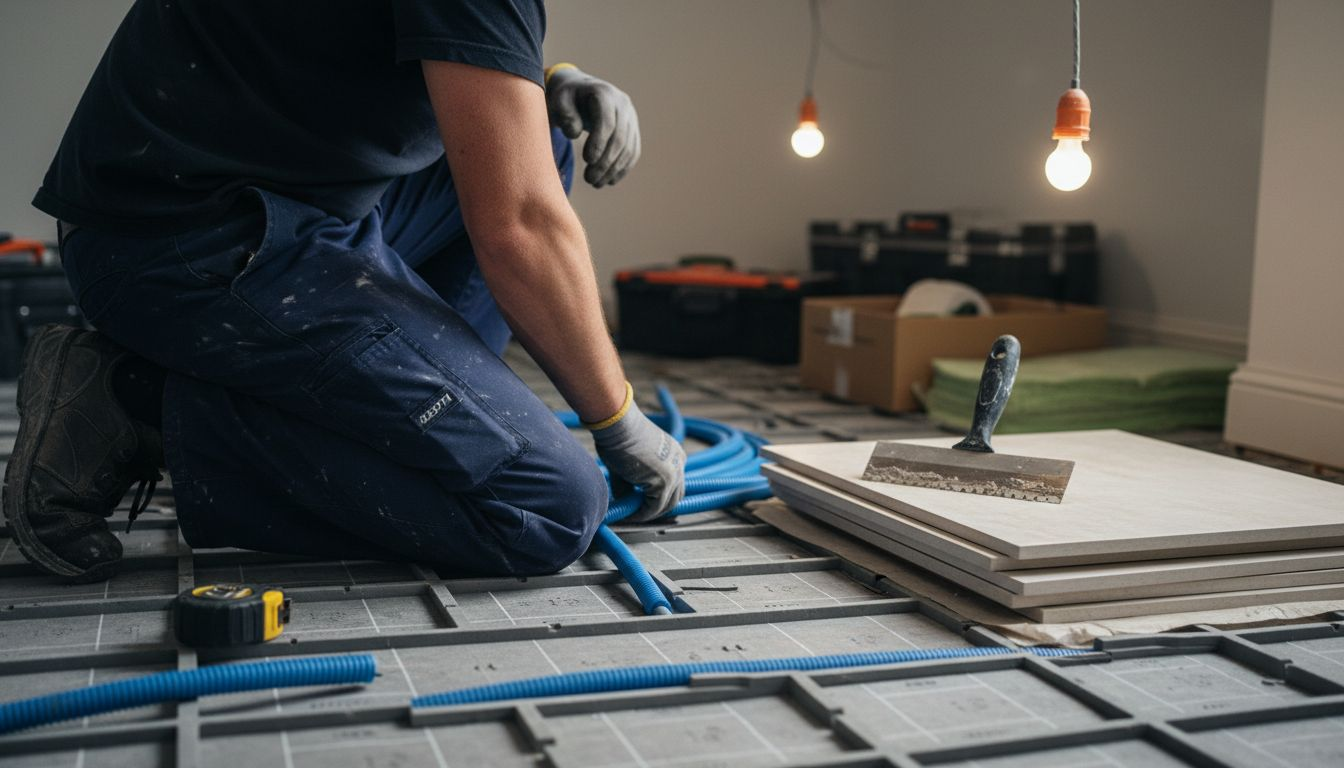
Pro Tip for System Selection: Carefully assess your specific room dimensions, existing floor construction, and heating requirements before choosing between electric and water-based underfloor heating, as each system offers unique advantages depending on your home’s characteristics and renovation scope.
Choosing the best tiles for underfloor heating
Selecting the optimal tiles for underfloor heating systems demands careful consideration of material properties, thermal conductivity, and overall performance. Best tiles for UK bathrooms highlight the critical factors homeowners must evaluate when matching tile materials with radiant heating technologies.
Ceramic and porcelain tiles emerge as the most suitable options for underfloor heating systems. These materials possess exceptional thermal conductivity, allowing heat to transfer efficiently and evenly across the floor surface. Their dense composition enables rapid heat absorption and distribution, creating a consistent warmth that radiates throughout the space. Natural stone tiles like slate, granite, and marble also perform admirably, offering similar heat transfer characteristics while providing unique aesthetic variations that can complement diverse interior design schemes.
Beyond material composition, tile thickness and density play crucial roles in underfloor heating performance. Thinner tiles—typically ranging between 8 to 12 millimetres—demonstrate superior heat transfer capabilities compared to thicker alternatives. Homeowners should prioritise tiles with high thermal mass and minimal insulating properties to maximise the efficiency of their underfloor heating system. Additionally, tiles with smooth, uniform surfaces ensure more consistent heat distribution and reduce potential temperature variations across the floor.
Below is a quick reference for tile types suited to underfloor heating:
| Tile Material | Thermal Conductivity | Typical Thickness | Aesthetic Diversity |
|---|---|---|---|
| Ceramic | Excellent | 8–12 mm | Wide range of styles |
| Porcelain | Excellent | 8–12 mm | Modern and durable finishes |
| Natural Stone | Very good | 10–20 mm | Unique patterns and colours |
Pro Tip for Tile Selection: Always consult with a professional heating specialist and tile expert to confirm the specific thermal compatibility of your chosen tile material, as individual product characteristics can significantly impact overall system performance.
Installation requirements and key safety factors
Underfloor heating installations in UK properties must adhere to stringent regulatory frameworks designed to ensure safety, efficiency, and long-term performance. Comprehensive regulatory guidelines outline critical compliance requirements spanning Building Regulations Part L for energy efficiency and Part O for overheating prevention.
Subfloor preparation represents a fundamental safety and performance consideration for underfloor heating systems. The substrate must be structurally sound, clean, and level, with appropriate insulation layers to prevent heat loss and maximise thermal efficiency. British Standards mandate specific requirements for screed depths, typically recommending 65-75 millimetres for water-based systems and minimal depths for electric mat installations. Installers must ensure precise levelling and incorporate movement joints to accommodate thermal expansion, preventing potential tile cracking or system stress.
Electrical safety demands meticulous attention during installation, particularly for electric underfloor heating systems. Professional certification becomes crucial, with all electrical connections requiring verification by qualified electricians registered with competent person schemes. The installation must include robust earthing systems, residual current device (RCD) protection, and comprehensive temperature controls to prevent overheating. Thermal imaging and resistance testing provide additional layers of safety verification, ensuring the heating elements are correctly positioned and functioning without potential electrical hazards.
Pro Tip for Safe Installation: Always engage a certified professional with specific underfloor heating experience, ensuring comprehensive system design, regulatory compliance, and thorough post-installation testing to guarantee optimal performance and safety.
Costs, risks and alternatives compared
Comprehensive cost analyses for UK homeowners reveal significant variations between electric and water-based underfloor heating systems, with initial investment and long-term operational expenses being critical decision factors. Electric systems typically require lower upfront installation costs, ranging from £60 to £120 per square metre, while water-based systems demand more substantial initial investments between £100 and £250 per square metre, including pipework and manifold installations.
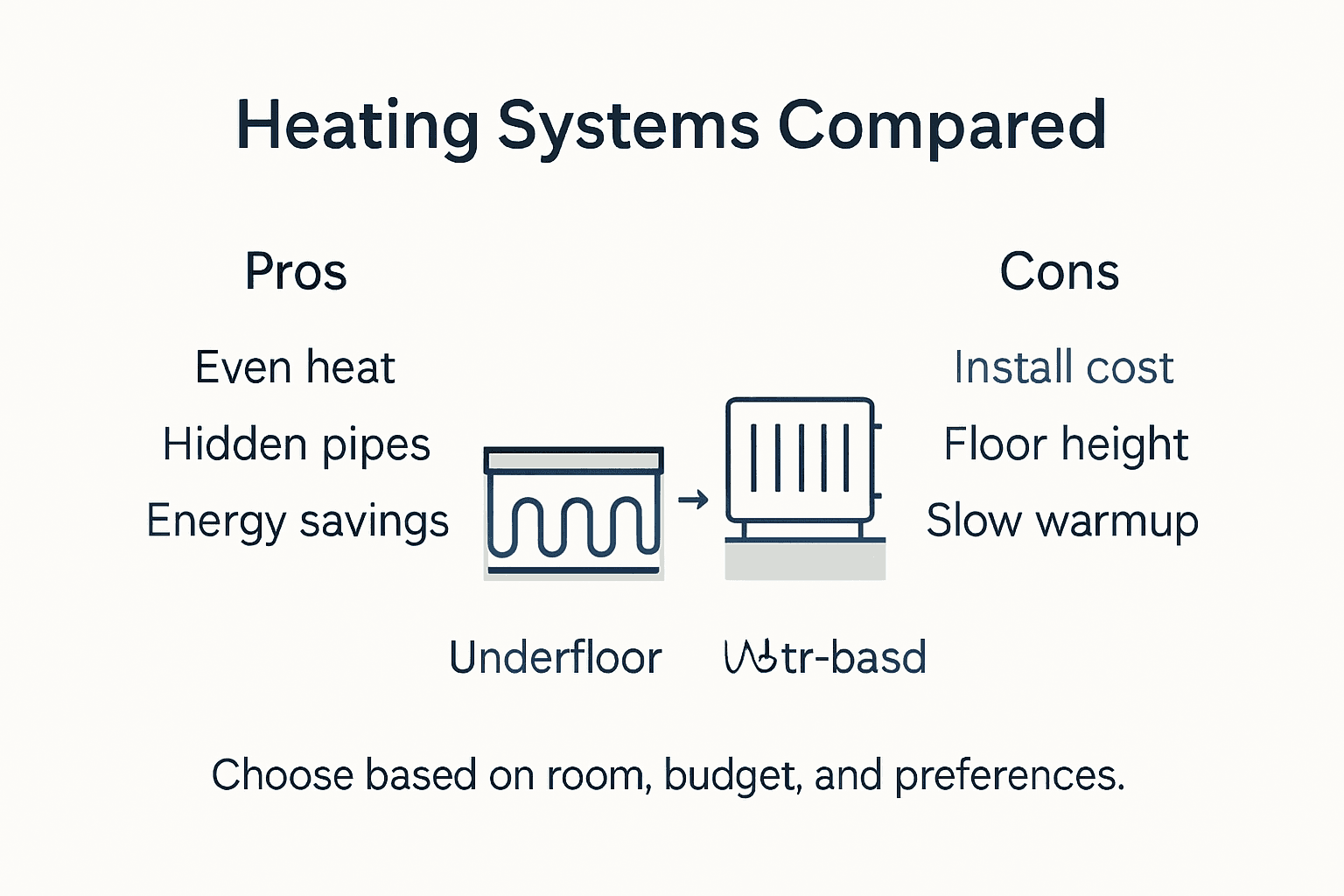
Running costs present a nuanced comparison between different underfloor heating technologies. Electric systems generally demonstrate higher operational expenses, with average annual running costs around £15-£25 per square metre, depending on usage patterns and electricity rates. Water-based systems, particularly when connected to heat pumps or renewable energy sources, offer more economical long-term performance, potentially reducing heating expenses by up to 25% compared to traditional radiator systems. The efficiency gains become more pronounced in well-insulated properties with consistent heating requirements.
Here’s a summary of key differences between electric and water-based underfloor heating:
| Aspect | Electric Systems | Water-Based Systems |
|---|---|---|
| Installation Cost | Lower (£60–£120/m²) | Higher (£100–£250/m²) |
| Running Cost | Higher annually | Lower, especially with heat pump |
| Best Use Case | Small rooms or retrofits | Large areas or new builds |
| Heat-Up Time | Quick | Slower but sustained warmth |
| Floor Height Impact | Minimal | Requires greater build-up |
| Energy Integration | Uses mains electricity | Compatible with renewables |
Alternative heating solutions present interesting comparisons for UK homeowners. Traditional radiator systems remain less expensive to install but provide less uniform heat distribution and occupy valuable wall space. Infrared panel heaters offer a modern alternative with lower installation costs, but they lack the comprehensive warmth and energy efficiency of underfloor heating. Heat pumps represent an emerging technology that can integrate seamlessly with underfloor systems, offering superior energy efficiency and potential long-term cost savings, albeit with higher initial investment requirements.
Pro Tip for Cost Management: Conduct a detailed energy assessment of your specific property, considering insulation levels, room configurations, and long-term heating needs before committing to an underfloor heating system, as tailored solutions can significantly impact overall financial performance.
Elevate Your Home’s Warmth with the Perfect Tiles for Underfloor Heating
Creating a cosy and energy-efficient home means selecting tiles that work seamlessly with your underfloor heating system. The article highlights key challenges such as choosing tiles with excellent thermal conductivity and ideal thickness to maximise heat distribution. At Vivido Tiles, we understand how crucial it is to balance comfort and efficiency without compromising style or budget.

Explore our extensive collection of premium ceramic, porcelain, and natural stone tiles specially suited for underfloor heating at Vivido Tiles. Whether you are renovating a bathroom or designing an open-plan living space, discover affordable, high-quality options that allow radiant heat to flow beautifully throughout your home. Visit our New Tile showroom in Harrogate to see collections firsthand or shop online today and transform your floors into a warm, inviting haven with lifestyle-enhancing tiles.
Frequently Asked Questions
What are the benefits of tile underfloor heating?
Tile underfloor heating offers consistent temperature regulation, improved thermal efficiency, and a comfortable living environment by providing radiant heat that can reduce cold spots compared to traditional heating methods.
How do I choose the best tiles for underfloor heating?
Select tiles made from materials with high thermal conductivity, such as ceramic or porcelain, ideally between 8 to 12 millimetres thick, to ensure efficient heat transfer and distribution across the floor.
What are the differences between electric and water-based underfloor heating systems?
Electric systems use heating mats or cables for quick heat distribution, ideal for smaller spaces, while water-based systems circulate warm water through pipes for larger areas, offering better long-term energy efficiency.
What installation requirements should I consider for underfloor heating?
Proper subfloor preparation, compliance with safety regulations, and the engagement of certified professionals are crucial for ensuring effective installation and long-term performance of underfloor heating systems.