
Why Back-Butter Tile preparation Boost Durability and Finish
Why Back-Buttering Tiles Boost Durability and Finish when doing tile preparation
Most British homeowners are surprised to learn that skipping proper tile preparation can reduce installation lifespan by more than half. With British properties often featuring older, uneven walls and floors, mastering tile adhesive coverage becomes crucial for achieving lasting results. This guide explores how back-buttering boosts durability and prevents the hidden problems that undermine tiled surfaces, offering practical insights especially important for demanding British conditions.
Table of Contents
- What Back-Buttering Tiles Involves
- Key Benefits For Tile Adhesion And Longevity
- When And Where Back-Buttering Is Essential
- Common Mistakes To Avoid When Back-Buttering
- Comparing Back-Buttering With Direct Fixing Methods
Key Takeaways
| Point | Details |
|---|---|
| Importance of Back-Buttering | Back-buttering ensures enhanced tile adhesion on uneven surfaces, significantly improving installation quality. |
| Benefits of Adhesive Coverage | This technique eliminates air pockets and addresses tile imperfections, leading to a more stable and durable finish. |
| Common Mistakes to Avoid | Tilers must maintain consistent adhesive application to prevent weak bonding, ensuring long-lasting installations. |
| Comparing Installation Methods | Back-buttering offers distinct advantages over direct fixing, particularly for complex tile surfaces and larger installations. |
What Back-Buttering Tiles Involves
Back-buttering is a specialised tiling technique used to ensure exceptional adhesion and a flawless finish when installing floor tiles on uneven or challenging surfaces. When a substrate is not completely flat or the tile’s back has deep indentations or raised profiles, this method becomes critical for achieving a professional finish.
The process involves applying tile adhesive directly to the back of individual tiles using a notched trowel, creating a complete and uniform coverage layer. This technique differs from traditional tiling methods where adhesive is spread only on the surface being tiled. By carefully applying a consistent layer of adhesive to the tile’s reverse side, installers can:
- Compensate for surface irregularities
- Improve overall tile adhesion
- Minimise potential air pockets
- Create a more stable and durable installation
Professional tilers typically use specific techniques when back-buttering, ensuring even coverage and optimal adhesive thickness. This method requires precision, with the installer carefully spreading adhesive across the entire tile back using deliberate, controlled movements. The goal is to create a complete, uniform layer that will bond seamlessly with both the tile and the underlying surface, providing enhanced structural integrity and longevity to the tiling installation.
Key Benefits for Tile Adhesion and Longevity
Back-buttering offers significant advantages for tile installation, particularly in enhancing bond strength and addressing tile surface complexities. By carefully applying adhesive to the tile’s reverse side, installers can dramatically improve the overall performance and durability of tiled surfaces.
One of the primary benefits is the technique’s ability to address inherent tile imperfections. When tiles have embossed patterns, slight warpage, or uneven surfaces, back-buttering becomes crucial. The method promotes increased mortar bond strength by keying the adhesive into the tile’s surface, effectively filling potential voids and creating a more stable installation.
The longevity benefits of back-buttering extend far beyond initial installation. By ensuring complete adhesive coverage and eliminating potential air pockets, this technique helps prevent future issues such as:
- Tile lifting or detachment
- Uneven surface development
- Moisture penetration
- Premature wear and degradation
Professional porcelain tile installations particularly benefit from back-buttering, as these materials often have more complex surface profiles. The meticulous process creates a robust connection between the tile and substrate, ensuring a professional finish that can withstand significant environmental stress and daily wear.
When and Where Back-Buttering Is Essential
Back-buttering is not a universal technique but a strategic approach tailored to specific tiling scenarios. Professional tilers understand that certain surface conditions and tile types demand this meticulous installation method to ensure optimal performance and longevity.
Critical scenarios requiring back-buttering include installations on uneven substrates, large-format floor tiles, and surfaces with significant texture or depth variations. Natural stone tiles, which often feature irregular backing surfaces, particularly benefit from this technique. Likewise, tiles with embossed or textured rear surfaces create unique challenges that standard tile adhesive application cannot effectively address.
The most common situations where back-buttering becomes essential include:
- Installations on walls with slight undulations or imperfections
- Large porcelain tiles exceeding 600mm in length
- Natural stone tiles with variable thickness
- External tiling projects exposed to temperature fluctuations
- Areas subject to high moisture or mechanical stress
- Renovations involving complex surface preparations
Professional commercial design environments demand exceptional precision, making back-buttering an indispensable technique for achieving flawless, durable tile installations that withstand intense usage and environmental challenges.
Common Mistakes to Avoid When Back-Buttering
Back-buttering requires precision and careful technique, with even experienced tilers encountering potential pitfalls during installation. Understanding common errors can significantly improve the quality and durability of tile installations, preventing costly mistakes that compromise structural integrity.
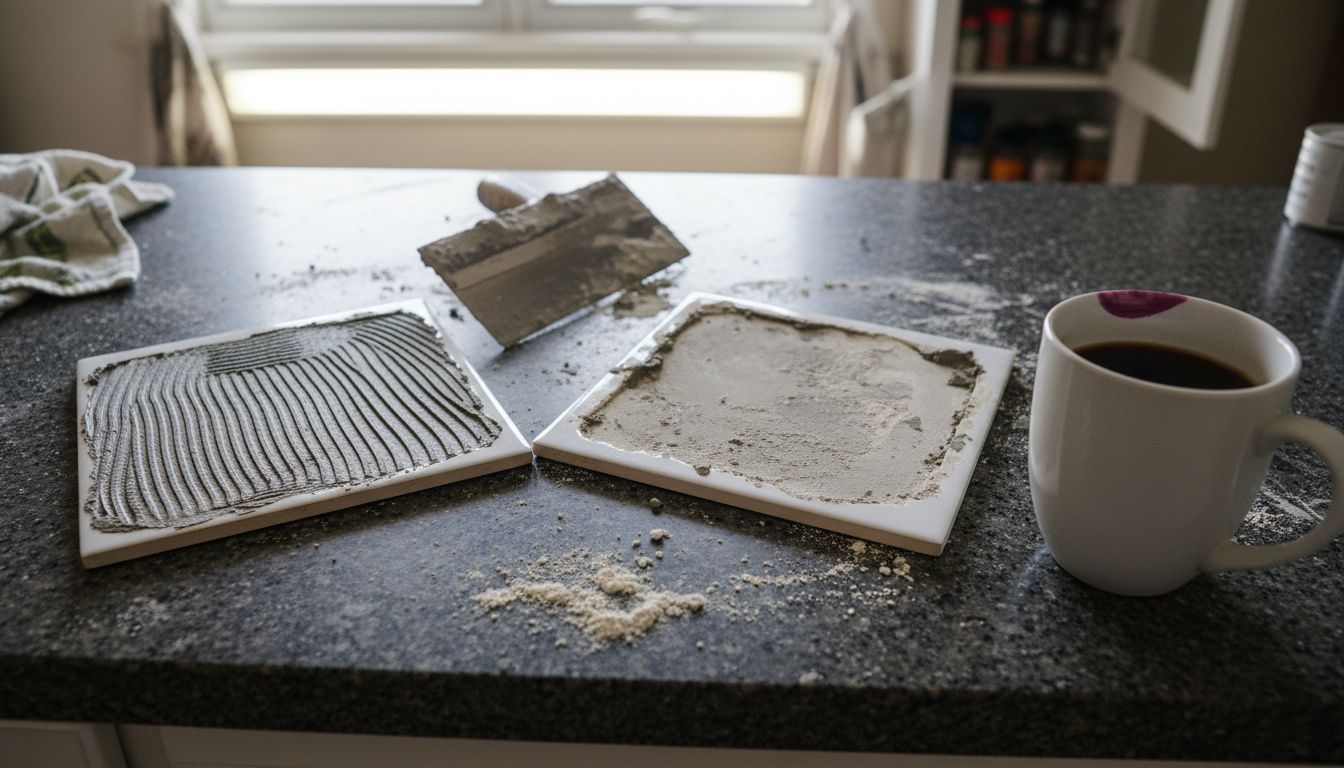
One of the most frequent errors involves inconsistent adhesive application. Tilers sometimes apply uneven layers of tile adhesive to the tile’s reverse side, creating potential weak points and compromising overall bonding strength. This inconsistency can lead to tiles that are more susceptible to lifting, cracking, or developing uneven surfaces over time. Professional installers must maintain a uniform adhesive thickness, ensuring complete coverage without excessive build-up.
The most critical mistakes to avoid include:
- Applying adhesive too thickly or too thinly
- Failing to clean tile backs before application
- Neglecting to use the correct notched trowel
- Ignoring manufacturer’s specific installation guidelines
- Rushing the back-buttering process
- Not checking tile flatness before installation
- Mixing incompatible adhesives
Porcelain tile installations demand particular attention, as these materials are less forgiving of installation errors. Professionals must approach back-buttering as a precise craft, taking time to ensure each tile is prepared and applied with meticulous care to achieve a flawless, long-lasting finish.
Comparing Back-Buttering with Direct Fixing Methods
Tile installation techniques vary significantly, with back-buttering and direct fixing representing two distinctly different approaches to achieving a robust and long-lasting surface. Professional tilers understand that each method carries unique advantages and potential limitations depending on specific project requirements.
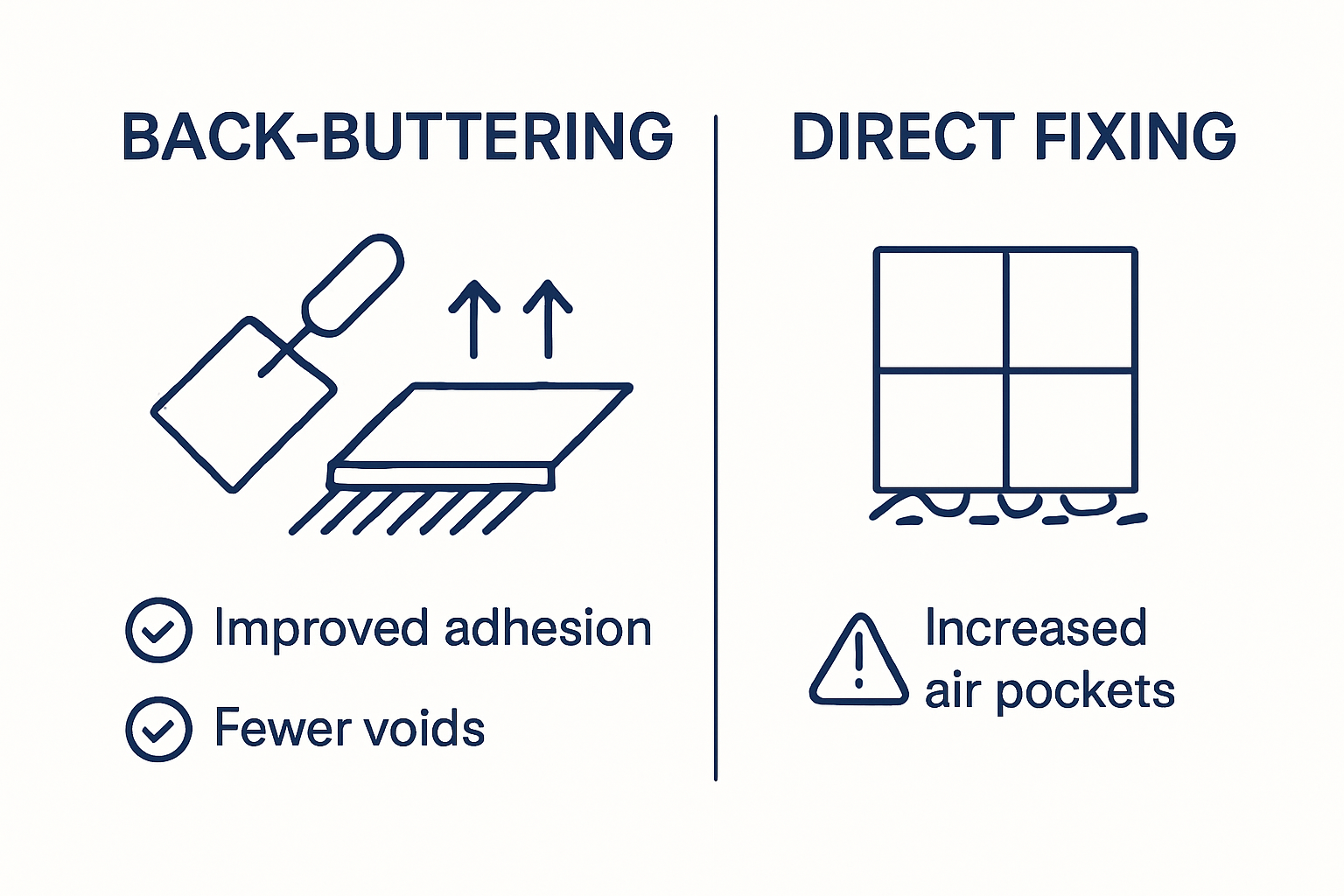
Direct fixing involves applying adhesive directly to the substrate, with tiles placed onto this layer using standard spreading techniques. This method works well for relatively flat surfaces and smaller tiles. Back-buttering, by contrast, introduces an additional layer of precision by applying adhesive to the tile’s reverse side, creating a more comprehensive bonding strategy that compensates for surface irregularities and tile variations.
Key differences between the two methods include:
- Surface preparation requirements
- Adhesive coverage percentage
- Suitability for different tile sizes
- Ability to manage substrate imperfections
- Labour intensity and installation time
- Long-term performance expectations
- Compatibility with various tile materials
Porcelain tile installations particularly benefit from back-buttering, as these materials often feature complex surface profiles that demand more nuanced installation techniques. While direct fixing remains acceptable for simple applications, back-buttering provides a more comprehensive approach to achieving exceptional tile performance and durability.
Boost Your Tile Installation with Durable and Precise Solutions
The article highlights the challenges of ensuring strong adhesion and a flawless finish when installing tiles on uneven or textured surfaces. Back-buttering tiles is key to overcoming issues such as tile lifting, air pockets, and uneven surfaces—ensuring long-lasting and professional results. If you want to avoid these common installation pitfalls and achieve a finish that stands the test of time, choosing the right tiles designed for back-buttering techniques is essential.
Explore our premium range of tiles at Vivido Tiles, where you will find high-quality porcelain, natural stone, and outdoor tiles perfectly suited for expert installation methods like back-buttering. Our collection offers exceptional variety and excellent value, giving you confidence that your project will not only look stunning but also deliver outstanding durability. Visit our website now or discover our newly opened showroom in Harrogate to see the quality and finish in person. Take the first step toward flawless tile installations by shopping with us today.
Frequently Asked Questions
What is back-buttering in tile installation?
Back-buttering is a tiling technique where adhesive is applied directly to the back of individual tiles to ensure better adhesion and a uniform coverage layer, especially on uneven surfaces or tiles with deep indentations.
Why is back-buttering important for tile adhesion?
Back-buttering improves bond strength by filling voids and compensating for imperfections in both the tile and substrate. It helps prevent issues such as tile lifting or moisture penetration, resulting in a more stable and durable installation.
When should back-buttering be used instead of direct fixing?
Back-buttering is essential for installations on uneven substrates, large-format tiles, or surfaces with significant texture. It is particularly beneficial for natural stone and complex tile profiles where conventional methods might not provide sufficient adhesion.
What common mistakes should be avoided when back-buttering tiles?
Common mistakes include applying inconsistent adhesive thickness, neglecting to clean the tile backs, using the wrong notched trowel, and rushing the process. It’s essential to ensure meticulous application for durable and long-lasting results.