
Role of Tile in Commercial Kitchens – Impact on Safety and Hygiene
Most british commercial kitchens report that over 90 percent of hygiene breaches link back to poor surface choices. For kitchen designers and managers in North Yorkshire, the right tile does more than complete a look. It helps keep kitchens safe, clean, and visually inviting every day. Discover options that combine strict compliance, reliable durability, and the professional finish your clients now expect.
Table of Contents
- Role of Tile in Kitchen Environments
- Types of Tiles Used in Commercial Kitchens
- Essential Features and Performance Standards
- Health, Safety and UK Regulatory Compliance
- Cost, Maintenance and Common Pitfalls
Key Takeaways
| Point | Details |
|---|---|
| Tile Selection is Critical | Choose materials like Porcelain and Stainless Steel for their durability and hygiene properties in commercial kitchens. |
| Compliance with Regulations | Ensure tiles meet UK health and safety standards to avoid legal and financial penalties. |
| Maintenance is Essential | Regular cleaning and maintenance are crucial for operational efficiency and to prevent costly replacements. |
| Cost Considerations | Account for hidden costs in installation and ongoing maintenance to minimise long-term expenses. |
Role of Tile in Kitchen Environments
In commercial kitchen settings, tiles play a critical role in maintaining safety, hygiene, and operational efficiency. Proper kitchen surface preparation involves selecting materials that can withstand intense culinary environments while providing maximum protection against moisture, bacteria, and physical wear.
Commercial kitchen tiles must meet stringent performance requirements beyond aesthetic considerations. They need to resist high temperatures, sudden impacts, chemical cleaning agents, and constant foot traffic. Porcelain and ceramic tiles are particularly effective due to their dense, non-porous surfaces that prevent bacterial growth and facilitate easy cleaning. Their smooth finish allows kitchen staff to quickly wipe down surfaces, reducing contamination risks and maintaining strict health standards.
The strategic placement of tiles in kitchen environments is equally important. High-traffic areas like food preparation zones, cooking stations, and dishwashing areas require tiles with superior slip resistance and durability. Textured tiles with high coefficient of friction can significantly reduce workplace accidents, while light-coloured tiles help improve visibility and make cleanliness more apparent. These design considerations are not merely cosmetic but directly impact workplace safety and operational hygiene.
Expert Tip: When selecting commercial kitchen tiles, prioritise materials with smooth, impermeable surfaces and minimal grout lines to maximise hygiene standards and ease of cleaning.
Types of Tiles Used in Commercial Kitchens
Commercial kitchen environments demand specialised tile solutions that can withstand extreme conditions while maintaining hygiene standards. When selecting kitchen floor tiles, professionals must consider multiple performance characteristics beyond aesthetic appeal.
Porcelain tiles emerge as the premier choice for commercial kitchen applications due to their exceptional durability and non-porous surface. These tiles offer remarkable resistance to thermal shock, chemical exposure, and mechanical stress. Their dense composition prevents moisture absorption, which significantly reduces bacterial growth and makes them ideal for food preparation areas. Ceramic tiles represent another robust option, providing similar hygienic properties with slightly lower price points.
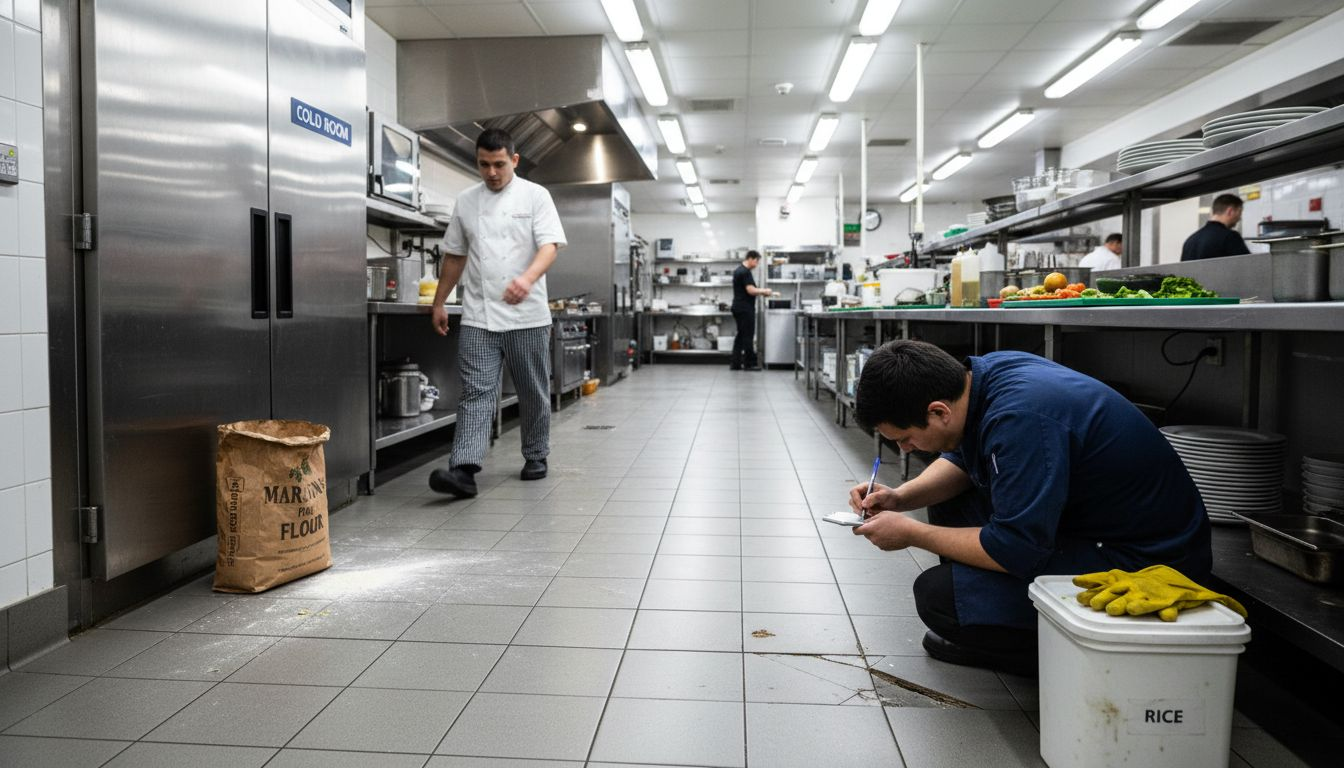
Stainless steel and quarry tiles also play crucial roles in commercial kitchen design. Stainless steel tiles provide unparalleled bacterial resistance and can withstand intense cleaning protocols, making them perfect for areas requiring sterile environments. Quarry tiles, with their exceptional slip resistance and robust composition, are particularly suited to high-traffic zones like cooking stations and dishwashing areas. The textured surface of quarry tiles helps prevent accidental slips, enhancing workplace safety.
The table below compares common kitchen tile materials based on their core strengths and best application zones:
| Tile Material | Key Strength | Main Application Area |
|---|---|---|
| Porcelain | Superior durability | Food preparation zones |
| Ceramic | Cost-effective hygiene | General flooring and wall surfaces |
| Stainless steel | Maximum sterility | Splashbacks and sterile areas |
| Quarry | Excellent slip resistance | Cooking and dishwashing areas |
Pro Tip: When selecting commercial kitchen tiles, prioritise materials that balance slip resistance, ease of cleaning, and durability to ensure long-term performance and safety.
Essential Features and Performance Standards
Commercial kitchen tiles must meet rigorous performance standards that go far beyond aesthetic considerations. Performance criteria for commercial kitchen floors demand exceptional durability, hygiene, and safety characteristics that protect both workers and food preparation environments.
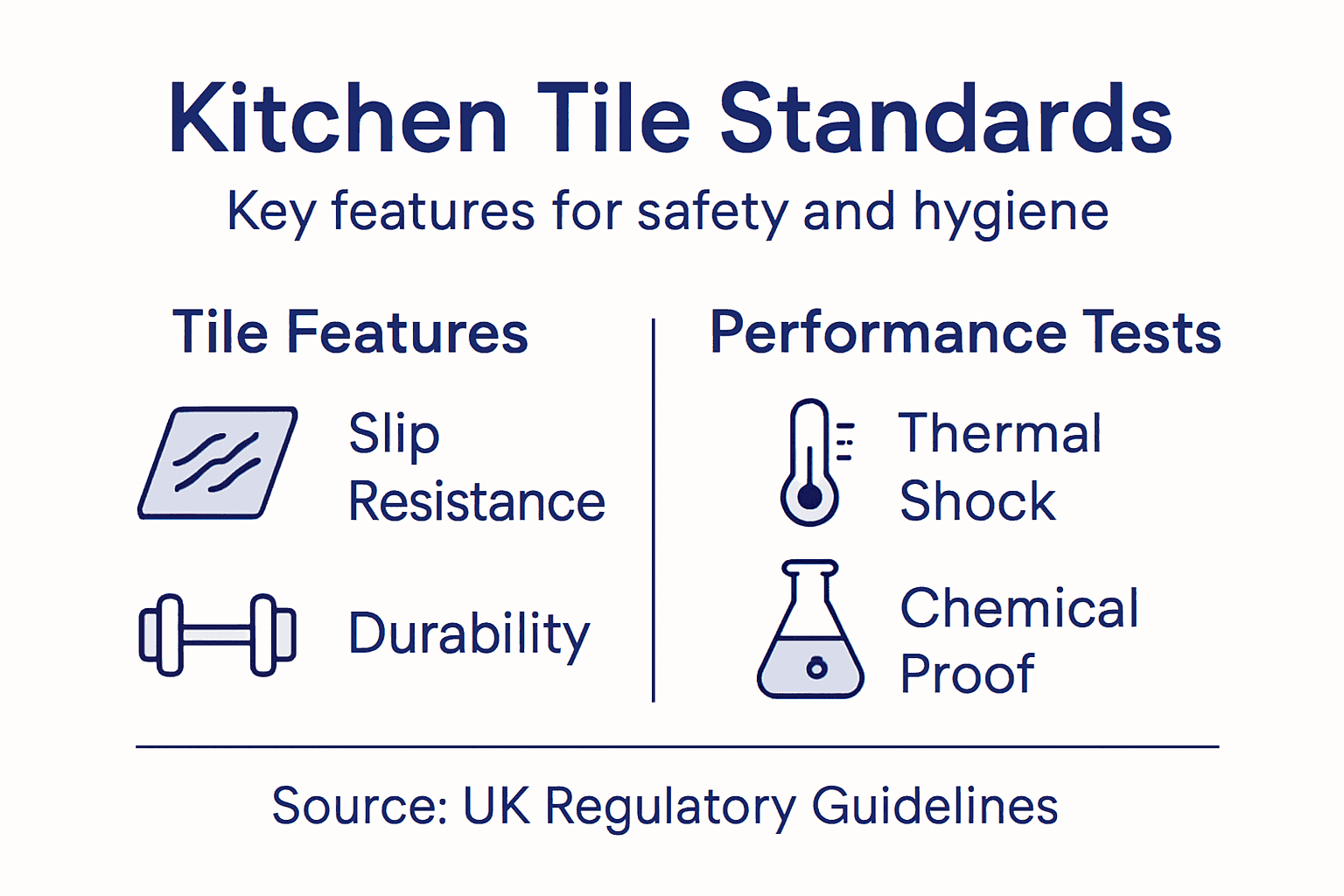
The British Standards specify comprehensive requirements for tile performance in commercial settings. Tiles must demonstrate superior resistance to thermal shock, chemical exposure, and mechanical stress. Critical performance metrics include slip resistance ratings, impact strength, and bacterial inhibition capabilities. Unglazed tiles are universally rejected due to their porous nature, which can harbour bacteria and compromise hygiene standards. Professional specifiers prioritise tiles with seamless, non-absorbent surfaces that facilitate rapid cleaning and prevent contamination.
Key performance standards encompass multiple technical specifications. Slip resistance is measured using standardised coefficients that determine safe walking surfaces in high-traffic kitchen zones. Chemical resistance testing evaluates a tile’s ability to withstand harsh cleaning agents, disinfectants, and potential food spillage without degradation. Thermal shock resistance ensures tiles can endure sudden temperature fluctuations typical in commercial cooking environments, preventing cracking or structural compromise.
Pro Tip: Always request comprehensive technical specifications and independent certification when selecting commercial kitchen tiles to ensure they meet stringent safety and performance standards.
Health, Safety and UK Regulatory Compliance
Commercial kitchen environments in the United Kingdom are subject to stringent regulatory frameworks that mandate specific safety and hygiene standards. Health and safety regulations for commercial kitchens establish comprehensive guidelines that directly impact tile selection, installation, and maintenance to protect workers and food preparation environments.
The Health and Safety Executive (HSE) and Food Standards Agency collaborate to enforce rigorous compliance requirements. These regulations focus on minimising workplace accidents, preventing cross-contamination, and ensuring surfaces can be thoroughly sanitised. Tile specifications must demonstrate exceptional resistance to bacterial growth, chemical cleaning agents, and physical wear. Professional kitchen designers must carefully evaluate materials that meet these exacting standards, considering factors such as surface porosity, slip resistance, and ease of cleaning.
UK regulatory compliance extends beyond simple material selection to include precise installation techniques and ongoing maintenance protocols. Grout lines, surface treatments, and tile joint configurations are scrutinised to prevent potential hygiene risks. Commercial kitchen operators must maintain comprehensive documentation demonstrating that their tile selections and installations meet current safety standards. Non-compliance can result in significant legal and financial penalties, making it crucial to work with suppliers and installers who understand the complex regulatory landscape.
Pro Tip: Consult with a certified health and safety inspector to ensure your commercial kitchen tile selection fully complies with current UK regulatory requirements.
Cost, Maintenance and Common Pitfalls
Commercial kitchen tile installations represent significant financial investments that require strategic planning and understanding of potential challenges. Hidden costs of kitchen projects frequently emerge from underestimated preparation, installation complexities, and long-term maintenance requirements.
Budgetary considerations extend far beyond initial tile purchase and installation. Professional kitchen managers must account for specialist adhesives, precise substrate preparation, and potential remedial work. Critical cost factors include surface preparation, specialised grout selection, professional installation, and ongoing maintenance protocols. Unexpected expenses can arise from improper initial tile selection, which may lead to premature wear, increased cleaning demands, or necessary replacement far earlier than anticipated.
Maintenance represents a crucial ongoing expense that directly impacts operational efficiency and hygiene standards. Commercial kitchen tiles require systematic cleaning regimens, periodic professional assessment, and potential resealing or grout restoration. Potential pitfalls include neglecting routine maintenance, using inappropriate cleaning chemicals, and failing to address minor damage promptly. These oversights can accelerate surface degradation, compromise hygiene standards, and ultimately result in substantially higher long-term replacement costs.
Below is a summary of frequent pitfalls in commercial tile projects and their business consequences:
| Common Pitfall | Impact on Business |
|---|---|
| Inadequate surface preparation | Expensive repairs and delays |
| Incorrect tile selection | Increased safety risks |
| Neglected routine maintenance | Rapid tile deterioration |
| Use of harsh cleaning chemicals | Loss of tile warranty |
Pro Tip: Budget an additional 15-20% beyond initial tile installation costs to cover potential maintenance, preparation, and unexpected remediation expenses.
Elevate Safety and Hygiene in Your Commercial Kitchen with Vividotiles
Ensuring your commercial kitchen meets the highest standards of slip resistance, durability, and hygiene is essential for protecting staff and maintaining compliance with UK regulations. Our selection of premium porcelain tiles and highly durable materials offers non-porous surfaces and exceptional slip resistance, precisely what your kitchen needs to reduce contamination risks and workplace accidents. From high-traffic cooking zones to critical food preparation areas, Vividotiles provides solutions that balance performance and affordability.

Discover our full tile range and benefit from expert guidance and free UK delivery. Visit Vividotiles.co.uk now to find the perfect tile that supports your kitchen’s health and safety goals. Act today to invest in resilient, easy-to-clean tiles that protect your business and enhance operational efficiency.
Frequently Asked Questions
What are the best tile materials for commercial kitchens?
Porcelain and ceramic tiles are the best materials for commercial kitchens due to their durability and non-porous surfaces, which resist moisture and bacteria.
How does tile choice impact safety in commercial kitchens?
The choice of tiles affects safety through slip resistance and durability. Textured tiles with a high coefficient of friction help prevent workplace accidents in high-traffic areas.
What performance standards should commercial kitchen tiles meet?
Commercial kitchen tiles should meet standards for thermal shock resistance, chemical resistance, and slip resistance, ensuring they can withstand harsh kitchen environments while maintaining hygiene.
How can I maintain my commercial kitchen tiles?
To maintain your commercial kitchen tiles, implement a systematic cleaning routine, avoid harsh chemicals, and address minor damages promptly to prevent rapid deterioration.