
Complete Guide to the Role of R10 Tiles
Most british homes face hidden risks from slippery floors, especially in places where water is common. With more than 18,000 injuries each year in the UK caused by slip and trip accidents, safety standards for tiles are not just technical details but genuine life savers. Learning about R10 tiles and slip ratings helps you make smarter choices that match both style and wellbeing, so you can feel confident every step at home or in commercial settings.
Table of Contents
- Defining R10 Tiles And Slip Ratings
- Key Features And Performance Characteristics
- Common Applications For R10 Rated Tiles
- Legal Safety Standards In The UK
- R10 Tiles Versus Other Slip Ratings
Key Takeaways
| Point | Details |
|---|---|
| Importance of Slip Ratings | Understanding slip ratings like R10 is essential for selecting safe flooring, especially in moist areas. |
| R10 Tile Characteristics | R10 tiles offer moderate slip resistance, making them suitable for kitchens, bathrooms, and light commercial spaces. |
| Legal Compliance | Adhering to UK safety standards is crucial for slip-resistant flooring, with guidelines set by the Health & Safety Executive. |
| Comparative Ratings | R10 tiles represent a balanced choice between minimal and high slip resistance levels, catering to varied environments. |
Defining R10 Tiles And Slip Ratings
When it comes to tile safety, understanding slip ratings is crucial for selecting the right flooring solution. The R10 tile classification represents a specific level of slip resistance that plays a significant role in determining surface safety. According to Chiltern Bathrooms, these tiles provide moderate slip resistance and are particularly suited for areas that experience occasional moisture, such as kitchens and bathrooms.
The R-rating system originates from the German ‘Rampentest,’ which measures a tile’s slip resistance on a scale ranging from R9 to R13. Each rating indicates the tile’s performance on an inclined surface under different conditions.
Practically speaking, R10 tiles are ideal for various residential and commercial spaces where maintaining safety without compromising aesthetic appeal is paramount. These tiles strike an excellent balance between functionality and design, making them suitable for:
- Kitchen floors
- Bathroom areas
- Entryways
- Light commercial spaces
- Areas with occasional moisture exposure
When selecting R10 tiles, homeowners and designers should consider both the aesthetic requirements and the specific environmental conditions of the space. By understanding these slip ratings, you can make an informed decision that prioritizes both safety and style. For more comprehensive insights into slip-resistant tiles, check out our Anti-Slip Tile Guide.
Key Features And Performance Characteristics
R10 tiles offer a sophisticated blend of performance characteristics that make them an exceptional choice for various architectural and design applications. These tiles are engineered to provide a critical balance between safety, durability, and aesthetic versatility. The moderate slip resistance ensures reliable traction in environments where moisture and potential slip hazards are common, making them an intelligent flooring solution for both residential and commercial spaces.
The performance profile of R10 tiles encompasses several key technical attributes. Their surface texture is specifically designed to create friction without compromising visual appeal, featuring subtle micro-texturing that enhances grip without creating an overly rough or industrial appearance. This engineered surface allows water and liquid dispersal, reducing the risk of surface pooling and subsequent slip potential. Additionally, these tiles demonstrate remarkable wear resistance, maintaining their functional and aesthetic qualities even under moderate to high foot traffic conditions.
Key performance features of R10 tiles include:
- Surface Friction: Provides consistent traction across wet and dry conditions
- Water Resistance: Effectively manages moisture without compromising structural integrity
- Durability: Withstands regular foot traffic and environmental stress
- Versatile Application: Suitable for multiple settings including kitchens, bathrooms, and commercial spaces
- Temperature Tolerance: Maintains performance across various environmental conditions
For homeowners and design professionals, understanding the nuanced performance characteristics of R10 tiles is crucial. These tiles represent more than just a flooring option – they are a strategic solution that combines safety, functionality, and aesthetic elegance. Whether you’re designing a contemporary kitchen, a commercial walkway, or a bathroom renovation, R10 tiles offer a sophisticated approach to surface management. Discover our comprehensive Anti-Slip Tile Guide to explore more insights into selecting the perfect tile for your specific requirements.
Common Applications For R10 Rated Tiles
R10 rated tiles represent a versatile flooring solution that seamlessly bridges safety and design across multiple environments. Their unique slip-resistant properties make them particularly well-suited for spaces that experience intermittent moisture or require enhanced traction. From residential interiors to light commercial settings, these tiles offer a pragmatic approach to surface management that doesn’t compromise on aesthetic appeal.
In residential spaces, R10 tiles shine in areas prone to occasional water exposure. Kitchens, bathrooms, laundry rooms, and entryways benefit significantly from their balanced slip resistance. The micro-textured surface provides reliable grip without creating an overly rough or industrial appearance, making them an ideal choice for homeowners seeking both safety and style. Commercial environments like restaurants, cafes, healthcare facilities, and retail spaces also find R10 tiles exceptionally practical, as they maintain performance under moderate foot traffic and potential liquid spills.
Specific applications where R10 tiles excel include:
- Residential Kitchens: Managing splash zones and cooking areas
- Bathroom Floors: Providing safe surfaces around showers and sinks
- Entryways and Hallways: Handling tracked-in moisture and potential slip risks
- Light Commercial Spaces: Restaurants, cafes, and reception areas
- Healthcare Facilities: Corridors and patient care areas requiring clean, safe surfaces
- Retail Environments: Showrooms and customer service zones
- Outdoor Patio Transitions: Areas connecting indoor and exterior spaces
For design professionals and homeowners looking to make informed tile selections, understanding the nuanced applications of R10 tiles is crucial. These tiles are not just a flooring option but a strategic design choice that prioritizes safety without sacrificing aesthetic flexibility. Explore our comprehensive guide on slip-resistant tiles to discover how these versatile tiles can transform your space with confidence and style.
Legal Safety Standards In The UK
Navigation of legal safety standards for flooring in the United Kingdom represents a critical aspect of architectural and design compliance, particularly when considering slip-resistant surfaces like R10 tiles. The regulatory landscape is primarily governed by stringent guidelines established by the Health & Safety Executive (HSE), which sets comprehensive protocols for mitigating slip-related risks in various environments. These standards are not merely recommendations but legally enforceable guidelines that impact design, installation, and maintenance of floor surfaces.
According to Tiles UK, the UK Health & Safety Executive recommends the Pendulum Test as the primary method for assessing slip resistance. This rigorous evaluation process involves measuring the Pendulum Test Values (PTV), which provide a quantitative assessment of surface friction. For floors likely to be wet or potentially contaminated, the guidelines explicitly mandate the use of slip-resistant surface tiles to ensure occupant safety, placing a legal responsibility on property owners and designers to select appropriate flooring solutions.
Key legal considerations for slip-resistant tiles in the UK include:
- Workplace Safety Regulations: Compliance with HSE guidelines
- Building Codes: Mandatory slip resistance requirements for public spaces
- Liability Protection: Reducing risk of accidents and potential legal claims
- Insurance Requirements: Meeting standard safety specifications
- Occupational Health Standards: Protecting employees and visitors
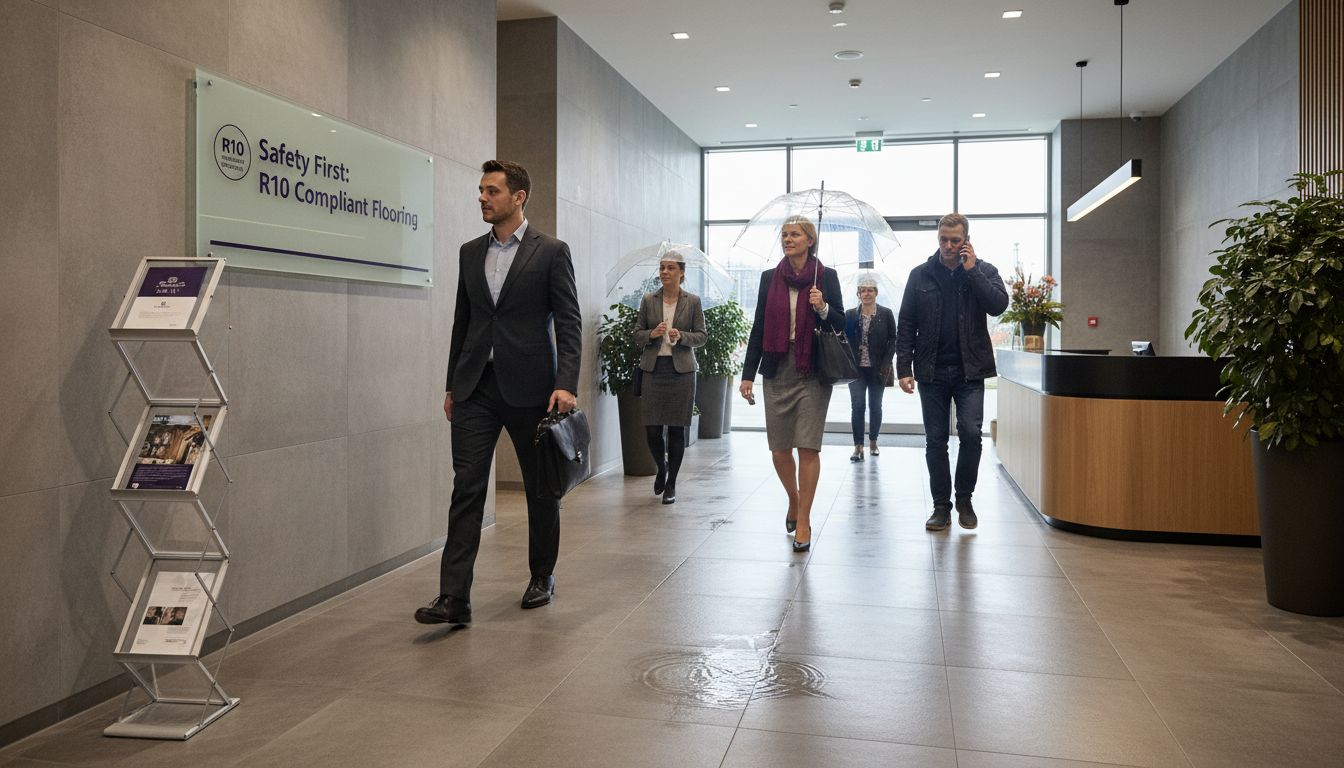
For property owners, designers, and contractors, understanding these legal safety standards is not just about regulatory compliance but about creating genuinely safe environments. The implications extend beyond mere technical specifications, representing a comprehensive approach to risk management and occupant protection. Learn more about choosing slip-resistant tiles to ensure you meet all necessary legal and safety requirements in your next project.
R10 Tiles Versus Other Slip Ratings
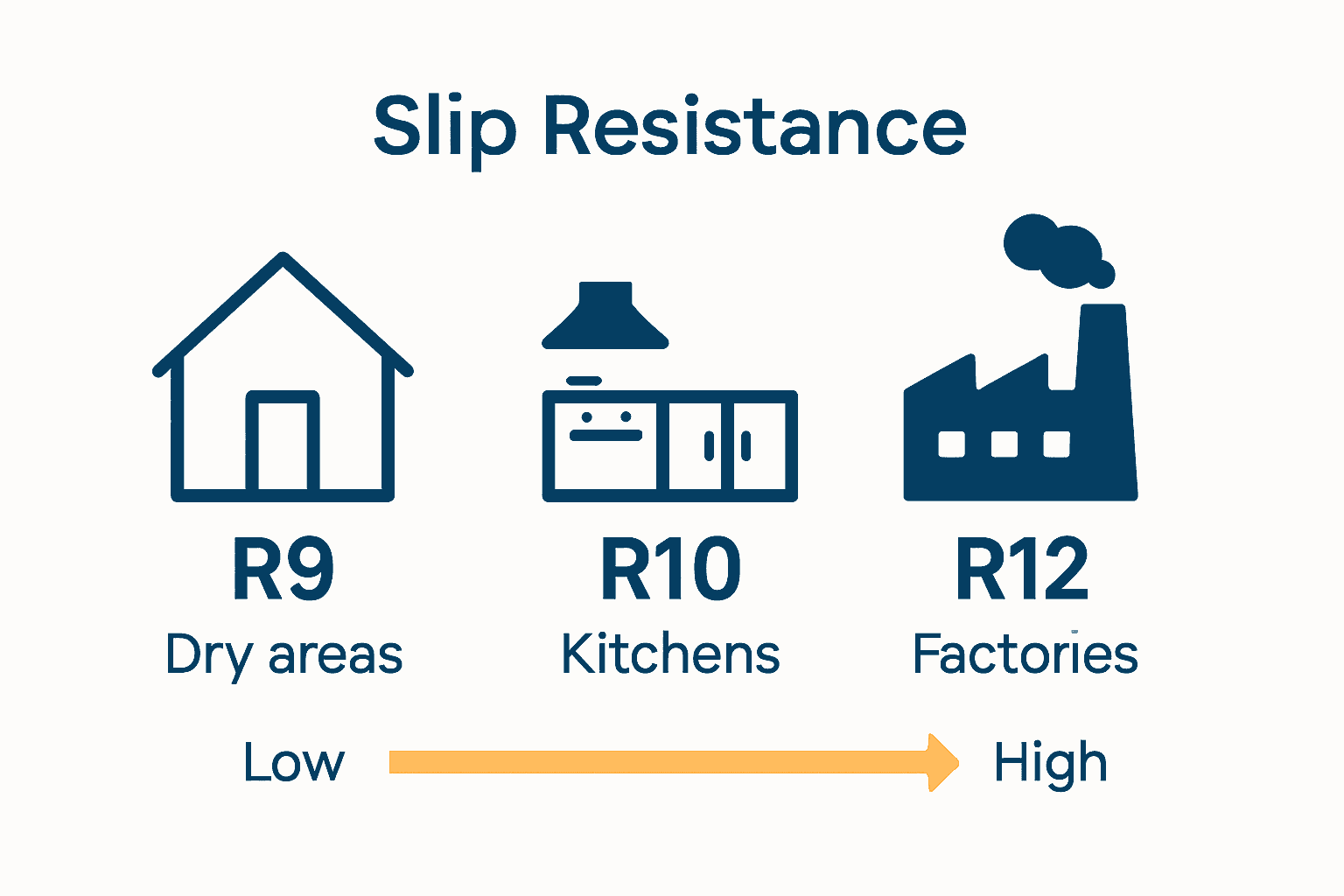
Understanding the nuanced landscape of slip ratings requires a comprehensive examination of how R10 tiles compare to alternative slip-resistance classifications. The R-rating system represents a technical spectrum of surface friction, ranging from R9 to R13, with each level indicating progressively increased slip resistance. R10 tiles occupy a strategic middle ground, offering a balanced approach to traction that makes them exceptionally versatile across various residential and commercial environments.
When comparing slip ratings, the key differentiations become apparent. R9-rated surfaces provide minimal slip resistance and are suitable only for dry areas with extremely low moisture risks. In contrast, R10 tiles deliver moderate slip protection, making them ideal for spaces with occasional water exposure. Higher classifications like R11-R13 represent increasingly aggressive surface texturing, typically reserved for industrial settings, wet rooms, and areas with constant liquid contamination. These higher ratings create more pronounced surface friction but can compromise aesthetic smoothness and are often less comfortable for extended walking.
Key comparative characteristics of slip ratings include:
- R9: Minimal slip resistance, suitable for dry indoor areas
- R10: Balanced protection, ideal for kitchens and light commercial spaces
- R11: Enhanced traction, recommended for more demanding environments
- R12-R13: Extreme slip resistance, typically used in industrial settings
- PTV Scale: Complementary measurement system for assessing surface friction
For design professionals and property owners, selecting the appropriate slip rating involves carefully balancing safety requirements with aesthetic considerations. Explore our comprehensive guide on anti-slip tile selection to understand how different slip ratings can transform your space’s safety and design potential.
Choose R10 Tiles for Safety and Style with Vivido Tiles
Selecting the right tile means balancing safety with design. The Complete Guide to the Role of R10 Tiles explains how these tiles deliver moderate slip resistance, ideal for areas that face occasional moisture such as kitchens and bathrooms. If you want to avoid slip hazards without sacrificing elegance and durability, R10 tiles offer an optimal solution that protects your family or customers while enhancing your space.
Explore our wide collection of premium tiles at Vivido Tiles where you can find R10-rated options including porcelain, natural stone, and trendy patterned styles. Benefit from competitive prices, free UK delivery on many products, and expert guidance that makes choosing the perfect anti-slip tile straightforward. Visit our recently opened showroom in Harrogate to see our tile collections in person or shop conveniently online. Start creating safer, stylish floors today by browsing our selection at Vivido Tiles and learn more about slip resistance with our Anti-Slip Tile Guide. Your ideal slip-resistant flooring is just a click away.
Frequently Asked Questions
What are R10 tiles and why are they important?
R10 tiles are a classification in the slip rating system that indicates moderate slip resistance, making them suitable for areas prone to occasional moisture, like kitchens and bathrooms. They provide a balance of safety and aesthetic appeal.
How do R10 tiles compare to other slip ratings?
R10 tiles offer moderate slip resistance compared to R9 tiles, which provide minimal traction, and R11-R13 tiles, which have enhanced slip protection suitable for higher risk areas. R10 tiles are ideal for general residential and light commercial use.
What environments are best suited for R10 tiles?
R10 tiles are suitable for a variety of spaces, including kitchen floors, bathroom areas, entryways, and light commercial spaces where moisture may occasionally be present. They strike a balance between safety and design in these settings.
What are the key performance characteristics of R10 tiles?
R10 tiles feature surface friction that provides reliable traction, effective water resistance, durability under foot traffic, and versatility for multiple applications. Their micro-textured surface enhances grip while maintaining aesthetic appeal.