
Quarry Vs Porcelain Tiles: Complete Comparative Guide
Quarry Vs Porcelain Tiles: Complete Comparative Guide
Quarry Vs Porcelain tiles: More than 55 percent of british property developers say tile choice directly impacts both practicality and style in homes and businesses. With quarry and porcelain tiles offering strikingly different advantages, the decision goes beyond colour or texture. Whether your project demands robust durability or versatile design, understanding how these materials are made and where they excel will help you confidently select the right tile for any space.
Table of Contents
- Defining Quarry And Porcelain Tiles
- How Each Tile Type Is Manufactured
- Key Performance And Durability Differences
- Best Applications For Each Tile Option
- Costs, Maintenance, And Installation Factors
Key Takeaways
| Point | Details |
|---|---|
| Material Composition | Quarry tiles are made from natural clay, while porcelain tiles use a denser clay with low water absorption. |
| Durability and Performance | Porcelain tiles offer superior strength and stain resistance, making them ideal for outdoor use, whereas quarry tiles excel in high-traffic areas with excellent slip resistance. |
| Application Suitability | Quarry tiles are recommended for commercial settings like kitchens and factories, while porcelain tiles are versatile for both residential and decorative applications. |
| Cost and Maintenance | Quarry tiles have lower initial costs and maintenance needs, whereas porcelain tiles provide long-term value but may involve higher installation and upkeep expenses. |
Defining Quarry And Porcelain Tiles
Tiles form a critical part of interior and exterior design, with quarry and porcelain representing two distinctive yet fascinating materials that serve different functional needs. According to Wikipedia, quarry tile is a robust building material typically 13 to 19 mm thick, manufactured through extrusion or press forming processes using natural clay or shales fired at extremely high temperatures around 2000°F.
In contrast, Wikipedia defines porcelain tiles as ceramic tiles characterised by an exceptionally low water absorption rate of less than 0.5%. These tiles are crafted from a denser clay composition compared to standard ceramic tiles and can be presented in glazed or unglazed finishes. The manufacturing process involves pressing and firing clay at high temperatures, creating a highly durable and versatile tiling solution.
The key differences between quarry and porcelain tiles emerge in their composition, manufacturing techniques, and practical applications. Quarry tiles are traditionally made from natural clay and often used in industrial or high-traffic environments due to their exceptional durability. Porcelain tiles, by comparison, offer greater design flexibility, with the ability to mimic various materials like stone, wood, or marble while providing superior moisture resistance.
For those exploring tiling options, understanding these fundamental characteristics becomes crucial. Porcelain Tiles Guide: Choosing Tiles for Every Room can provide additional insights into selecting the most appropriate tile for specific spaces and design requirements.
How Each Tile Type Is Manufactured
The manufacturing processes for quarry and porcelain tiles represent fascinating examples of precision engineering and material science, with each type following distinct production techniques that determine their ultimate performance and characteristics. Quarry tiles are traditionally created through an extrusion or press forming process, where natural clay or shales are carefully selected and processed to create robust building materials.
Porcelain tile production, by contrast, involves a more sophisticated approach. According to CSDC India, these tiles are manufactured by heating clay at significantly higher temperatures compared to standard ceramic tiles. This elevated temperature process results in tiles that are notably thicker, remarkably damp-proof, and inherently stain-resistant due to their extremely low permeability.
The manufacturing workflow for both tile types involves several critical stages.
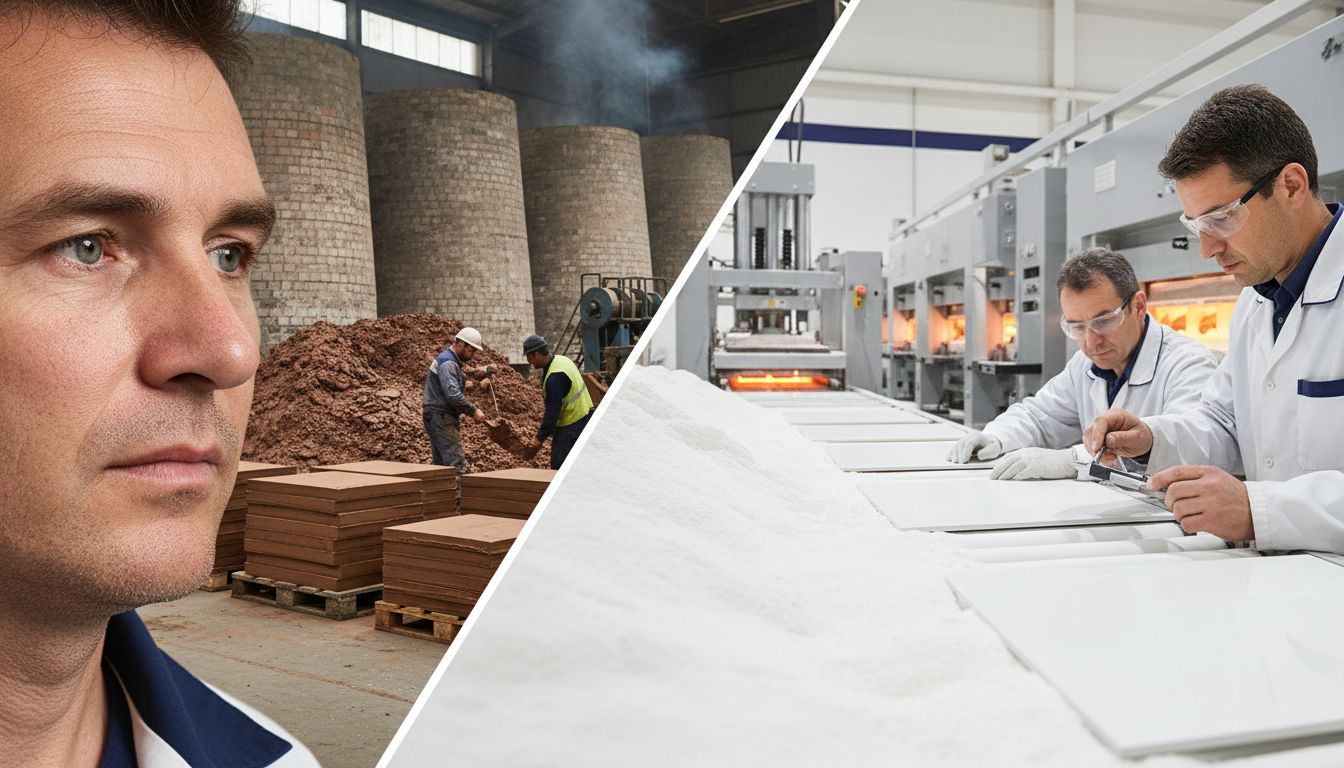 For quarry tiles, the process begins with raw clay selection, followed by thorough mixing, extrusion or pressing into specific shapes, and then firing in kilns at temperatures around 2000°F. Porcelain tiles undergo a more refined process, involving refined clay mixtures, higher pressure compaction, and firing at even more extreme temperatures, which contributes to their exceptional density and durability.
For homeowners and professionals seeking comprehensive insights into tile installation and selection, Floor Tiling Workflow: Achieve Flawless Tile Installation provides an excellent resource to complement understanding these intricate manufacturing processes.
Key Performance And Durability Differences
When comparing quarry and porcelain tiles, performance and durability emerge as critical factors that significantly influence their suitability for different environments and applications. Durability becomes a key consideration for homeowners and designers seeking long-lasting flooring solutions that can withstand varied usage conditions.
According to SEFa Labs, porcelain tiles demonstrate superior body strength, making them substantially less prone to cracking. These tiles offer remarkable advantages, including exceptional freeze-thaw resistance, which makes them particularly suitable for outdoor installations. Their minimal expansion and contraction properties further enhance their overall durability and long-term performance.
In contrast, Metro Ceramics highlights that quarry tiles possess unique performance characteristics. These unglazed tiles feature through-body coloration, eliminating concerns about surface glazing wear. They excel in high-traffic environments, offering outstanding slip resistance, impact resilience, and exceptional resistance to abrasion, chipping, and freeze-thaw effects. The inherent robustness of quarry tiles makes them an excellent choice for industrial settings, commercial spaces, and areas requiring maximum durability.
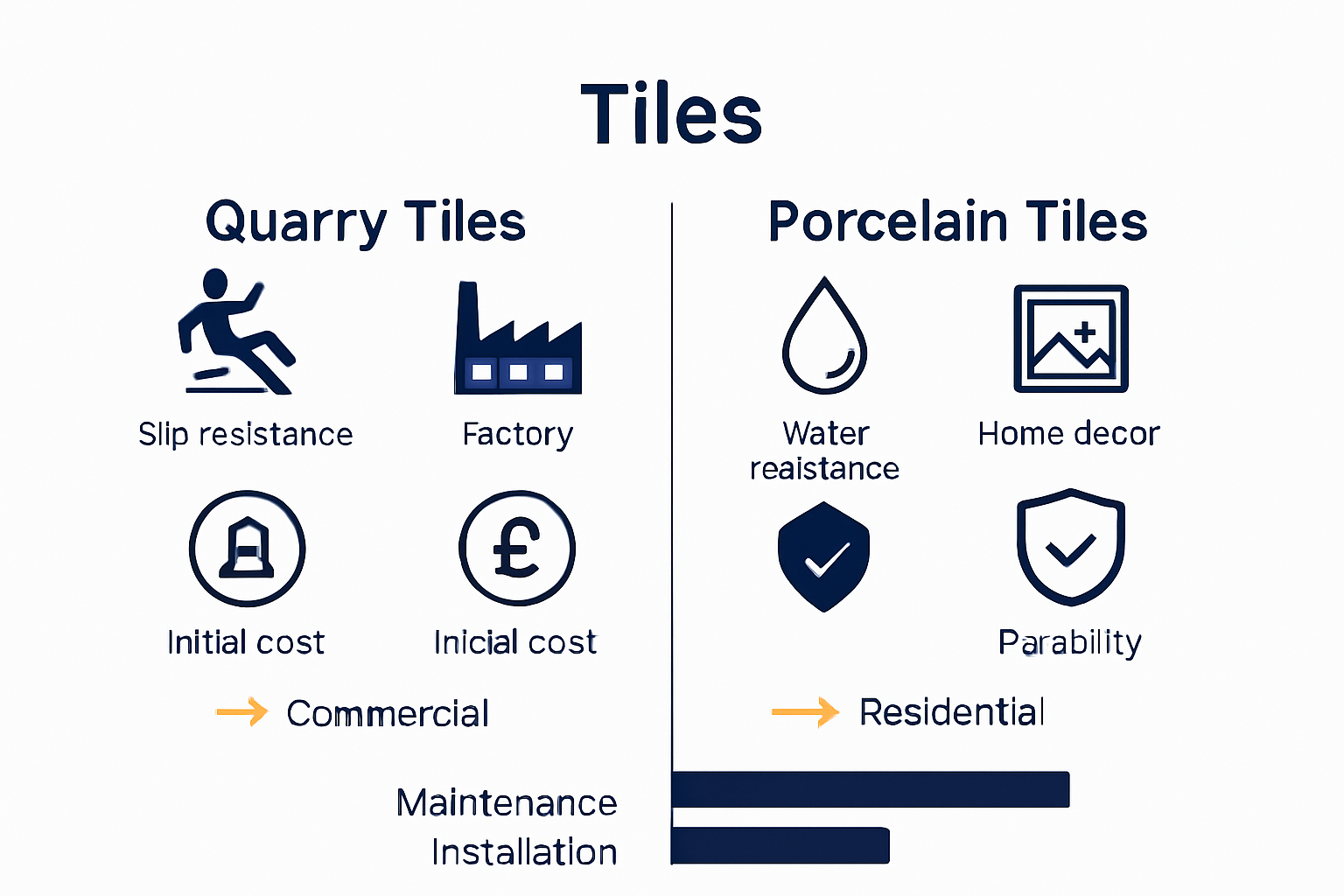
Ultimately, the choice between quarry and porcelain tiles depends on specific project requirements, aesthetic preferences, and environmental conditions. Floor Tiling Workflow: Achieve Flawless Tile Installation can provide additional guidance for professionals and homeowners navigating these critical selection considerations.
Best Applications For Each Tile Option
Selecting the appropriate tile for specific spaces requires a nuanced understanding of each material’s unique characteristics and performance capabilities. Tile selection is not merely an aesthetic choice but a strategic decision that impacts functionality, longevity, and overall design coherence.
According to Spectra CF, quarry tiles are exceptionally suited for high-traffic commercial environments. These robust tiles excel in demanding settings such as restaurant kitchens, factory floors, public walkways, and garages, where durability and slip resistance are paramount. Their unglazed, through-body composition ensures consistent performance under intense use and frequent mechanical stress.
Flooring Clarity highlights that porcelain tiles offer remarkable versatility for residential and decorative applications. These tiles are particularly ideal for bathroom spaces, kitchen backsplashes, living areas, and even outdoor installations. Their low water absorption rate and superior durability make them an excellent choice for areas requiring both aesthetic appeal and practical performance, from interior wall cladding to exterior patio surfaces.
For design professionals seeking inspiration in tile selection, 7 Inspiring Examples of Tile Patterns for Every Space can provide additional creative insights into maximising each tile type’s unique potential across different architectural contexts.
Costs, Maintenance, And Installation Factors
Selecting between quarry and porcelain tiles involves carefully weighing multiple economic and practical considerations beyond initial aesthetic appeal. Installation complexity and long-term maintenance requirements can significantly impact the overall value and performance of your tiling project.
Quarry tiles typically present a more economical upfront investment, with their robust manufacturing process allowing for straightforward installation in commercial and industrial settings. Their unglazed, through-body composition means minimal surface treatments are required, reducing both initial and ongoing maintenance costs. These tiles demonstrate exceptional durability, which translates to reduced replacement expenses over their extended lifecycle.
Porcelain tiles, while potentially more expensive initially, offer remarkable long-term value through their superior moisture resistance and design versatility. Professional installation becomes critical with porcelain, as precise cutting and alignment techniques are necessary to achieve optimal results. Maintenance involves regular sealing for unglazed varieties and careful cleaning to preserve their aesthetic integrity, which might represent a slightly higher ongoing investment compared to quarry tiles.
For homeowners and professionals seeking comprehensive guidance on navigating these complex considerations, Tile Design Tips: 7 Top Tips for Stunning Spaces can provide additional insights into making informed tiling decisions that balance budget, performance, and design aesthetics.
Discover the Ideal Tile Solution for Your Space Today
Choosing between quarry and porcelain tiles can feel overwhelming due to factors like durability, moisture resistance and design versatility explored in our detailed guide. At Vividotiles.co.uk, we understand these challenges and are here to help you make the best choice that fits your project needs and style preferences. Whether you require robust quarry tiles for heavy use or elegant porcelain tiles for a beautiful finish we offer quality options to meet every goal.
Explore our extensive tile collection with clear product details and competitive prices. Benefit from expert advice and free UK delivery on many items so you can start your tiling project with confidence now. Visit our new Harrogate showroom to see all our tiles in person or shop online today and take the first step towards stunning, durable floors designed to last.
Learn more about selecting the perfect tile in our Porcelain Tiles Guide: Choosing Tiles for Every Room and get practical tips on installation through our Floor Tiling Workflow: Achieve Flawless Tile Installation. Your ideal tile solution awaits at Vividotiles.co.uk.
Frequently Asked Questions
What are the key differences between quarry and porcelain tiles?
Quarry tiles are typically thicker, made from natural clay, and are highly durable, making them ideal for high-traffic areas. Porcelain tiles, on the other hand, are denser, have a low water absorption rate, and are available in various designs, making them versatile for both residential and decorative applications.
How are quarry and porcelain tiles manufactured?
Quarry tiles are produced through extrusion or press forming, using natural clay fired at high temperatures. Porcelain tiles undergo a more complex process involving refined clay mixtures, higher compaction pressure, and firing at even higher temperatures, resulting in more durable and stain-resistant tiles.
What are the best applications for quarry and porcelain tiles?
Quarry tiles excel in commercial environments such as kitchens, factories, and high-traffic public areas due to their slip resistance and robustness. Porcelain tiles are suitable for residential spaces like bathrooms and kitchens, as well as outdoor installations, due to their aesthetic appeal and moisture resistance.
What are the maintenance requirements for quarry and porcelain tiles?
Quarry tiles generally require less maintenance due to their durability and unglazed surface, while porcelain tiles may need regular sealing (for unglazed types) and careful cleaning to maintain their appearance. Despite initial cost differences, both tiles offer long-term value in their respective applications.