
What Is Porcelain vs Ceramic? Complete Overview
Porcelain vs ceramic Tiles: Complete Guide for UK Homes
porcelain vs ceramicChoosing between porcelain and ceramic tiles is a common dilemma for british homeowners planning a new space. Both promise style and versatility, but the differences beneath their surfaces matter more than many realise. Porcelain’s lower water absorption—often under 0.5 percent—makes it a powerhouse for demanding areas, while ceramic appeals for its affordability and unique patterns. Understanding these distinctions will help you pick the right tile for your project and avoid costly mistakes down the line.
Table of Contents
- Defining Porcelain And Ceramic Tiles
- Key Differences Between Porcelain And Ceramic
- Characteristics And Durability Of Each Tile
- Best Applications For Porcelain And Ceramic
- Cost, Maintenance, And Value Comparison
Key Takeaways
| Point | Details |
|---|---|
| Porcelain vs. Ceramic | Porcelain tiles are denser and more durable than ceramic tiles, making them more suitable for high-moisture and high-traffic areas. |
| Water Resistance | Porcelain tiles have superior water resistance due to their lower porosity compared to ceramic tiles, which are best for controlled indoor environments. |
| Cost Considerations | Although porcelain tiles have a higher upfront cost, their long-term performance and lower maintenance needs often provide better overall value than ceramic tiles. |
| Application Suitability | Ceramic tiles excel in decorative roles in low-traffic areas, while porcelain tiles are ideal for robust applications like commercial spaces and outdoor installations. |
Defining Porcelain and Ceramic Tiles
Porcelain and ceramic tiles may seem similar at first glance, but they possess distinctive characteristics that set them apart in the world of tiling. According to homebuilding.co.uk, these tiles differ fundamentally in their composition and manufacturing process.
At the core, porcelain tiles are crafted from refined clay and subjected to extremely high firing temperatures. This process results in an exceptionally dense and durable material with remarkable performance characteristics. Ceramic tiles, by contrast, are created using natural clay in red, brown, or white variants, and are fired at lower temperatures, rendering them less dense and more porous.
The manufacturing nuances significantly impact each tile’s practical applications and performance. Porcelain tiles typically offer superior water resistance, making them ideal for high-moisture environments like bathrooms, kitchens, and outdoor spaces.
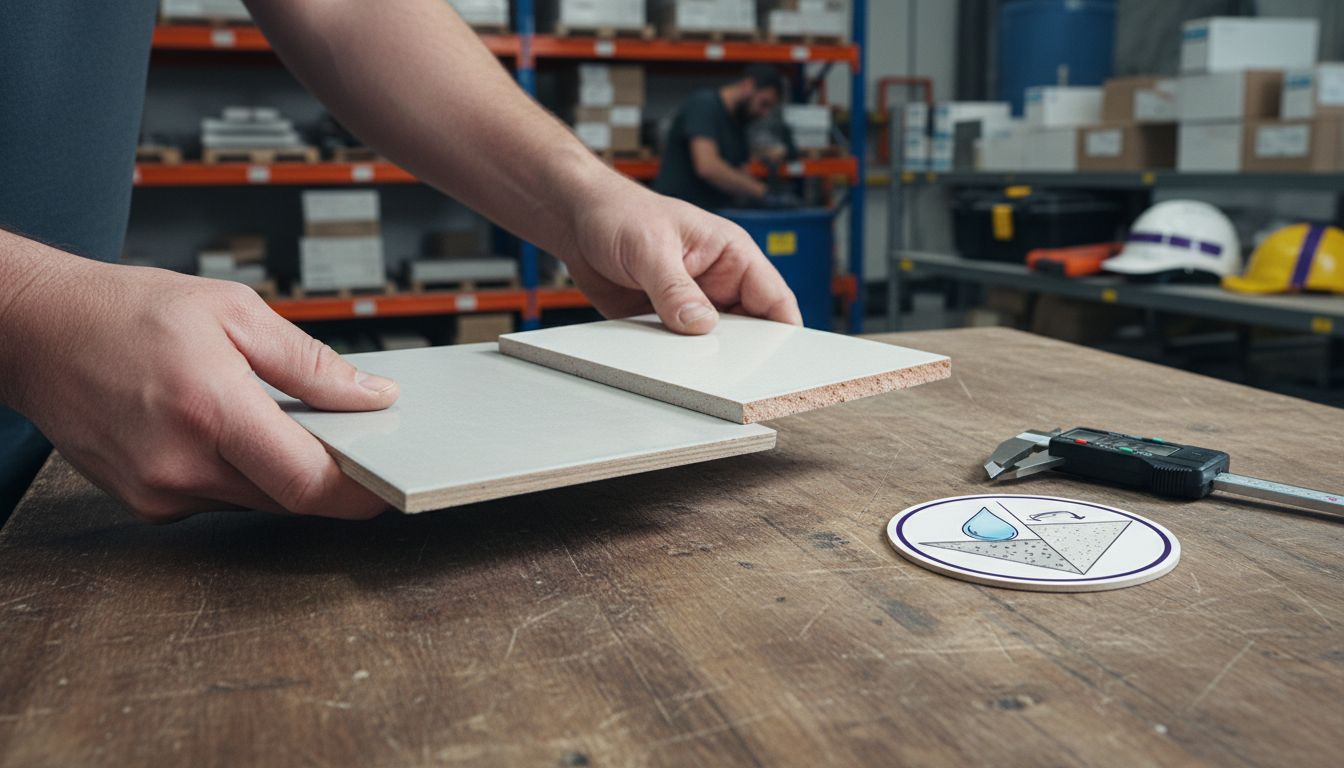 Their lower porosity means they absorb less water and are less susceptible to cracking, staining, and moisture damage. Read our comprehensive guide on porcelain tiles to understand how these characteristics translate into real-world tiling solutions.
Understanding these fundamental differences helps homeowners and design professionals make informed decisions about tile selection. While both porcelain and ceramic tiles offer aesthetic value, their structural variations mean they excel in different settings and applications. Ceramic tiles might be perfect for low-traffic indoor areas, whereas porcelain tiles provide robust performance in demanding environments that require exceptional durability and moisture resistance.
Key Differences Between Porcelain and Ceramic
The distinctions between porcelain and ceramic tiles extend far beyond their aesthetic appearances, deeply impacting their performance and suitability for various spaces. According to abiinteriors.co.uk, these tiles diverge significantly in fundamental characteristics such as weight, density, and resilience.
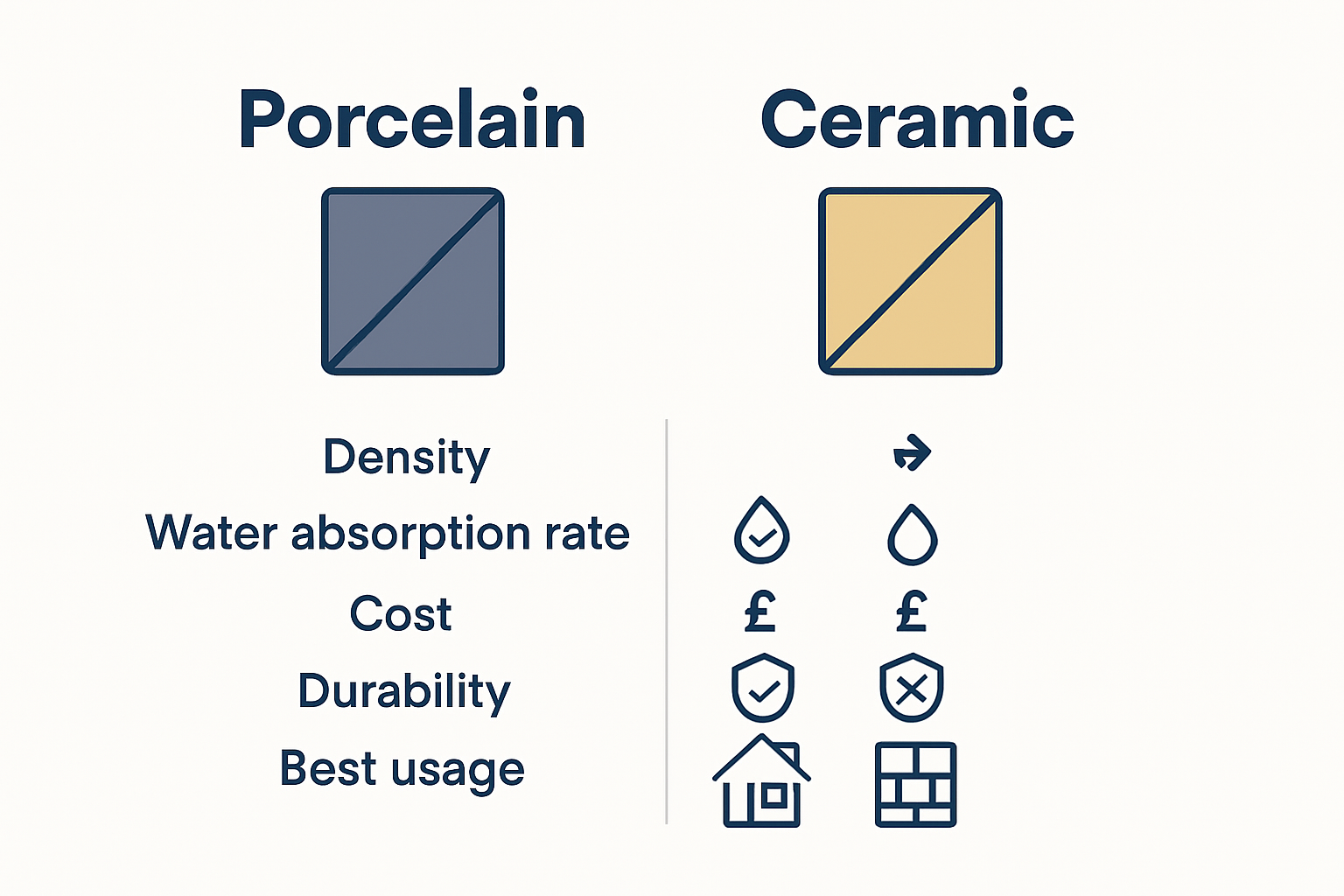
Density and Weight play a crucial role in differentiating these tile types. Porcelain tiles are substantially heavier and denser, offering superior strength that makes them ideal for high-traffic areas like hallways, commercial spaces, and outdoor environments. Ceramic tiles, in contrast, are lighter and more porous, which limits their application in more demanding settings. Discover more about porcelain tile features to understand their robust engineering.
When considering moisture resistance and durability, porcelain tiles demonstrate remarkable advantages. Their lower porosity means they absorb minimal water, making them exceptionally resistant to cracking, staining, and moisture damage. This characteristic renders them perfect for bathrooms, kitchens, and exterior spaces where environmental conditions can be harsh. Ceramic tiles, while aesthetically pleasing, are better suited to interior spaces with controlled humidity and lower foot traffic.
Ultimately, the choice between porcelain and ceramic tiles depends on specific project requirements. Professional designers and homeowners must weigh factors like location, expected wear, moisture exposure, and budget when selecting the most appropriate tiling solution. While ceramic tiles offer affordability and design versatility, porcelain tiles provide unmatched durability and long-term performance in challenging environments.
Characteristics and Durability of Each Tile
When evaluating tile options, understanding the unique characteristics of porcelain and ceramic becomes crucial for making informed design decisions. According to diffen.com, these tile types demonstrate significant variations in durability and water resistance that directly impact their practical applications.
Water Absorption and Performance are critical differentiators between these tile types. Porcelain tiles excel in moisture resistance, featuring an incredibly low water absorption rate that makes them supremely suitable for both indoor and outdoor environments. Their dense composition allows them to withstand harsh weather conditions, heavy foot traffic, and potential moisture exposure. Explore our guide on terrazzo porcelain tiles to understand how these characteristics translate into practical flooring solutions.
The manufacturing process fundamentally influences each tile’s durability and aesthetic potential. Porcelain tiles are crafted using more refined clay and fired at higher temperatures, resulting in an exceptionally hard-wearing surface that maintains its integrity under challenging conditions. Ceramic tiles, while more budget-friendly, are better suited to controlled interior spaces with minimal moisture and lighter usage. Their slightly higher porosity means they require more careful maintenance and are less resilient in high-traffic or exterior applications.
Ultimately, selecting between porcelain and ceramic tiles involves carefully weighing performance requirements against aesthetic preferences and budgetary constraints. Professional designers and homeowners must consider factors like location, expected wear, moisture exposure, and design vision when making their selection. While ceramic tiles offer charming design flexibility, porcelain tiles provide unparalleled durability and long-term performance across diverse environmental conditions.
Best Applications for Porcelain and Ceramic
Selecting the right tile involves understanding the unique strengths of porcelain and ceramic materials across different architectural and design environments. Each tile type offers distinct advantages that make them suitable for specific applications, transforming spaces with their individual characteristics.
Indoor Spaces present different opportunities for both tile types. Ceramic tiles shine in low-traffic interior areas like bathroom walls, kitchen backsplashes, and decorative accent zones. Their affordability and design versatility make them perfect for creating intricate patterns and visual interest. Explore practical ceramic tile examples to understand their aesthetic potential in residential settings.
For high-performance environments, porcelain tiles emerge as the superior choice. Their exceptional durability makes them ideal for commercial spaces, entryways, outdoor patios, and areas experiencing significant foot traffic. The dense composition allows porcelain tiles to withstand extreme temperatures, resist moisture, and maintain structural integrity under challenging conditions. Homeowners and designers seeking long-lasting solutions will find porcelain tiles particularly beneficial in spaces requiring maximum resilience.
Ultimately, the selection between porcelain and ceramic tiles depends on balancing practical requirements with aesthetic preferences. Bathrooms and kitchens demand different performance characteristics, with porcelain offering superior water resistance and ceramic providing design flexibility. Professional designers carefully evaluate factors like moisture exposure, expected wear, budget constraints, and visual design goals when recommending the most appropriate tiling solution for each unique project.
Cost, Maintenance, and Value Comparison
Navigating the financial landscape of tiling requires a nuanced understanding of long-term value beyond initial purchase price. According to tilingadvice.co.uk, the cost dynamics between porcelain and ceramic tiles are complex, involving factors that extend well beyond the initial investment.
Upfront Costs and Long-Term Investment reveal significant differences between these tile types. Porcelain tiles typically command a higher initial price point due to their sophisticated manufacturing process and superior durability. While ceramic tiles appear more budget-friendly at first glance, explore our comprehensive guide to ceramic tiles to understand the true economic implications of your selection. The higher porosity of ceramic tiles means increased maintenance expenses and potentially shorter lifespan, potentially negating initial savings.
Maintenance requirements play a crucial role in the overall value proposition. Porcelain tiles’ dense composition makes them remarkably resistant to staining, cracking, and moisture damage, translating to reduced cleaning and repair costs over time. Ceramic tiles, being more porous, demand more frequent sealing, careful cleaning, and potentially more frequent replacement in high-traffic or moisture-prone environments. Homeowners and commercial property managers must consider these ongoing maintenance expenses when calculating true long-term value.
Ultimately, the decision between porcelain and ceramic tiles transcends simple price comparisons. Savvy consumers evaluate total cost of ownership, considering factors like durability, maintenance frequency, potential replacement costs, and aesthetic longevity. While porcelain tiles represent a higher initial investment, their exceptional performance characteristics often deliver superior value, making them a financially prudent choice for discerning property owners seeking lasting quality and minimal long-term maintenance.
Choose the Perfect Tile with Confidence and Style
Struggling to decide between porcelain and ceramic tiles for your next project The article highlights the crucial differences in durability, water resistance, and long-term value That is where Vividotiles.co.uk steps in with a wide selection of premium tiles to suit every need and style Whether you seek the robust performance of porcelain for high-traffic areas or the aesthetic charm of ceramic for decorative indoor spaces we have you covered

Browse our extensive collection and discover why so many homeowners and designers trust Vividotiles.co.uk for quality and affordability Act now to benefit from free UK delivery on many items and explore detailed guides to help you make the right choice Navigate your options easily at Vividotiles landing page and transform your space with confidence today Learn more about porcelain tiles and explore ceramic tile solutions to find the perfect fit for your home or commercial project
Frequently Asked Questions
What are the main differences between porcelain and ceramic tiles?
Porcelain tiles are made from refined clay and fired at high temperatures, resulting in a denser, more durable material. Ceramic tiles are made from natural clay and fired at lower temperatures, making them lighter and more porous.
Which tile type is more moisture-resistant?
Porcelain tiles are more moisture-resistant due to their lower porosity, making them ideal for high-moisture environments like bathrooms and kitchens. Ceramic tiles are better suited for dry, low-traffic indoor spaces.
How do the costs of porcelain and ceramic tiles compare?
Porcelain tiles usually cost more upfront due to their durability and manufacturing process, while ceramic tiles are generally more budget-friendly. However, ongoing maintenance costs for ceramic may offset initial savings in high-traffic or moisture-prone areas.
What are the best applications for porcelain versus ceramic tiles?
Porcelain tiles are best for high-traffic areas, outdoor spaces, and commercial environments due to their durability. Ceramic tiles are excellent for low-traffic indoor areas like bathroom walls and decorative accents, where design versatility is key.