
What Is Large Format Porcelain and Why Choose It
Most british homeowners underestimate just how dramatic a difference large format porcelain tiles can make in a renovation. With sizes often exceeding 60x120 centimetres, these modern tiles can instantly give any North Yorkshire home a more open and luxurious feel. Because over 85 percent of contemporary designers now recommend large format porcelain for seamless interiors, understanding your options—and getting the right installation guidance—can help you achieve a high-end look without overspending.
Table of Contents
- Large Format Porcelain Explained and Defined
- Sizes, Variations, and Popular Styles
- Key Advantages for Contemporary Interiors
- Installation Requirements and Potential Pitfalls
- Comparing Large Format to Standard Tiles
Key Takeaways
| Point | Details |
|---|---|
| Large Format Dimensions | Large format porcelain tiles exceed 60x120 centimetres, allowing for seamless designs with fewer grout lines. |
| Versatile Applications | Suitable for various settings, these tiles enhance aesthetics while providing durability and low maintenance. |
| Professional Installation Required | Proper installation by a specialist is crucial to ensure optimal performance and avoid costly mistakes. |
| Comparative Advantages | Large format tiles offer superior durability and visual continuity compared to standard tiles, making them a forward-thinking choice for interiors. |
Large Format Porcelain Explained and Defined
Large format porcelain represents a significant advancement in tile technology, offering homeowners and designers unprecedented opportunities for creating seamless, sophisticated spaces. Large porcelain tiles are defined by their substantial dimensions, typically exceeding 60x120 centimetres and reaching up to an impressive 160x320 centimetres. These expansive panels enable architects and interior designers to craft continuous, minimalist surfaces with fewer visible grout lines.
Manufactured through a precise process of refined clay compaction and firing at extremely high temperatures, large format porcelain tiles possess remarkable characteristics that distinguish them from traditional ceramic options. According to British Standards, these tiles must have at least one edge longer than 60 centimetres and a total surface area greater than 1,800 square centimetres. Their exceptional engineering results in extremely low porosity levels, usually between 0.005% and 0.5% water absorption, making them incredibly robust and suitable for both interior and exterior applications.
The versatility of large format porcelain extends across multiple design contexts. Whether used for kitchen splashbacks, bathroom walls, living room floors, or commercial spaces, these tiles offer a sleek, contemporary aesthetic while providing superior practical benefits. Their large size reduces grout lines, creating a more streamlined appearance and making spaces feel more expansive. Additionally, their dense composition makes them resistant to stains, scratches, and moisture, ensuring long-lasting performance in high-traffic areas.
Pro tip: When selecting large format porcelain tiles, always consult a professional installer who understands the specialised techniques required for handling these substantial, thin-bodied panels.
Sizes, Variations, and Popular Styles
Large format porcelain offers an impressive range of sizes and design possibilities, typically beginning at 600x1200 millimetres and extending up to extraordinary dimensions of 1600x3200 millimetres. These expansive panels provide architects and designers with unprecedented flexibility in creating seamless, contemporary spaces. The standard thickness ranges from 6 to 12 millimetres, allowing for versatile applications across residential and commercial environments.
The aesthetic versatility of large format porcelain is remarkable, with collections mimicking natural materials that capture intricate textures and visual nuances. Popular design styles include marble effects with elegant veining, concrete-inspired surfaces with industrial minimalism, wood-look panels that replicate natural grain patterns, and stone-effect tiles that bring organic complexity to interior spaces. These design variations enable homeowners to achieve sophisticated looks while maintaining the exceptional durability and low-maintenance characteristics of porcelain.
Choosing the right size depends on specific design goals and spatial considerations. Smaller panels around 600x1200 millimetres work brilliantly in compact areas, creating visual interest without overwhelming the space. Larger formats like 900x1800 millimetres or the expansive 1600x3200 millimetre slabs are ideal for open-plan living areas, commercial spaces, and feature walls where continuity and minimalist aesthetics are paramount. The reduced grout lines inherent in larger formats contribute to a more streamlined, contemporary appearance.
Here’s a concise summary of common applications and suitability of large format porcelain:
| Area of Use | Recommended Size | Key Benefit |
|---|---|---|
| Kitchen Splashbacks | 600x1200 mm panels | Easy cleaning, sleek look |
| Bathroom Walls | 900x1800 mm or larger | Reduced grout, fresh feel |
| Living Room Floors | 1600x3200 mm slabs | Spacious, seamless effect |
| Commercial Spaces | 1200x2400 mm upwards | Durability, modern design |
Pro tip: When selecting large format porcelain tiles, measure your space carefully and consider using digital visualisation tools to preview how different tile sizes and patterns will look in your specific environment.
Key Advantages for Contemporary Interiors
Large format porcelain tiles have revolutionised contemporary interior design, offering an unparalleled combination of aesthetic sophistication and practical functionality. Modern UK homes are increasingly embracing textured tiles that create visual depth and architectural interest while maintaining a sleek, minimalist aesthetic. The expansive surface area of these tiles allows designers and homeowners to create seamless, uninterrupted visual landscapes that transform living spaces.
The design advantages of large format porcelain are multifaceted. Minimal grout lines mean fewer interruptions in visual flow, creating an illusion of greater space and elegance. These tiles can mimic high-end materials like marble, concrete, and natural stone with extraordinary precision, providing luxurious finishes at a fraction of the cost of traditional materials. Their large-scale format is particularly effective in open-plan living areas, where continuous surfaces can make rooms feel more spacious and cohesive.

Practically speaking, large format porcelain tiles offer exceptional performance characteristics that make them ideal for contemporary interiors. They are incredibly resistant to moisture, stains, and wear, making them perfect for high-traffic areas like kitchen floors, bathroom walls, and commercial spaces. The non-porous surface prevents bacteria and mould growth, ensuring hygienic environments. Their thermal stability means they work brilliantly with underfloor heating systems, providing both aesthetic appeal and functional comfort in modern homes.
Pro tip: When designing with large format porcelain, consider using matching or complementary tiles for walls and floors to create a truly seamless, contemporary interior aesthetic.
Installation Requirements and Potential Pitfalls
Proper installation of large format porcelain tiles demands meticulous planning and specialist expertise, with multiple critical considerations beyond traditional tiling approaches. Unlike standard ceramic tiles, these expansive panels require precise substrate preparation, specialised handling techniques, and advanced installation skills. The weight, fragility, and substantial surface area of large format porcelain create unique challenges that can compromise the entire project if not managed professionally.
Key installation requirements centre around three fundamental aspects: substrate preparation, adhesive selection, and cutting techniques. The surface must be exceptionally level, with minimal deviation to prevent lippage or uneven placement. Specialist adhesives designed specifically for large format porcelain are crucial, ensuring complete coverage and maximum bond strength. Cutting these tiles requires diamond-blade wet saws and extreme precision, as complex cuts like ‘L’ shapes can introduce stress points that might cause microscopic fractures or delayed cracking.
Potential installation pitfalls are numerous and can result in costly remediation. Common mistakes include insufficient adhesive coverage, improper substrate levelling, inadequate expansion joints, and using inappropriate cutting techniques. Professional installers recommend supporting tiles during cutting, maintaining continuous communication among team members, and performing careful dry layouts before permanent installation. Thermal expansion, substrate movement, and environmental conditions must also be carefully considered to prevent future tile failure or aesthetic degradation.
Pro tip: Always engage a professional tiling specialist with specific experience in large format porcelain installation to ensure optimal results and minimise the risk of expensive mistakes.
Comparing Large Format to Standard Tiles
Large format tiles represent a transformative approach to interior design, fundamentally challenging traditional tile dimensions and aesthetic possibilities. Where standard tiles typically range from 30x30 centimetres to 60x60 centimetres, large format porcelain panels extend dramatically to 120x240 centimetres and beyond, creating unprecedented visual continuity and spatial perception. This substantial difference in scale translates into profound design and functional advantages that standard tiles simply cannot match.
The visual impact of large format tiles is immediately apparent. Minimal grout lines mean fewer visual interruptions, creating a more seamless, expansive appearance that can make spaces feel larger and more sophisticated. Standard tiles, with their numerous grout lines, tend to fragment visual spaces, whereas large format tiles provide a more continuous, elegant surface. This characteristic is particularly transformative in smaller rooms, where the reduced number of joint lines can create an illusion of greater space and sophistication.
Practical performance differences are equally significant. Large format porcelain tiles offer superior durability, with greater resistance to wear, moisture, and thermal stress compared to standard ceramic tiles. Their dense composition and minimal porosity mean fewer maintenance requirements, reduced potential for water penetration, and enhanced longevity. Standard tiles, while functional, typically have more joints and potentially lower density, making them more susceptible to moisture absorption, staining, and structural degradation over time. For homeowners seeking a long-term, low-maintenance flooring or wall covering solution, large format porcelain represents a more advanced, forward-thinking choice.
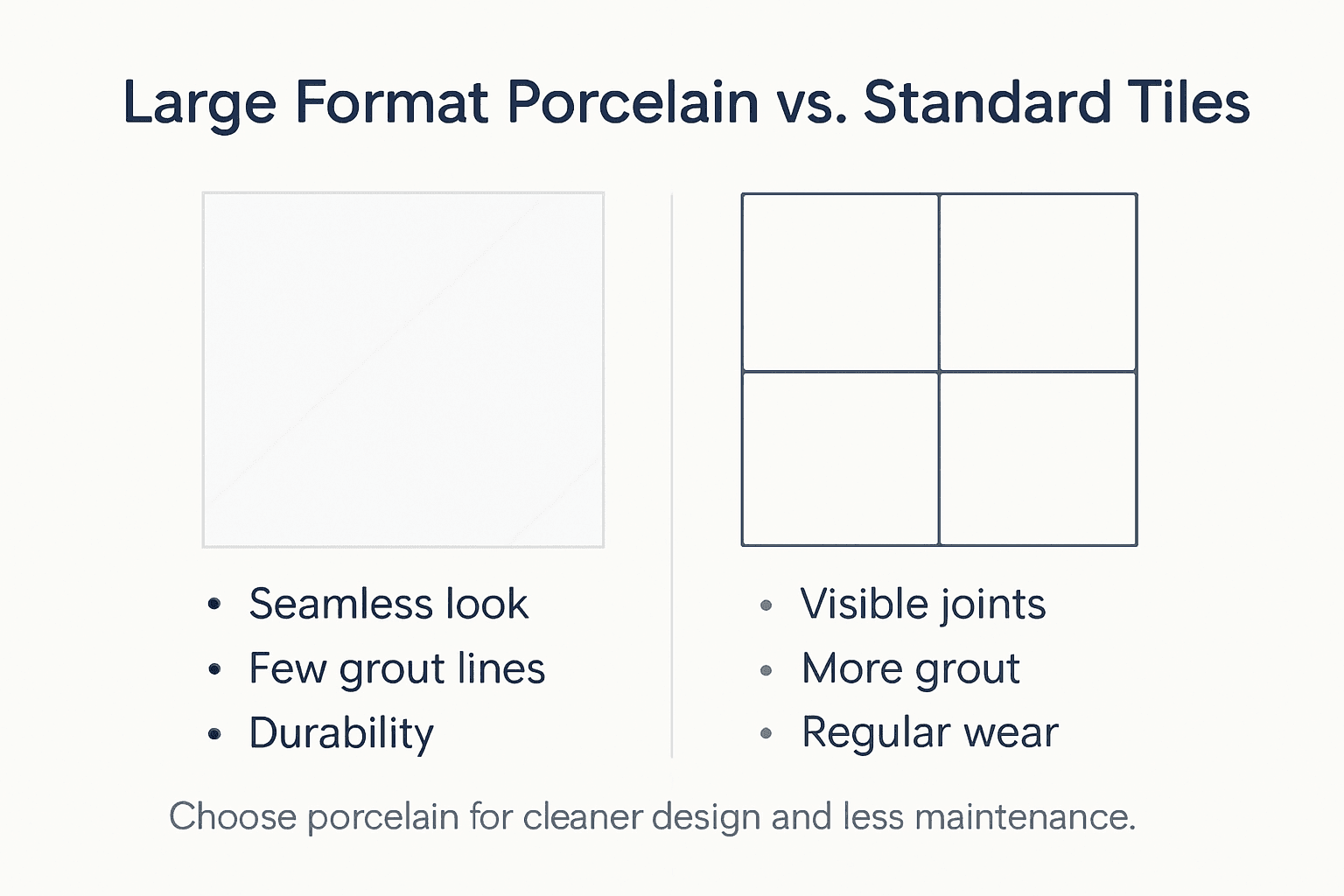
Compare at-a-glance the main differences between large format and standard tiles:
| Aspect | Standard Tiles | Large Format Porcelain |
|---|---|---|
| Typical Size | 300x300–600x600 mm | 600x1200–1600x3200 mm |
| Visual Impact | Fragmented surfaces | Expansive, seamless look |
| Maintenance | More grout, frequent | Minimal joints, low upkeep |
| Durability | Good, basic ceramic | Excellent, high-density |
Pro tip: When transitioning from standard to large format tiles, consult a professional installer who understands the specialised techniques required for optimal placement and performance.
Discover the Transformative Power of Large Format Porcelain Tiles for Your Space
Are you ready to elevate your interiors with the sleek, seamless beauty of large format porcelain? From reducing grout lines to creating sophisticated, expansive surfaces these tiles address common design challenges faced by homeowners and designers alike. Experience the perfect blend of durability and elegance that brings your vision to life while offering practical benefits such as stain resistance and easy maintenance.
Explore our extensive collection at Vivido Tiles, where you will find a wide selection of large format porcelain tiles including marble effects, wood looks and stone styles all available at budget-friendly prices. Take advantage of free UK delivery and expert advice tailored to ensure flawless installation and lasting results. Visit our New Tile Showroom in Harrogate to see our collections in person and start transforming your home today with confidence from the trusted specialists at Vivido Tiles.
Frequently Asked Questions
What are large format porcelain tiles?
Large format porcelain tiles are defined by their considerable dimensions, typically exceeding 60x120 centimetres and reaching sizes up to 160x320 centimetres. They provide a seamless and sophisticated look, making them popular for modern interior designs.
What are the advantages of using large format porcelain over standard tiles?
Large format porcelain offers fewer grout lines, creating a more continuous and spacious appearance. Additionally, they are more durable, resistant to moisture and stains, and require less maintenance compared to standard ceramic tiles, which often have more joints.
How should large format porcelain tiles be installed?
Proper installation of large format porcelain requires careful substrate preparation, the use of specialist adhesives, and precise cutting techniques. It is recommended to engage a professional installer familiar with the specific challenges associated with these large, thin-bodied panels to avoid potential pitfalls.
What types of designs are available in large format porcelain tiles?
Large format porcelain tiles come in a variety of designs, including marble effects, concrete finishes, wood-look panels, and stone effects. These options allow homeowners to achieve sophisticated aesthetics while benefiting from the durability and low-maintenance features of porcelain.